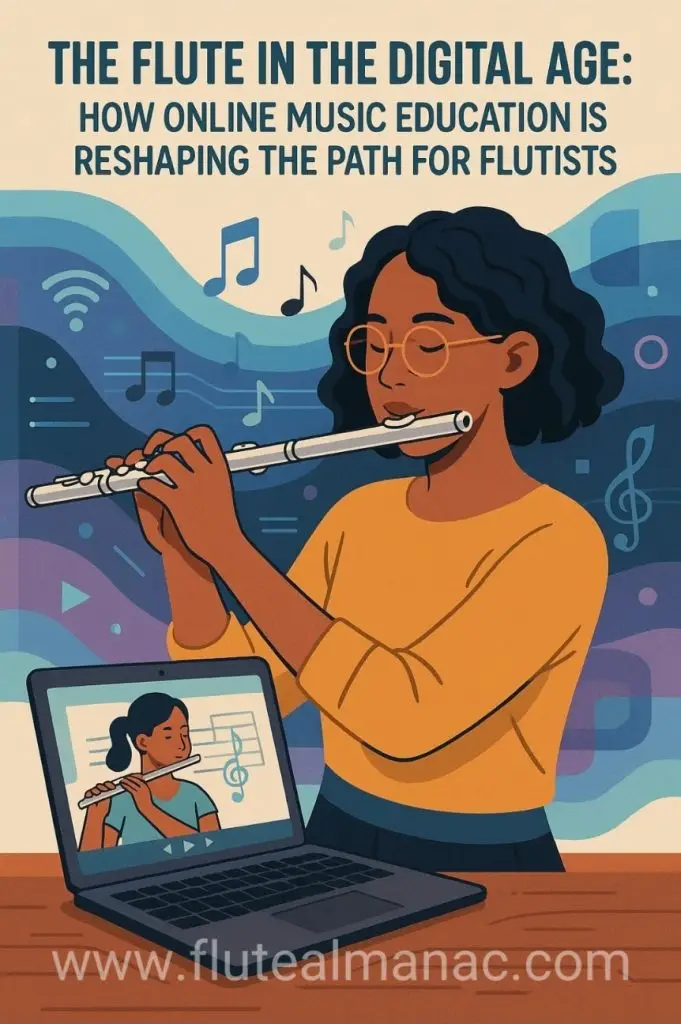
In a world increasingly driven by technology, even the ethereal sound of the flute is finding its place in the digital realm. According to a recent report by Mordor Intelligence, the online music education market is projected to grow from $3.43 billion in 2025 to $6.63 billion by 2030, with a robust CAGR of 14.08%. While piano and guitar often dominate the landscape of online instruction, there’s a quiet but powerful shift happening in the flute world—one that bridges centuries of tradition with cutting-edge innovation.
A Silver Lining for Flutists
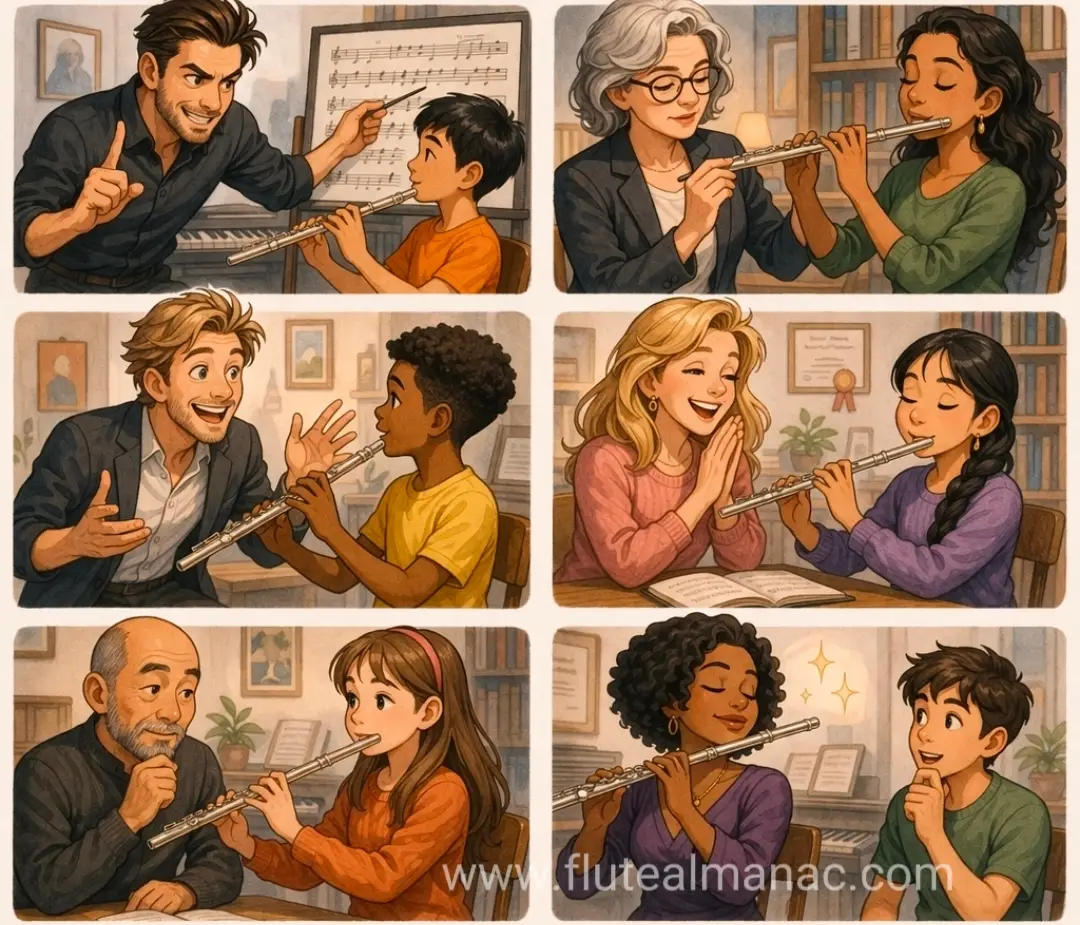
Historically, flute instruction has relied heavily on in-person mentorship, subtle tonal corrections, and nuanced breathing techniques – all things that once seemed impossible to replicate online. But advances in adaptive learning technology and AI-powered feedback systems are beginning to close that gap. Platforms like Lessonface, Musika, and even conservatories like Berklee and Juilliard now offer high-quality flute courses online. Through real-time video, digital sheet music with audio syncing, and playback evaluations, flutists today can learn Mozart’s concerti or Telemann’s fantasias from anywhere in the world.
What’s more, Virtual Reality (VR) is opening up new spaces for flutists to rehearse in orchestral settings, experiment with ensemble playing, and even take mock auditions in virtual halls – an especially valuable experience for students preparing for competitive careers.
Reinventing Music History and Theory for the Flute
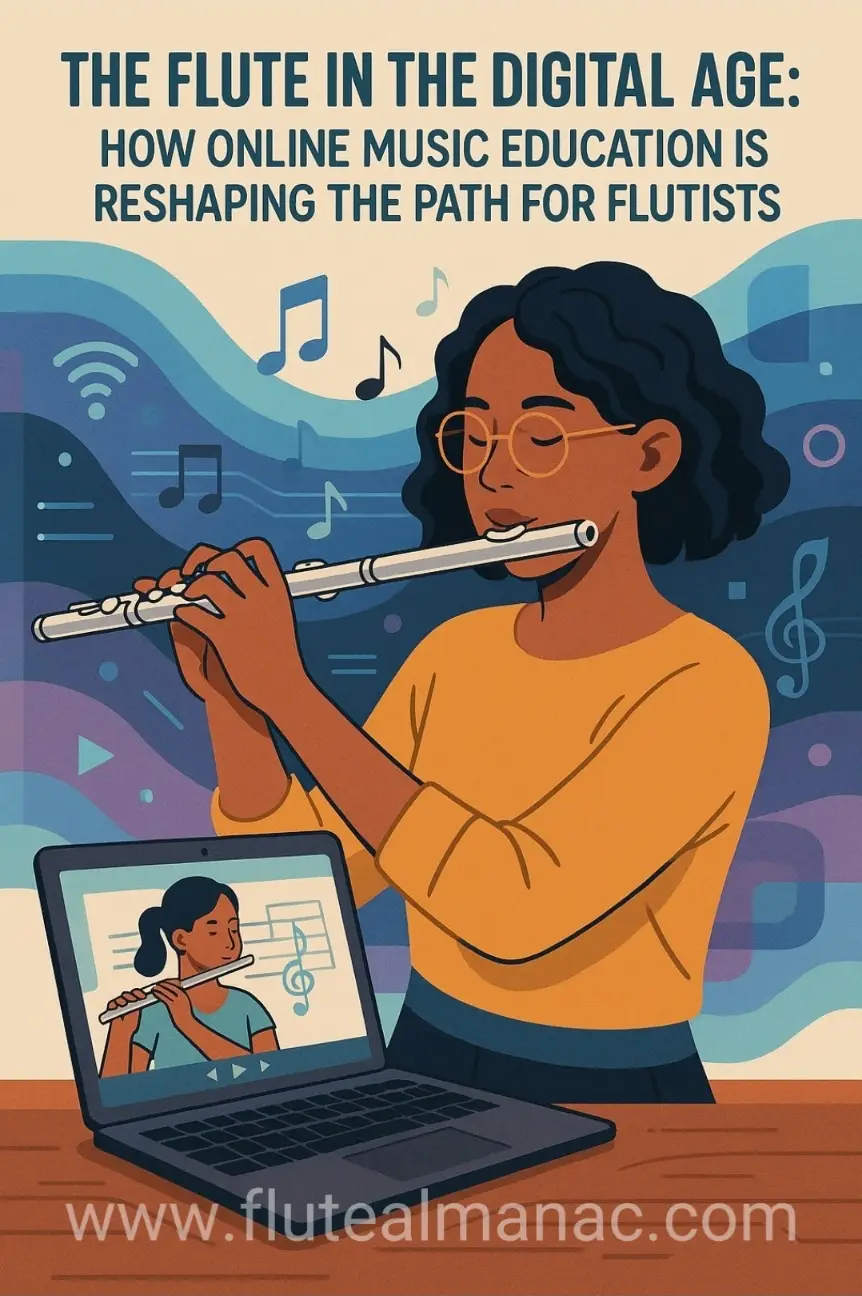

Online platforms have also transformed how music history and theory are taught to flutists. Traditionally taught through dry textbooks and lectures, these subjects are now coming alive through multimedia modules, gamified quizzes, and culturally immersive content. Imagine studying the French Baroque style while interacting with a 3D traverso and hearing Jean-Marie Leclair’s sonatas performed on period instruments. Or learning about the harmonic structure of Poulenc’s Flute Sonata while watching an animated score light up in sync with a professional performance.
Courses tailored for flutists now integrate theory directly with instrument-specific repertoire, enabling a holistic understanding that’s immediately applicable. For instance, a theory lesson on modal interchange might be linked to the interpretation of Debussy’s Syrinx, or a history unit on the Romantic era might spotlight Reinecke’s Flute Concerto.
A Democratization of Access
Perhaps the most revolutionary impact of online music education is its power to democratize access. No longer are world-class flute teachers restricted to elite conservatories or urban centers. A young flutist in rural India or Latin America can now study with a Paris Conservatory professor, participate in a masterclass via Zoom, and even submit recordings for international competitions – all from their living room.
For learners with disabilities or those from under-resourced communities, AI-powered tools like Yousician and Tonara provide immediate feedback on pitch, rhythm, and articulation, helping level the playing field. Adaptive technologies also ensure that students can learn at their own pace, with the platform tailoring the content to their individual strengths and weaknesses.
Challenges: The Need for Connection
Yet, the flute is an instrument of breath, phrasing, and emotion – qualities that are deeply human and sometimes hard to digitize. The lack of physical presence can limit subtle feedback, especially for beginners. For instance, correcting embouchure or breath support often requires in-person observation and tactile cues.
To address this, many educators are blending online and offline approaches. Hybrid learning models are emerging, where in-person workshops complement ongoing digital instruction. This combination allows students to build foundational skills through guided practice, then refine artistry and expression with their mentors in real time.
Looking Forward: The Role of the Flute Community
As the online music education market continues to expand, the flute community has a unique opportunity – and responsibility – to shape its direction. Flute teachers can embrace these tools not as replacements, but as enhancements. Institutions can invest in culturally rich, flute-specific content that preserves traditions while exploring innovation. And students can explore paths previously inaccessible, building a global community of flutists connected not by proximity, but by passion.
In the end, technology cannot replace the soul of music – but it can amplify it. The breath behind the flute remains human. What changes is who gets to breathe life into it.