The image of a flutist is often tied to a concert stage, an orchestra pit, or a quiet studio, but the 21st-century flutist has a world of opportunities beyond these traditional settings. Thanks to digital platforms, educational innovation, and the blending of genres, flute players today can forge unique and fulfilling careers in music and beyond. Here’s a look at the many professional paths available for flutists, from classic to cutting-edge.
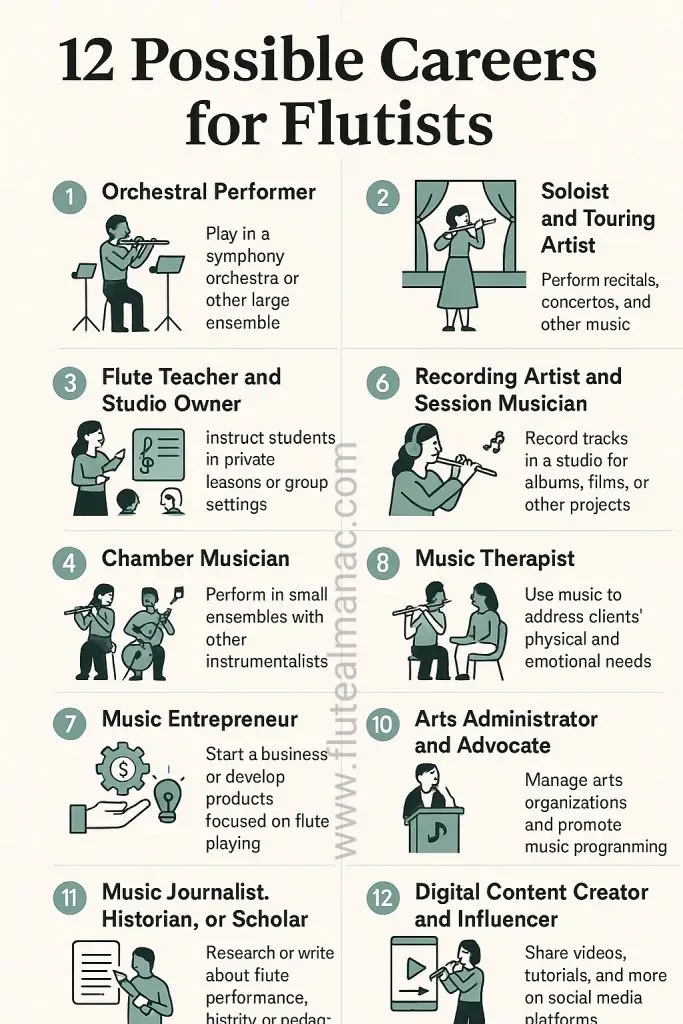
1. Orchestral Performer
Many flutists aspire to a seat in a professional symphony orchestra. This role offers the opportunity to interpret masterworks with skilled colleagues and often provides stability and prestige. Winning an orchestral audition is highly competitive and requires years of disciplined preparation, but it remains a top-tier aspiration for many classical flutists.
Related Roles: Chamber musician, opera orchestra member, ballet orchestra performer.
2. Soloist and Touring Artist
For flutists with a flair for the spotlight, a solo career can include recitals, concerto appearances, and collaborations with other musicians or ensembles. Today’s soloists often curate themed programs, premiere new works, and cross over into genres such as jazz, world music, or electronic music to reach broader audiences.
3. Flute Teacher and Studio Owner
Teaching is one of the most common and rewarding career paths for flutists. From private studios and music schools to university-level instruction, educators help shape the next generation of musicians. With the rise of online learning, many flutists now run virtual studios and reach students around the globe.
Specializations: Suzuki method instructor, early childhood music educator, university professor, online course creator.
4. Chamber Musician



Chamber music offers flutists a collaborative and expressive outlet. Whether in a traditional wind quintet or a genre-blending ensemble, chamber musicians often enjoy a more intimate relationship with audiences and the freedom to design their own programs.
5. Composer and Arranger
Flutists with a gift for creativity may pursue composition or arranging, crafting music for flute and other instruments. Many contemporary flutists write original works or adapt existing repertoire to suit different levels or ensembles.
6. Recording Artist and Session Musician
In film, TV, video games, and commercial music, flutists can contribute as session musicians. Studio work demands versatility, sight-reading skills, and the ability to quickly shift styles. With home recording technology, many flutists now produce their own albums and digital content.
7. Music Entrepreneur
Entrepreneurial flutists build businesses around their art. This could include launching a flute festival, creating educational platforms, developing flute accessories, or founding a publishing company. Digital marketing skills and a strong brand identity are key to success.
8. Music Therapist
With additional training, flutists can become certified music therapists, using music to support the emotional, cognitive, and physical well-being of clients in hospitals, schools, or therapeutic centers. The soothing and expressive qualities of the flute make it a powerful tool in healing work.
9. Flute Repair Specialist and Flute Maker
For those with a fascination for the mechanics of the instrument, careers in flute repair or flutemaking offer a hands-on path. These experts ensure instruments perform at their best and often work closely with top performers to customize instruments.
10. Arts Administrator and Advocate
Arts administrators run festivals, concert series, competitions, nonprofit organizations, and educational institutions. A background in flute performance can offer insight into programming and community needs, making flutists valuable in these leadership roles.
11. Music Journalist, Historian, or Scholar
Flutists with a passion for writing and research can contribute to academic journals, magazines, or blogs, covering performance practice, flute history, pedagogy, or reviews. Some go on to write books or curate digital archives, enriching the field’s collective knowledge.
12. Digital Content Creator and Influencer
Social media, YouTube, and podcasting have opened new doors for flutists to share tutorials, performances, reviews, and educational content. Successful content creators often blend strong musical skills with storytelling and visual creativity.
Conclusion
Being a flutist in today’s world is not about fitting into a single mold—it’s about crafting a career that blends your strengths, passions, and values. Whether on stage, in the studio, or behind the scenes, there’s a place for every flutist to thrive.
The path may not always be linear, but it is certainly full of potential.