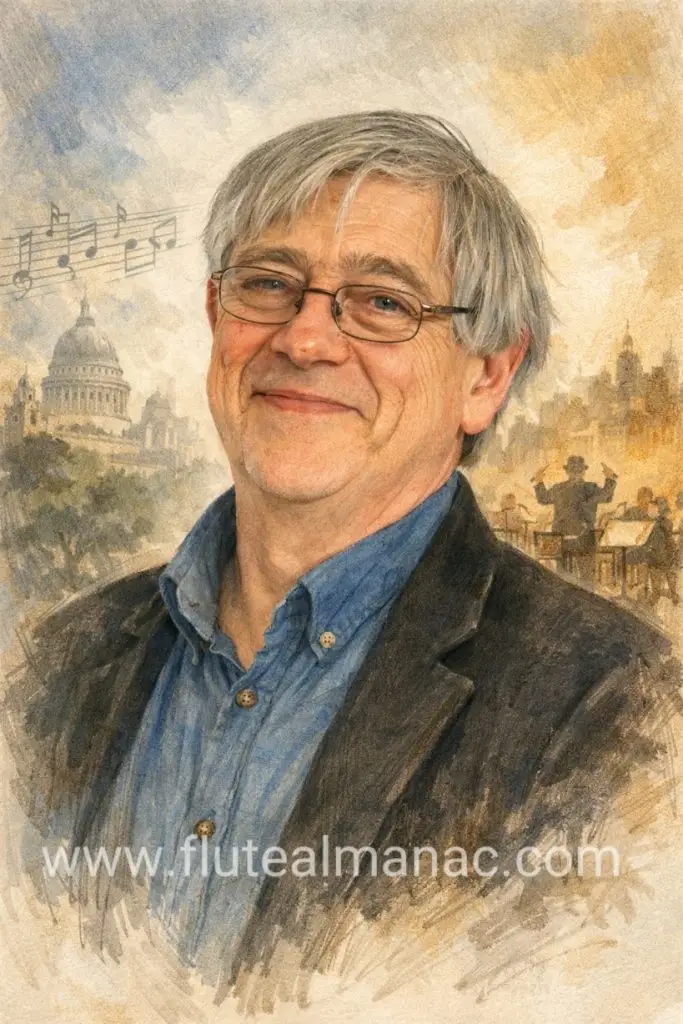
The international music world is mourning the loss of Andrew Clements, the long-serving chief classical music critic of The Guardian, who died on 11 January 2026 at the age of 75 after a period of illness. His passing marks the end of an era in English-language music criticism — one defined by intellectual rigor, independence of judgment, and a lifelong commitment to musical modernity.
A flautist’s awakening to modern music
For readers of Flute Almanac, Andrew Clements’ story holds a particularly meaningful resonance. His musical imagination was transformed while still at school, when—as a young flautist — he encountered the music of Pierre Boulez. That moment opened what became a lifelong engagement with contemporary music, shaping not only his listening but also the critical voice that would later influence composers, performers, and institutions across the globe.
Clements often recalled this formative encounter as revelatory: modern music was not an intellectual abstraction but a living, breathing language—one that demanded deep listening, historical awareness, and openness to new sonic worlds. This perspective never left him.
Three decades at The Guardian
Clements joined The Guardian in August 1993, succeeding Edward Greenfield as chief music critic. His appointment was personally recommended to the editor by the pianist Alfred Brendel, who cited Clements’ rare depth of understanding of contemporary repertoire. Over the next 32 years, Clements wrote across the entire spectrum of classical music, from early repertoire to the most challenging new works, with clarity, precision, and unmistakable authority.
His five-star reviews were famously rare and carried exceptional weight—not because of severity, but because they were earned through decades of listening, comparison, and reflection. Even when illness prevented him from reviewing live performances after March 2025, his engagement never ceased; his final CD review appeared on 2 January 2026.
Champion of composers — and of conviction

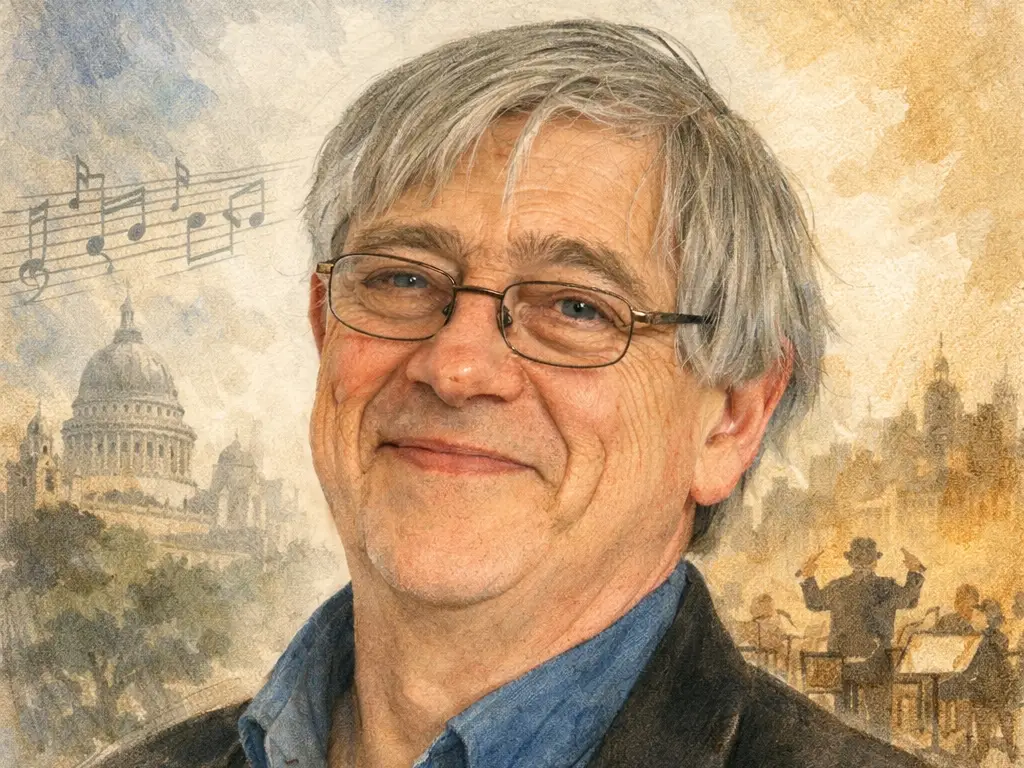
Andrew Clements played a crucial role in ensuring that the music of composers such as Harrison Birtwistle, Hans Abrahamsen, Oliver Knussen, and Mark-Anthony Turnage was taken seriously — not only by critics, but by artistic administrators and programmers. He was never interested in consensus for its own sake. Instead, he wrote from well-formed convictions, unafraid to challenge orthodoxies or to stand apart from prevailing tastes.
At the same time, his musical passions were wide-ranging. Solo piano music was among his deepest loves, and in one of his final articles he wrote of the late pianist Radu Lupu that no musician had given him “more consistent pleasure or a greater sense of wonder” over more than half a century of concert-going.
A mind of rare breadth
Before joining The Guardian, Clements served as music critic of the New Statesman, editor of The Musical Times, and a regular contributor to the Financial Times (1979–1993). He began his professional life in publishing, working at Faber & Faber and later for the Open University, following a degree in theoretical physics from Cambridge—an academic background that perhaps helps explain the analytical precision and structural insight that characterized his writing.
Beyond music, he was a devoted naturalist, with a particular passion for birds, butterflies, and orchids — an expertise that famously made him unforgiving of inaccurate stage design in opera productions.
A generous colleague, a lasting legacy
Those who worked with Andrew Clements consistently describe a man whose sometimes gruff exterior concealed warmth, generosity, and quiet kindness. He was supportive of younger colleagues, patient with questions, quick with praise, and always capable of laughing at himself.
As The Guardian’s editor-in-chief Katharine Viner wrote, his reviews were not only illuminating but “always a joy to read” — a rare balance of scholarship and humanity.
For the flute community, his legacy carries special significance. That a young flautist’s encounter with Boulez could shape one of the most influential critical minds of our time is a powerful reminder of how deeply early musical experiences can resonate across a lifetime.
Andrew Clements understood — perhaps better than most — how vital music is to the human soul. His voice will be deeply missed, but his writing remains: a record of listening done with seriousness, courage, and love.