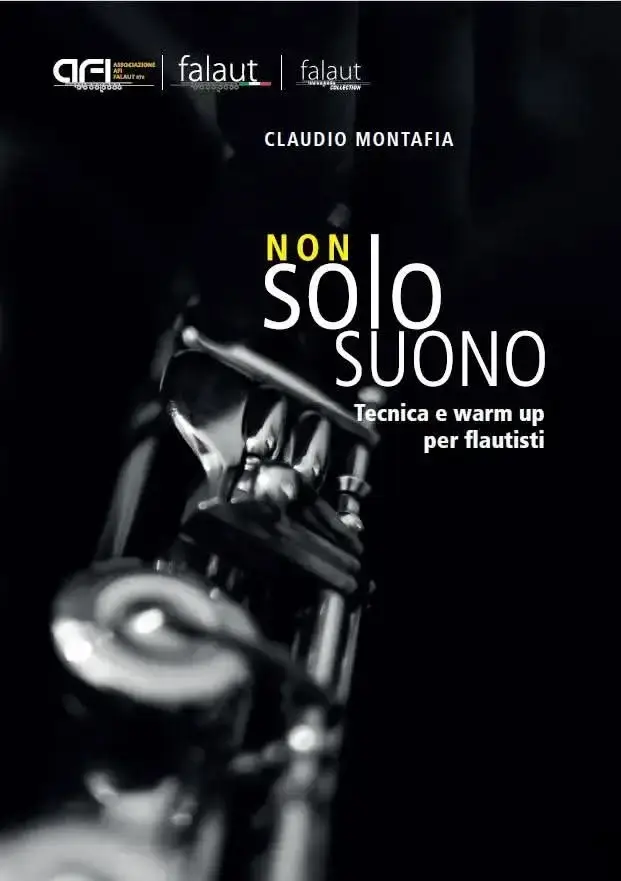
In the ever-growing landscape of flute methods, few stand out for their ability to combine practicality, artistry, and insight into the real needs of today’s flutists. Claudio Montafia’s new book, Non solo Suono (“Not Just Sound”), does exactly that. This beautifully structured and pedagogically rich volume is more than just an exercise book – it is a thoughtful guide to developing the complete flutist, one who is technically prepared, musically sensitive, and artistically curious.
Following his previous publication Cantabile è… Flauto, which focused on tone and warm-up routines, Montafia now shifts the lens toward a broader spectrum of flute technique and musicianship. This second volume is built upon a clear concept: to provide the flutist not just with traditional exercises, but with creative, adaptable tools for solving real musical challenges, especially those arising in orchestral and solo repertoire.
A Three-Part Journey: Sound, Technique, and Repertoire
The method is divided into three major sections:
- Studi di riscaldamento (Warm-up Studies)
- Esercizi tecnici e di meccanismo (Technical and Mechanism Exercises)
- Passi, passaggi e soli (Orchestral and Solo Excerpts)
Each section is introduced with a concise but meaningful commentary, sharing Montafia’s philosophy and offering clear guidance on how to use the material. This narrative tone immediately distinguishes the method from more mechanical compilations and invites the reader into a collaborative learning experience.
Warm-ups Rooted in Improvisation
Montafia’s warm-up studies are born from his personal improvisations, an approach that breathes spontaneity and variety into the daily ritual of warming up. These short studies focus on embouchure flexibility, airflow, mental presence, and expressive shaping – all of which are essential to launching a productive practice day. The final warm-up, an adaptation of the English horn solo from Dvořák’s New World Symphony, is a gem – beautiful, lyrical, and ideal for tone focus.
The text encourages flutists to personalize their warm-ups and treat them as exploratory exercises rather than rigid routines. This is not only refreshing but pedagogically sound, fostering a deeper connection with the instrument.
Technical Exercises with Purpose
The second section takes aim at finger technique, but with a twist. Montafia provides modular exercises that isolate specific patterns and expand them in a way that is flexible and scalable. Rather than endless pages of permutations, the author offers condensed models and explains how they can be developed across the flute’s full range and applied with various articulations and rhythmic groupings.
Special attention is given to hand positioning, control, and the physiological mechanics of movement – topics often glossed over in traditional method books. The clarity of explanation in the prefatory texts shows Montafia’s experience as both a teacher and performer. The reader feels guided, not lectured.
Excerpts That Teach
The third and most expansive part of the method addresses orchestral and solo excerpts, from Mendelssohn to Mozart. This is where Non solo Suono truly shines. Each excerpt is not merely reproduced but prefaced by insightful commentary on common challenges, interpretive goals, and technical solutions.

The Mendelssohn Scherzo from A Midsummer Night’s Dream, for example, is presented alongside advice on breathing, articulation, and rhythmic drive – essential for any flutist preparing for an audition. Ravel’s Daphnis et Chloé solo is contextualized with attention to harmonic intonation and tone color, while the Mozart concerti KV 313 and 314 receive a thorough discussion of historical articulation practices and trills.
Other featured excerpts include:
- Sergei Prokofiev – Pierino e il lupo
- Camille Saint-Saëns – Volière from Le carnaval des animaux
- Carl Reinecke – Concerto in D major, Op. 283
- Francis Poulenc – Sonata for Flute and Piano
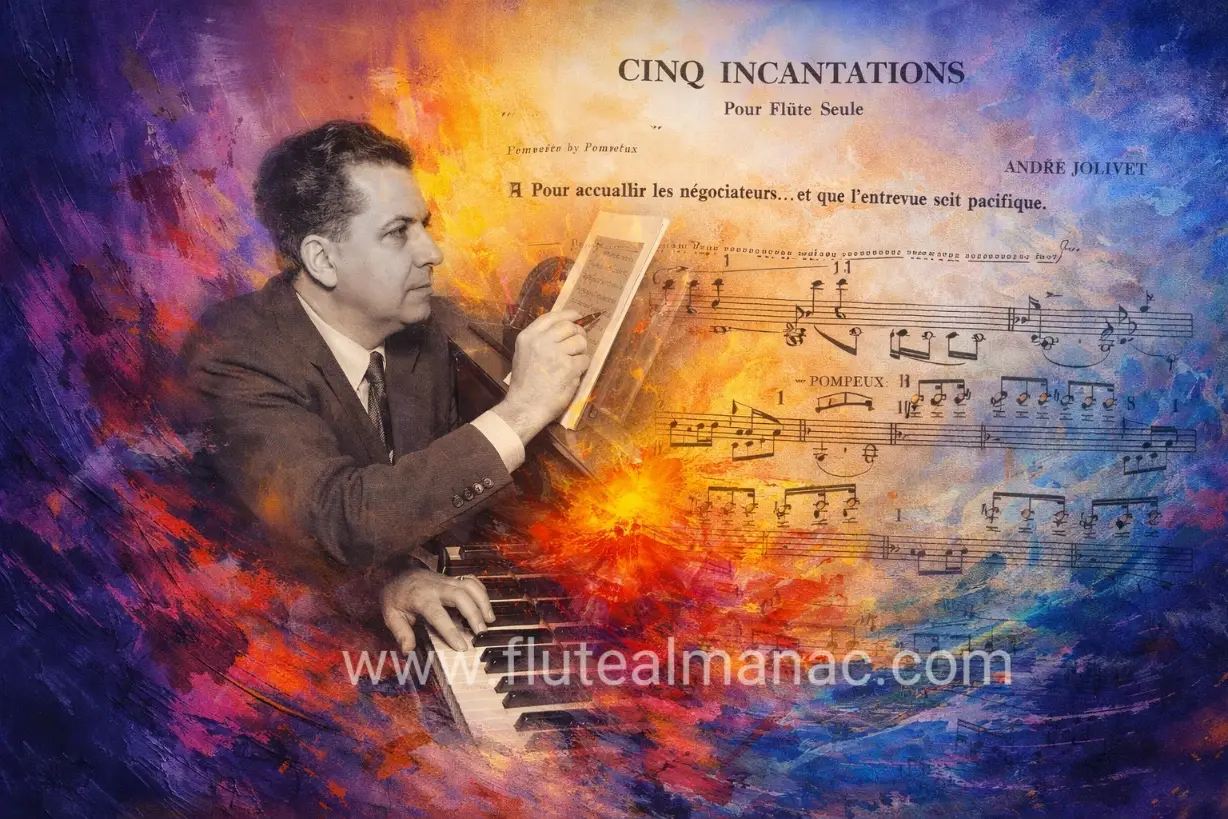
- André Jolivet – Chant de Linos
What sets these excerpts apart is Montafia’s emphasis on how to study them. He goes beyond simply saying “practice this” and offers strategies for phrasing, tone production, and even mental focus. The inclusion of preparatory exercises that lead into each solo builds a bridge between technical mastery and expressive delivery.
Aesthetic and Practical Merits
The layout of the book is clean, with legible notation and well-organized sections. QR codes throughout the book lead to audio recordings – an excellent modern feature that adds an aural dimension to the learning process. The inclusion of historical figures like Emanuele Krakamp and Giulio Briccialdi in the visual design pays homage to Italian flute heritage, adding a subtle but meaningful cultural layer.
The publisher, F.E.M. Edizioni Musicali, has done an excellent job with the production. The paper quality, engraving, and thoughtful design all contribute to a professional presentation that reflects the seriousness of the content.
A Book with a Mission
In the introduction, Montafia expresses his desire to offer young flutists a pathway to deeper study and discovery. He writes, “Spero che questo testo possa essere utile a tutti i giovani flautisti per progredire e migliorare le proprie qualità tecniche fornendo loro nuovi spunti per lo studio.” (“I hope this text will be useful to all young flutists to improve their technical qualities and provide new ideas for their studies.”)
This aspiration is fully realized in the pages that follow. The method is generous in its scope, practical in its design, and inspiring in its tone. It feels less like a book and more like a mentorship on paper.
Final Thoughts
Non solo Suono is a welcome addition to the modern flutist’s library – one that deserves a place alongside classics like Taffanel & Gaubert and Moyse, not as a replacement, but as a contemporary complement. For teachers, it offers structured, flexible material for lessons. For students, it opens doors to self-directed growth. For professionals, it provides new tools for refining well-known excerpts.
Claudio Montafia has created something that is “not just sound,” but substance – rooted in experience, shaped by creativity, and committed to the art of thoughtful flute playing.
About Claudio Montafia
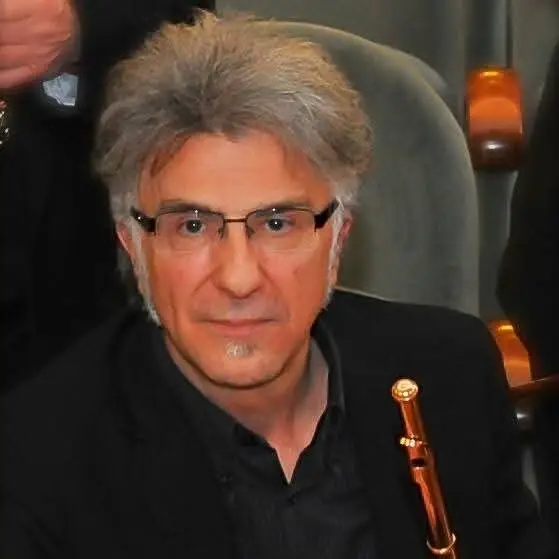
Claudio Montafia is an esteemed Italian flutist and educator renowned for his contributions to flute performance and pedagogy. He graduated with honors from the G. Verdi Conservatory in Turin under A. Evangelisti and furthered his studies at Dartington Hall and Sion. Montafia earned a Superior Diploma with distinction under Peter-Lukas Graf and later refined his artistry with Sir James Galway, becoming the only Italian conservatory professor to have studied directly with Galway.
A laureate of several competitions – including Manta, Stresa, and RAI’s “Rassegna Giovani Interpreti” – Montafia has recorded for labels such as Fonit Cetra, Tactus, Rainbow Records, Bongiovanni, and Denon, and has been featured on national and international radio and television broadcasts.
His performance career spans solo and chamber music appearances at prestigious festivals like Evian, Zagreb, Montreux, Settembre Musica, Lancut, Frankfurt, and the Galway Flute Festival. He has served as principal flutist with ensembles including the RAI Orchestra and Teatro Regio Orchestra in Turin, Orchestra Internazionale d’Italia, Teatro Lirico di Cagliari, I Solisti Veneti, and the Regional Orchestra of Venice (ORV). Montafia has collaborated with notable musicians such as harpist Lily Laskine, pianist Roger Vignoles Lacroix, and conductor Donato Renzetti.
As an educator, Montafia holds a professorship at the Pollini Conservatory in Padua, where he imparts his extensive knowledge to the next generation of flutists. He is also recognized for his pedagogical publications, including the innovative method book Non solo Suono, which emphasizes technical development and musical expression.