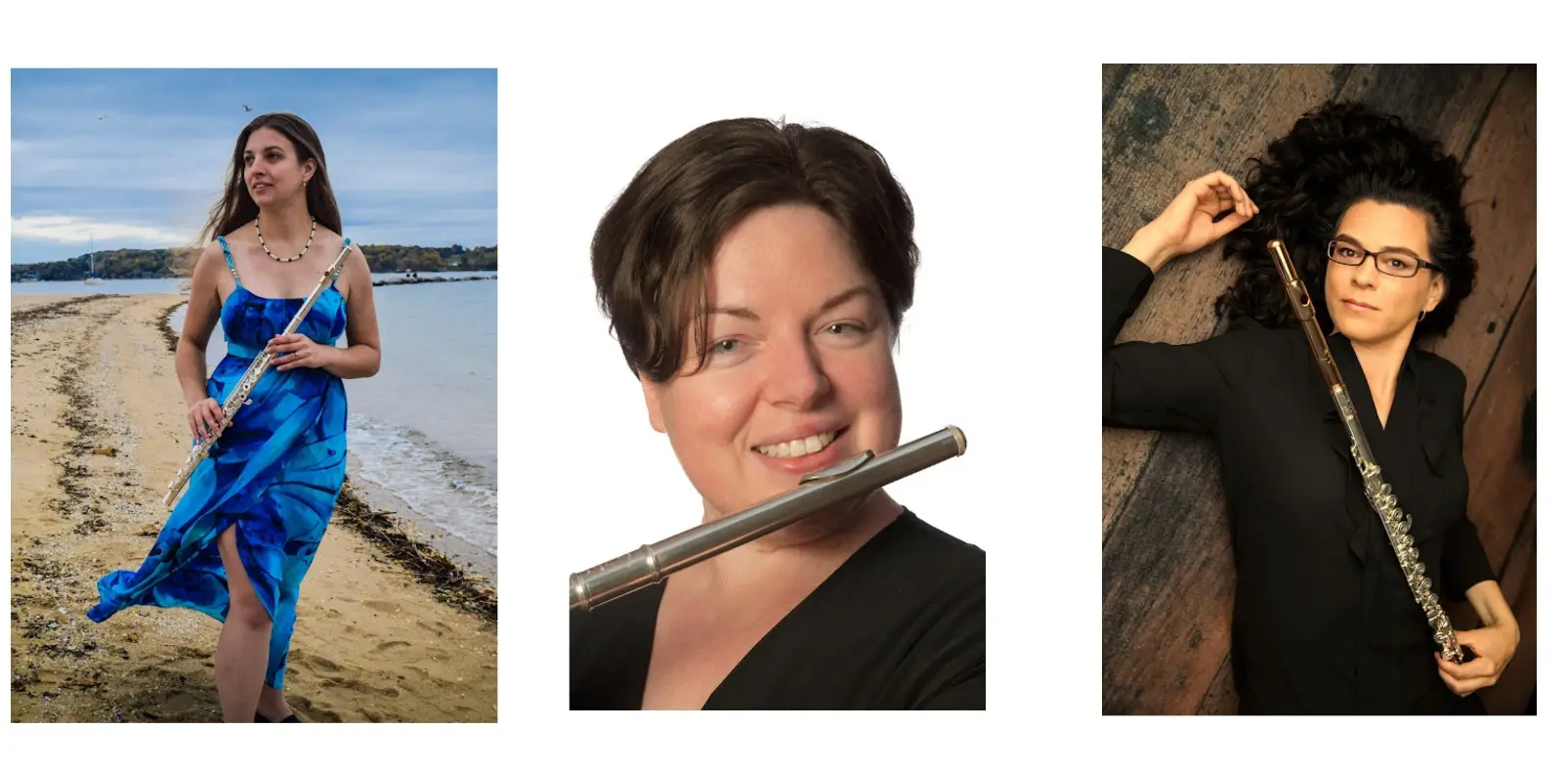
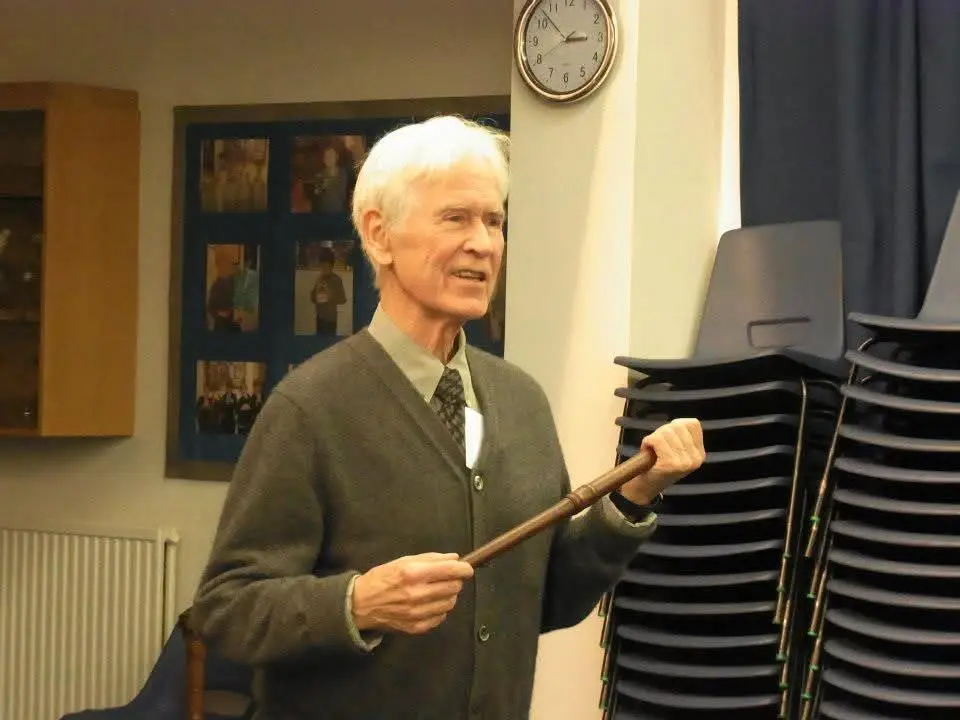
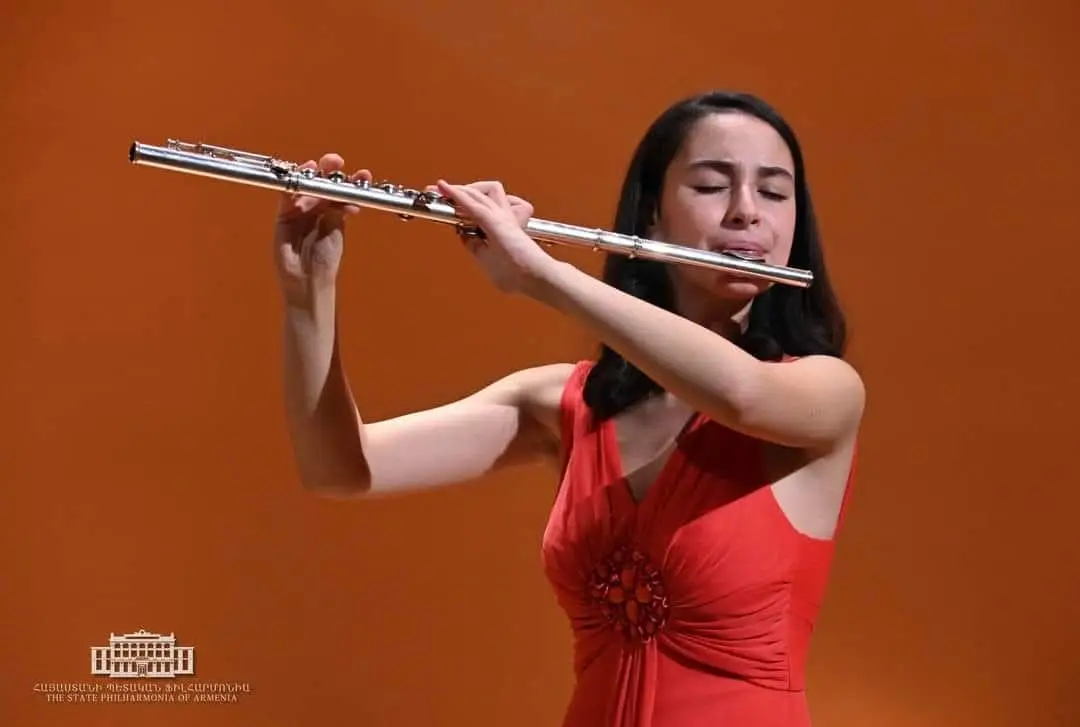
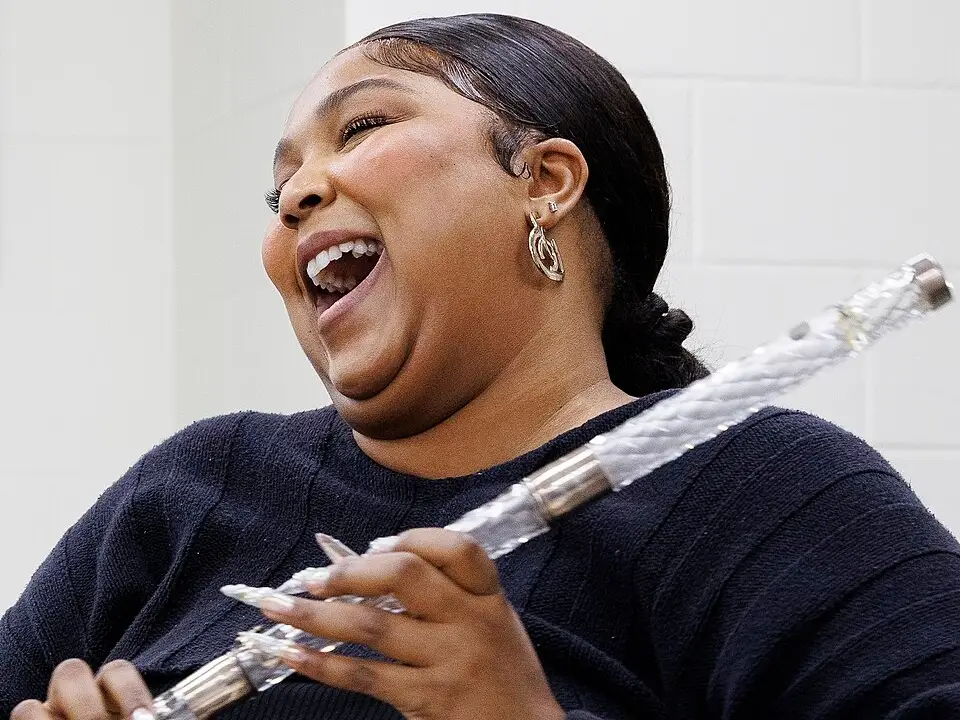
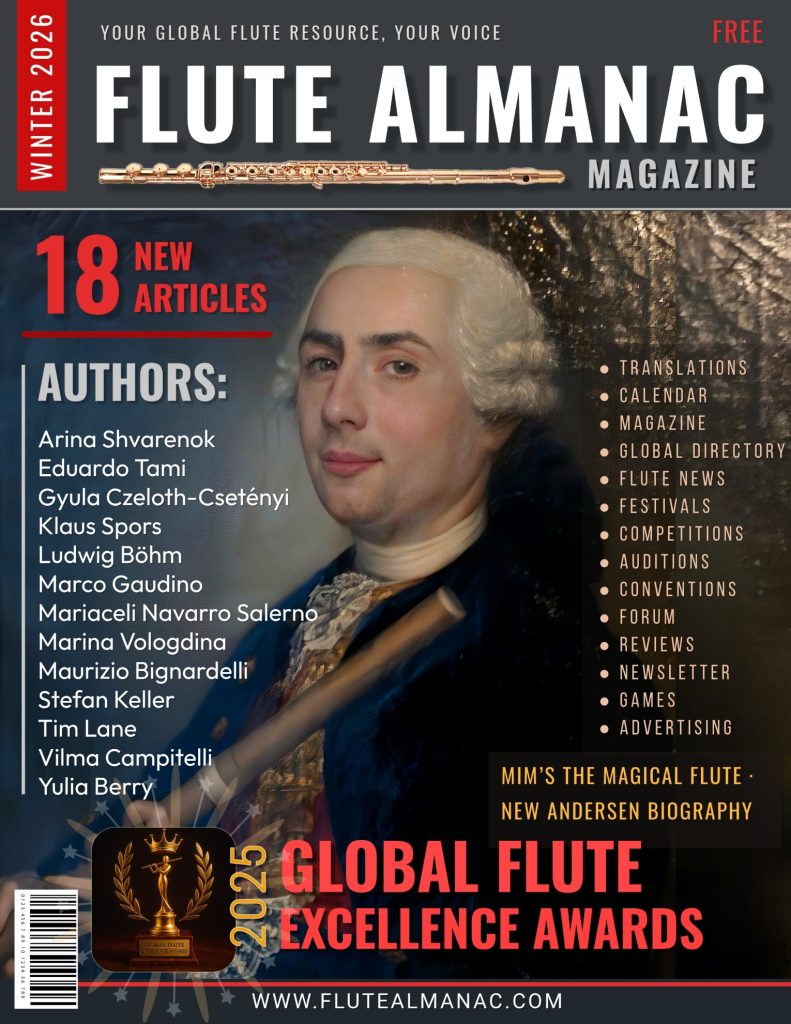
The Winter 2026 edition of Flute Almanac stands as one of our most ambitious and internationally resonant issues to date — a publication shaped by depth rather than trends, by reflection rather than speed, and by a commitment to preserving, questioning, and advancing flute culture worldwide.
This edition brings together 18 in-depth articles written by 13 authors representing 8 countries — the United States, Russia, Italy, Germany, Argentina, Hungary, Venezuela, and Switzerland — reflecting the truly international voice of today’s flute community. At the same time, Flute Almanac now reaches readers in 252 countries and territories, supported by exceptionally strong and steadily growing global traffic. What began as a vision has become a living, worldwide platform for flute culture.
At the heart of this issue are several defining pillars of our mission.
A central highlight is the philosophical and cultural framework surrounding the Global Flute Excellence Awards, explored not as a competition, but as an act of documentation, recognition, and preservation. The essay Why Documenting Flute History Is an Act of Cultural Preservation articulates why honoring excellence — when paired with context, memory, and inclusivity — becomes a safeguard for artistic heritage itself. In this sense, recognition is not the end goal, but the beginning of cultural continuity.
Another cornerstone of the Winter 2026 edition is the unprecedented coverage of The Magical Flute: Beauty, Enchantment, and Power exhibition at the Musical Instrument Museum (MIM) in Phoenix. This issue presents both a sweeping historical feature tracing 8,000 years of flute history across civilizations and an exclusive, in-depth interview with MIM curator and flutist Eddie Chia-Hao Hsu, offering rare insight into the curatorial vision behind one of the most important flute exhibitions ever created. Together, these articles form a dialogue between archaeology, anthropology, performance, and living tradition — a global story of breath, sound, symbolism, and human imagination.
Equally significant is our Flute Almanac review of The Joachim Andersen We Never Knew by András Adorján, William Wilsen, and Kyle Dzapo (Oxford University Press, 2025). This landmark biography redefines how we understand Andersen — not only as the composer of indispensable études, but as a virtuoso, conductor, and cultural figure of European stature. Its inclusion underscores our commitment to serious scholarship and to restoring historical figures in their full artistic and human complexity.
Importantly, these highlights do not overshadow the richness of the edition as a whole. Winter 2026 also offers:
- rigorous scientific and physiological research on breathing and sound production,
- advanced pedagogical guidance on intonation and tone,
- historically grounded studies of 19th-century flute culture,
- contemporary reflections on digital cognition and musicianship,
- underrepresented repertoire research, including more than 100 works for piccolo by women composers,
- living portraits of composers, thinkers, and educators,
- festival and concert culture from Switzerland to Latin America,
- and reflective essays on artistry, ego, curiosity, and interdisciplinary thinking.
Together, these contributions affirm Flute Almanac as more than a magazine. It is a source of inspiration, knowledge, dialogue, and cultural memory — a place where scholarship meets practice, where history informs the present, and where the global flute community can think deeply about who we are, where we come from, and where we are going.
Winter 2026 is not built around a single theme, but around a shared conviction:
that the flute — and those who play, study, make, teach, and love it — deserve depth, context, and a truly global voice.
Welcome to the Winter 2026 edition of Flute Almanac
Why Documenting Flute History Is an Act of Cultural Preservation
By Flute Almanac
In this reflective and foundational essay, Flute Almanac explores why documenting flute history is not merely an academic pursuit, but a vital act of cultural stewardship. Drawing a clear connection to the mission of the Global Flute Excellence Awards, the article examines the fragility of musical memory and the risks of losing artistic lineages, pedagogical traditions, and instrument-making knowledge if they are not intentionally preserved. It argues that responsible recognition — when paired with context, documentation, and global inclusivity — becomes a form of preservation itself. Positioned within a broader vision of living digital archives and shared responsibility, the article affirms that safeguarding the flute’s past is essential to shaping its future.
The Magical Flute: A Global Journey Through 8,000 Years of Sound and Story
By Flute Almanac
This expansive feature article presents The Magical Flute: Beauty, Enchantment, and Power at the Musical Instrument Museum in Phoenix as a defining cultural milestone for the global flute community. Tracing the flute’s story across 8,000 years of human history, the article explores how flutes have functioned not only as musical instruments, but as symbols of identity, spirituality, power, craftsmanship, and imagination across civilizations. From prehistoric bone flutes and ritual instruments to imperial court flutes, Boehm’s revolutionary designs, and instruments played by modern icons such as Sir James Galway and R. Carlos Nakai, the narrative weaves archaeology, anthropology, music history, and contemporary performance into a unified global perspective.
Complementing this overview, the same Winter 2026 edition of Flute Almanac features an exclusive in-depth interview with MIM curator and flutist Eddie Chia-Hao Hsu, offering readers a rare behind-the-scenes curatorial perspective on the exhibition’s vision, symbolism, and global scope.
Together, these two articles provide both a panoramic and an insider’s view of one of the most important flute exhibitions ever created.
The Transformation of Musical Consciousness: What Digitalization Takes from — and Gives to — the Classical Musician
By Arina Shvarenok (Russia)
In this intellectually rigorous and philosophically nuanced essay, Arina Shvarenok examines how digital technologies are reshaping the very cognitive foundations of classical musicianship. Moving beyond questions of convenience or efficiency, the article explores how the transition from paper scores to digital interfaces alters spatial memory, tactile perception, temporal awareness, and the internal mechanisms of musical intuition. Drawing on concepts from cognitive science, semiotics, and music philosophy, Arina Shvarenok analyzes digital annotation, scrolling scores, built-in tuners and metronomes, and the risk of outsourcing inner musical processes to external visual feedback. Rather than framing digitalization as progress or decline, the article argues for a hybrid musical consciousness — one that consciously balances analytical digital tools with embodied, introspective, and auditory traditions — raising essential questions about pedagogy, artistic depth, and the future uniqueness of human musical expression.
Trabajando sobre “Café 1930” — Part 3
By Eduardo Tami (Argentina)
In this third installment of his detailed exploration of Piazzolla’s Café 1930, Eduardo Tami guides readers through the expressive and technical nuances that shape the piece beyond the written score. Focusing on the transition to major mode and the subtle interplay between melancholy and luminosity so characteristic of tango, the article analyzes phrasing, rubato, ornamentation, glissandi, rhythmic flexibility, and tonal inflection as essential expressive tools. Tami emphasizes listening, stylistic awareness, and creative freedom, demonstrating how interpretation evolves through informed choices rather than rigid adherence to notation. Concluding with intensified expressive strategies for the final section and a bonus two-flute arrangement, the article offers flutists an insider’s perspective on tango interpretation, rooted in deep stylistic knowledge and personal musical experience.
A New Lens on Old Flutes: Rediscovering 19th-Century Secrets with Anne Pustlauk
By Gyula Czeloth-Csetényi (Hungary)
This in-depth conversation offers a rare and illuminating look into the artistic and scholarly world of Anne Pustlauk, one of today’s leading authorities on historical flutes and early Romantic performance practice. Through a wide-ranging interview, the article traces her journey from modern Boehm flute to simple system flutes, revealing how meticulous research into historical sources, original instruments, and forgotten repertoire reshapes both interpretation and teaching. Central themes include the technical and expressive challenges of keyed flutes, the evolution of musical language from Baroque to Romantic styles, and Pustlauk’s groundbreaking work on Jean-Louis Tulou and 19th-century conservatoire traditions. The discussion culminates in her landmark book The Classical and Early Romantic Flute, positioning this article as both a portrait of a deeply thoughtful musician-scholar and a compelling invitation to rediscover the richness and complexity of the 19th-century flute world.
More Than a Flutist: Thomas Nyfenger (1936–1990)
By Klaus Spors (Germany)
In this thoughtful, multi-layered tribute, Klaus Spors introduces Thomas Nyfenger as far more than a celebrated American flutist: a rare “musician’s musician,” a transformative pedagogue, and the author of the seminal book Music and the Flute (1986), which Spors places among the most important writings in modern flute pedagogy. Blending biography, personal discovery, and a creative “imagined interview” built from Nyfenger’s own words, the article illuminates Nyfenger’s artistic philosophy — his insistence on listening, context, humor, and individual sound — alongside the realities of his career (from Cleveland to New York City Ballet and Yale) and the tragedy of his lifelong struggle with depression. It is both an introduction for readers who may not know Nyfenger and a compelling argument for why his voice, ideas, and legacy still deserve a central place in the global flute world today.
Boehm’s Legacy in the Balkans: Ludwig Böhm’s 2025 Lecture Tour
By Ludwig Böhm (Germany)
In this firsthand travel report, Ludwig Böhm — world-renowned historian and custodian of Theobald Böhm’s legacy — documents his 2025 lecture tour across Sarajevo, Podgorica/Cetinje, Pristina, Skopje, and Tirana. Written in an authentic, diary-like voice, the article offers a rare real-time glimpse into how Böhm’s ideas continue to resonate with flutists, students, and institutions throughout Southeastern Europe. Beyond recounting concerts, lectures, and challenging journeys, the narrative captures the human encounters, cultural contexts, and deep curiosity surrounding the history of the modern flute. Presented unedited with the author’s permission, this report stands as both a personal chronicle and a valuable historical document, affirming the living relevance of Theobald Böhm’s innovations and Ludwig Böhm’s lifelong mission to preserve and share them worldwide.
Breathing in Sound Production – Part I: Physical Breathing

By Marco Gaudino (Italy)
In this rigorous and wide-ranging first installment of a multi-part study, flutist and researcher Marco Gaudino approaches breathing not as a purely muscular act, but as a complex aerodynamic and physiological phenomenon fundamental to sound production in wind instruments. Moving from basic principles of air pressure, temperature, and condensation/rarefaction to the detailed behavior of airflow within the oral cavity, lungs, and vocal tract, the article offers a scientifically grounded rethinking of how breath functions in musical performance. Gaudino draws illuminating parallels between atmospheric physics and human respiration, examines the role of vocal muscles during instrumental playing versus singing, and introduces the concept of respiration as a preform of the sonic event itself. Bridging acoustics, physiology, pedagogy, and musical expression, this article lays a dense yet essential foundation for performers and teachers seeking a deeper, research-based understanding of breath as the primary generator of sound, energy, and emotion in flute playing.
More Than 100 Works for Piccolo Written by Women
By Mariaceli Navarro Salerno (Venezuela)
This extensive and meticulously researched article offers one of the most comprehensive surveys to date of piccolo repertoire composed by women, addressing long-standing gaps in visibility and documentation within classical music. Mariaceli Navarro Salerno presents a richly categorized catalogue spanning solo works, chamber music, mixed ensembles, electronics, orchestral concertos, and pedagogical materials, revealing both the historical depth and contemporary vitality of women’s contributions to the piccolo repertoire. Beyond listing works, the article situates this repertoire within broader discussions of equity, diversity, and cultural representation, emphasizing the role of performers as co-creators who bring these pieces to life through programming, recording, and commissioning. Conceived as a “living document,” the article stands as an essential resource for piccolists, teachers, researchers, and programmers, and a powerful affirmation of women’s creative presence in the global flute and piccolo landscape.
The Art of Intonation: How to Develop Pure Pitch and a Deep Tone (Part III)
By Marina Vologdina (Russia)
In the third installment of her pedagogical series, Marina Vologdina turns to one of the most delicate and decisive aspects of flute playing: intonation and sound quality. Building on earlier discussions of breathing, embouchure, posture, and fingering, this article offers a clear, experience-based guide to cultivating a stable pitch and a rich, resonant tone from the very first lessons. Vologdina examines long tones, octave work, intervals, resonators, dynamic control, vibrato, ensemble playing, and the physical relationship between the player and the instrument, emphasizing that clean intonation is inseparable from healthy technique, refined listening, and mindful practice. Written with pedagogical clarity and deep practical insight, the article is an invaluable resource for teachers and students alike, reaffirming that intonation is not a mechanical adjustment, but a holistic, living process rooted in sound imagination, body awareness, and musical sensitivity.
Luigi Marini: An Aristocratic Virtuoso of the Italian Flute School
By Maurizio Bignardelli (Italy)
In this richly documented historical study, Maurizio Bignardelli brings back into focus Count Luigi Marini (1803–1886), an exceptional yet long-overlooked figure of 19th-century Italian flute culture. Drawing on sources from Leonardo De Lorenzo to recent scholarship, the article portrays Marini as a noble dilettante of extraordinary musical stature—admired by leading virtuosi such as Giulio Briccialdi, Cesare Ciardi, Giuseppe Rabboni, and Emanuele Krakamp, many of whom dedicated works to him. Bignardelli explores Marini’s unique position outside the public theatrical sphere, his role within elite academic institutions, and the technical challenges posed by the Ziegler-system flute for which much of his music was conceived. Special attention is given to Marini’s operatic paraphrases, notably the Fantasia on Themes from Verdi’s Ernani, which allow modern flutists rare access to his brilliant style. The article ultimately restores Marini’s rightful place within the treasures of 19th-century Italian flute repertoire, bridging aristocratic patronage, virtuosity, and operatic tradition.
The Magic of the Flute – FLAUTANDO Boswil 2026
By Stefan Keller (Switzerland)
This article presents FLAUTANDO Boswil 2026, the annual “Surprise – Surround Concert” that transforms the historic Boswil concert church into an immersive soundscape dedicated entirely to the flute. Titled The Magic of the Flute, the event places the audience at the center of a surround-sound experience featuring the complete flute family — from piccolo to subcontrabass — performed by an outstanding international ensemble. With a richly varied program spanning Reinecke’s Undine Sonata, contemporary solo works, improvisation, jazz-inspired arrangements, and new sonic explorations, the concert reveals the flute as a boundless, multifaceted instrument. More than a performance, FLAUTANDO is portrayed as a sensory journey that unites tradition, innovation, and spatial listening into a singular musical experience.
My Studies with Maurice Sharp: Lessons from an American Original
By Timothy Lane (United States)
In this deeply personal and historically significant memoir, Timothy Lane offers a rare insider’s portrait of Maurice Sharp, legendary principal flute of The Cleveland Orchestra under George Szell and one of the most influential — yet understated — figures in American flute history. Drawing on years of close study beginning in Lane’s early teens, the article reveals Sharp not only as an orchestral icon trained by William Kincaid and Georges Barrère, but as a demanding, perceptive, and profoundly human pedagogue whose teaching centered on sound, intonation, rhythm, and musical responsibility above all else. Through vivid anecdotes, technical insights, and reflections on lineage, tradition, and artistic integrity, Lane captures a living transmission of the American flute school at a pivotal moment in the 20th century. More than a student memoir, this article preserves an oral history of sound ideals, teaching philosophies, and musical values that continue to resonate far beyond Sharp’s lifetime.
Graciela Agudelo Murguía (1945–2018): A Free Voice from Mexico
By Vilma Campitelli (Italy)
This in-depth portrait pays tribute to Graciela Agudelo Murguía, one of the most significant and forward-thinking figures in 20th-century Mexican music. Vilma Campitelli traces Agudelo’s artistic path at the intersection of avant-garde composition, pedagogy, cultural advocacy, and social engagement, highlighting her role in shaping a modern Mexican musical identity rooted in both experimentation and indigenous memory. The article explores Agudelo’s innovative compositional language, her pioneering work in music education, her leadership within international cultural institutions, and her profound reflections on gender, listening, and silence. Particular attention is given to her flute repertoire — especially Seis Meditaciones sobre Abya Yala — revealing a composer who transformed sound into an act of memory, freedom, and human connection.
When the Ego Outplays the Music: Navigating Egocentrism in the Musical World
By Yulia Berry (United States)
In this candid and thought-provoking essay, Yulia Berry examines how egocentrism can quietly take root in classical music culture — particularly within the flute world — often disguised as individuality, ambition, or artistic confidence. Drawing on pedagogical experience and close observation of conservatoire training, competitions, and digital self-promotion, the article explores how an overemphasis on personal recognition can undermine collaboration, curiosity, and artistic depth. Rather than condemning ambition, Berry invites reflection, advocating for a renewed focus on ensemble playing, mentorship, reflective practice, and humility. The essay ultimately reframes true musical excellence as a balance between individuality and dialogue, reminding readers that lasting artistry is built not only on brilliance, but on listening, generosity, and shared musical purpose.
Leonardo da Vinci’s To-Do List: Lessons for Flutists
By Yulia Berry (United States)
In this reflective and inspiring essay, Yulia Berry revisits Leonardo da Vinci not as a distant Renaissance genius, but as a model for how musicians can rethink learning, curiosity, and artistic growth. Using Leonardo’s famous to-do lists as a lens, the article contrasts routine, task-driven practice with a broader, interdisciplinary approach that embraces science, history, nature, movement, and observation. Berry invites flutists to expand their musical horizons beyond scales and excerpts, encouraging a Renaissance-style mindset in which curiosity fuels artistry and disciplines collide to deepen expression. The article ultimately reframes daily practice as an act of exploration, urging flutists to dream bigger, observe more, and consciously shape their artistic path through what they choose to learn, question, and imagine.
Inside “The Magical Flute” Exhibition at MIM: A Curator’s Perspective on Beauty, Enchantment, and Power
By Yulia Berry, DMA (United States)
In this in-depth and exclusive curator’s interview, Yulia Berry offers Flute Almanac readers a privileged look inside The Magical Flute: Beauty, Enchantment, and Power — the landmark global exhibition at the Musical Instrument Museum in Phoenix. Through a thoughtful conversation with Eddie Chia-Hao Hsu, Curator for Asia and Oceania at MIM and a professional flutist, the article explores the curatorial vision behind one of the most ambitious flute exhibitions ever mounted. Spanning 8,000 years of history and cultures from every continent, the exhibition presents the flute as a universal symbol of beauty, spiritual power, identity, and human expression. Highlighting extraordinary instruments—from Neolithic bone flutes and ritual whistles to Boehm’s revolutionary designs and Sir James Galway’s diamond-encrusted gold flute — alongside ceremonial regalia, opera costumes, and contemporary performance voices, the article captures how MIM transforms instruments into living cultural narratives. More than a review, it is a rare behind-the-scenes perspective on how global flute heritage is researched, interpreted, and brought vividly to life for today’s audiences.
The Joachim Andersen We Never Knew: A Brilliant New Biography
Written by Kyle Dzapo, András Adorján, and William Wilsen (Oxford University Press, 2025)
Flute Almanac Review
This authoritative review introduces a landmark publication that finally reveals the full artistic, cultural, and human dimensions of Joachim Andersen, long known primarily through his indispensable études. Drawing on decades of meticulous research, the authors present the first truly comprehensive biography of Andersen — as virtuoso flutist, founding member of the Berlin Philharmonic, influential conductor, and central figure in Danish musical life. The article highlights the book’s exceptional readability, rich visual documentation, and its groundbreaking catalogue of works, which for the first time establishes a definitive reference for Andersen’s complete output. Particular emphasis is placed on the fresh, illuminating analysis of the études, situating them within Andersen’s broader musical thinking and historical context. Positioned as an essential resource for performers, teachers, and scholars alike, the review affirms this volume as a milestone in flute literature and a long-overdue restoration of Andersen’s true legacy.
Editorial Closing
As this Winter 2026 edition comes to a close, we return to the idea that runs quietly but firmly through every page of this magazine: the flute is not merely an instrument of the present moment, but a living continuum of history, knowledge, craft, and human expression. Each article in this issue — whether scholarly, pedagogical, reflective, or documentary — contributes to a larger act of preservation, dialogue, and inspiration that defines Flute Almanac’s mission.
We warmly invite our readers to take part in this shared responsibility. Nominations for the Global Flute Excellence Awards are open until December 31, and we encourage you to nominate artists, teachers, makers, researchers, and institutions whose lifelong contributions deserve thoughtful recognition and lasting documentation.
–> Nominate
At the same time, submissions for the next edition of Flute Almanac are now open. The upcoming Spring 2026 issue will be published on March 15, and we welcome new articles from around the world that deepen understanding, challenge perspectives, and celebrate the richness of the global flute community.
–> Submission information
We also invite you to explore the Global Flute Directory — a truly unique and carefully curated international resource designed to document the flute world with elegance, depth, and visibility. More than a list, the Directory is a beautifully structured, living archive of flutists, teachers, makers, competitions, festivals, institutions, historians, and collectors from across the globe. We encourage individuals and organizations alike to visit the Directory and add their listings, becoming part of a global map that honors excellence, legacy, and connection.
–> Explore the Global Directory
Flute Almanac exists because of its readers, contributors, and the worldwide community it serves. Thank you for being part of this journey — one that preserves the past, engages the present, and shapes the future of the flute.