Hope Will Never Be Silent, a global recital series, celebrates the voices of gay, lesbian, and trans composers, composers of color, and Jewish and women composers. Its title draws inspiration from Harvey Milk’s call to action. Each program serves both as a tribute and an invitation to hear stories too often silenced, with the flute, an instrument born of breath, carrying these narratives with extraordinary intimacy.
In Hope Will Never Be Silent, the flute becomes more than an instrument: it becomes a storyteller. Its voice conveys the music of composers whose own voices have been marginalized, reminding us that expression is itself an act of resilience, and that hope continues to speak, even when silenced.
Simply performing this music, though, soon felt insufficient to convey the urgency I felt about sharing these voices. The project then expanded into the written word, with future plans for video interviews to allow these stories to reach a broader audience.
I begin the written portion of the project by exploring three composers featured in the recital series and why their music matters: Pyotr Ilych Tchaikovsky, Walter Benedict, and Fania Chapiro.
Though Pyotr Ilych Tchaikovsky never completed a solo work for flute, he nearly did. After his death in 1893, brief sketches for a flute-and-orchestra work were discovered—believed to have been intended as a Flute Concerto. Tchaikovsky himself wrote to Léonce Détroyat: “I have promised to write concertos for piano, violin, cello, flute, etc. for various renowned artists,” naming Paul Taffanel among them. Later, he confided to cellist Yulian Poplavsky that he expected to write a flute concerto in October, a work already envisioned for Taffanel (Poznansky, 1998).
Tchaikovsky’s life was constrained by societal restrictions. He was gay in Tsarist Russia, where laws criminalized homosexual acts, and exposure could mean severe penalties and social ostracism. These pressures compelled him to guard his personal life closely, shaping both his relationships and inner world (Healey, 2001). In later decades, Soviet-era biographies and archival publications further erased or sanitized any mention of his sexuality (Tchaikovsky, 2014). Even the circumstances of his death were framed within societal norms: suicide was considered shameful, so cholera or natural causes became the official narrative.
Despite these constraints, Tchaikovsky’s music reveals the fullness of his heart; he died at 53, never able to live fully as himself, but his compositions still convey his emotions, passions, and love. The flute concerto he never finished leaves us wondering what could have been.
In this recital series, I bring Tchaikovsky’s personal expression to the flute through transcriptions, including Lensky’s aria from Eugene Onegin. By giving the flute a voice in this piece, we highlight a story constrained by societal pressures, connecting Tchaikovsky’s silenced personal identity to the broader goal of amplifying marginalized voices. This arrangement conveys the character’s longing and introspection, giving audiences an intimate perspective on Tchaikovsky’s emotional world.
Walter Benedikt (later spelled Benedict after he emigrated to the United States) was an Austrian Jewish composer whose life and music were profoundly disrupted by the rise of the Nazis. In 1938, he fled to the United States, leaving much of his work behind, nearly lost to history. After arriving in the United States, Benedict settled in New York and became part of a thriving flute community, forming friendships with luminaries such as Verne Q. Powell and John Wummer. His Humoresque for flute and piano (1943) was premiered by Powell in 1954 at the New York Flute Club, bringing his wit and inventiveness to life for a new audience (NYFC Centennial Booklet, 2025).
In September 2025, I had the honor of premiering Benedict’s long-lost flute sonatas at the Austrian Cultural Forum New York, during a ceremony in which the Austrian government formally repatriated his manuscripts to his surviving family. The event, attended by Vice Chancellor Andreas Babler and Consul General Thomas Schlessinger, was both a historical and deeply personal moment, giving long-overdue recognition to a voice that had been silenced. These pieces are not yet publicly available, but I am in the process of recording them and seeking publishers who might bring them to a wider audience.
Fania Chapiro was born into a musical family in the Netherlands and quickly showed remarkable talent, first on violin and then on piano. By age six, she was performing publicly, and in 1934 she moved to Paris to study under Lazare Lévy, developing both her piano and compositional skills.
World War II upended her life. Her father went into hiding, and she refused to join the Nazi-imposed Kultuurkamer, sacrificing public performance. She continued playing in underground house concerts and composing piano and clarinet works, sustaining herself and others even during the Dutch famine of 1944–45.
Chapiro’s compositions, including the Sonatina for flute, demonstrate both technical brilliance and expressive depth, preserving her artistry and resilience under extraordinary constraints.
Hope Will Never Be Silent celebrates composers whose voices were marginalized, suppressed, or nearly lost to history. Among these are Walter Benedict and Fania Chapiro, whose works for flute showcase both remarkable creativity and enduring strength. Benedict’s Sonata in E-flat Major combines lyricism, inventiveness, and historical significance, reflecting a voice nearly silenced by the upheavals of Nazi Europe. Chapiro’s Sonatina, born from her steadfast devotion to music under wartime constraints, demonstrates both technical brilliance and expressive depth.
These compositions are not only historically important, they are musically vital. Their melodic clarity, structural elegance, and expressiveness make them ideally suited for the flute. Incorporating Benedict’s sonata and Chapiro’s sonatina into the standard repertoire allows flutists to engage with music that is both challenging and profoundly human, giving audiences the chance to hear voices that history almost forgot.
Performing these works continues to be the mission of Hope Will Never Be Silent: to amplify voices that were silenced, to honor their artistry, and to ensure that their music speaks as vividly today as it did when it was first imagined.
I invite flutists, musicians, and audiences alike to bring these works to life. By performing, studying, and sharing Benedict’s Sonata in E-flat Major and Chapiro’s Sonatina, we ensure these extraordinary voices, once silenced by history, continue to resonate and inspire today. For those interested in discovering even more music by Jewish composers from the WWII era, the Leo Smit Foundation maintains a remarkable collection at https://leosmitfoundation.org/.
Works Cited
Foundation, L. S. (n.d.). Forbidden Music Regained. Retrieved from Leo Smit Foundation: https://www.forbiddenmusicregained.org/search/composer/id/100019
Healey, D. (2001). Homosexual Desire in Revolutionary Russia: The Regulation of Sexual and Gender Dissent. Chicago: University of Chicago Press.
NYFC Centennial Booklet. (2025). Retrieved from The New York Flute Club: https://nyfluteclub.org/uploads/Centennial/NYFC%20Centennial%20booklet_110819_final-low.pdf
Poznansky, A. (1998). Pyotr Ilyich Tchaikovsky to Léonce Détroyat, 20 June/2 July 1888. In Čajkovskijs Homosexualität und sein Tod. Legenden und Wirklichkeit (pp. 239-242). Hamburg, Germany.
Tchaikovsky, P. I. (2014). Letters to His Relatives. (S. A. Petukhova, Ed.) Moscow, Russia: State Institute for Art Studies.
About the Author
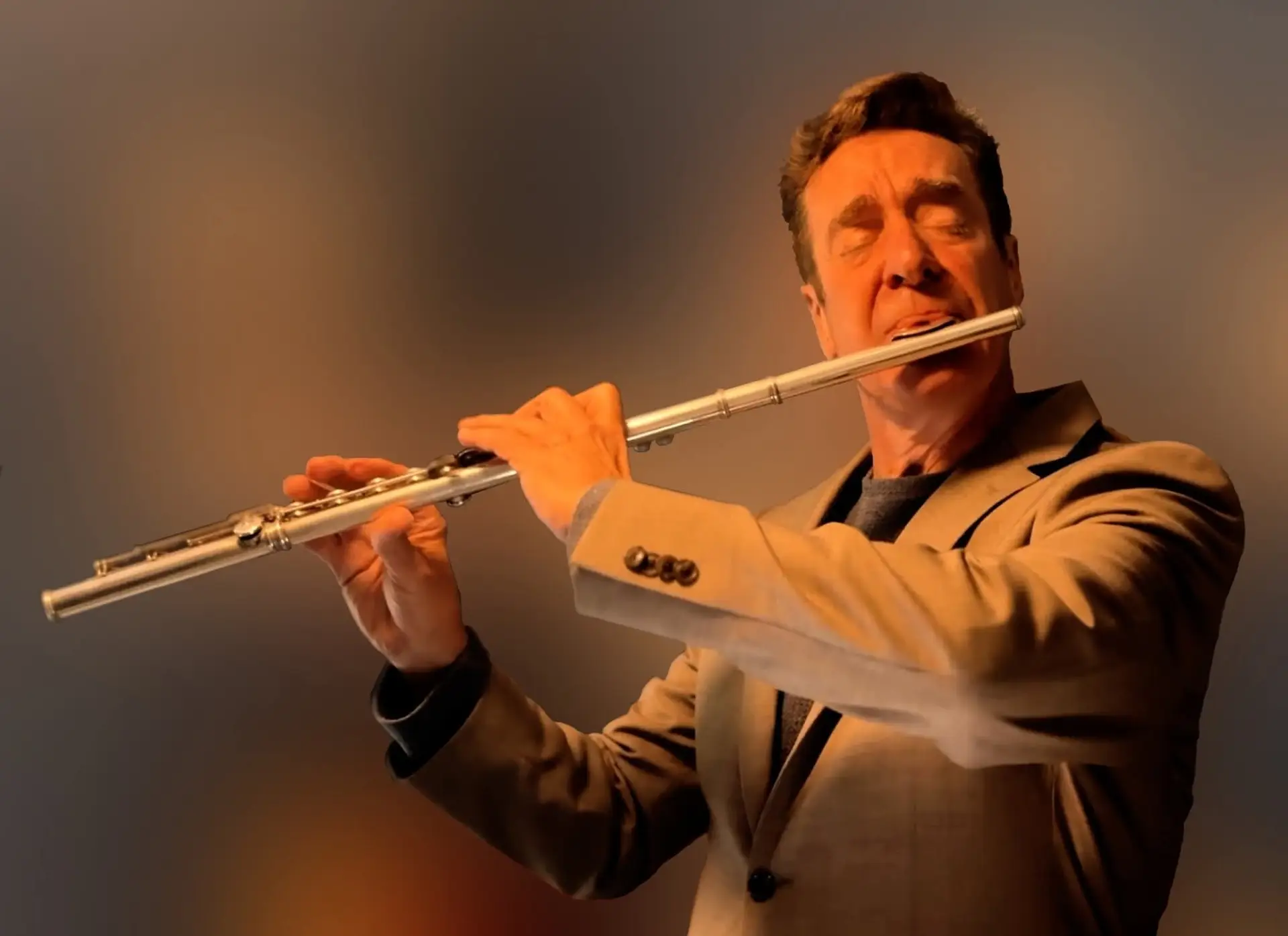
Flutist Robert Cart is an international soloist and chamber musician, performing throughout Europe, Asia, and the Americas at venues including Carnegie Hall, The Kennedy Center, and the Library of Congress, as well as festivals such as Tanglewood, Ravello, Wolftrap, and Aldeburgh. He has premiered over 50 works by composers including Jennifer Higdon, Gary Schocker, and Sergi Casanelles, and is featured on upcoming recordings with Albany and Centaur Records.
Cart is the founding flutist of the Marrazza-Cart Duo and Éxi Chéria Trio, teaches at Blue Lake Fine Arts Camp, and serves as Executive Director of the Marcel Moyse Society. He also holds leadership roles with the Flute Society of Washington (DC) and the National Flute Association. A published scholar on bel canto-inspired flute pedagogy, he presents masterclasses worldwide as a Powell Flutes Artist. Dr. Cart earned his MM from Indiana University Jacobs School of Music and DMA from the University of Maryland, studying with Francis Fuge, Peter Lloyd, James Pellerite, and Gary Schocker. He performs on a 1938 Verne Q. Powell flute and has served over 25 years as a professor.
To learn more about Robert Cart and the Hope Will Never Be Silent series, visit www.robertcartflute.com.
Upcoming performances of recitals in this series include:
October 11, 2025
New Jersey Flute Society
Robert Cart (flute) and Steven W. Ryan (piano) in a recital of works to include Walter Benedict’s Humoresque, Samuel Barber’s Canzone, Jake Heggie’s Soliloquy, and the world premiere of Benedict’s Sonata in E flat major, at the Flute Society of New Jersey’s Flute Fair.
October 19, 2025
Mohican Hills Concert Series, Bethesda, MD.
Robert Cart (flute) and Regina DiMedio Marrazza (piano) will be perform music of Samuel Barber, Leonard Bernstein, Fania Chapiro, Jake Heggie, and Florence Price at the Mohican Hills Concert Series in Bethesda, MD.
November 14, 2025
Trinity Concerts, Pleasanton, CA
Robert Cart (flute) and Miles Graber (piano) will perform music of Miguel del Aguila, Samuel Barber, Walter Benedict, Fania Chapiro, Charles Griffes, and Robert Musczynski at Trinity Concerts in Pleasanton, CA
November 16, 2025
St. Paul’s Concert Series, Walnut Creek, CA
Robert Cart (flute) and Miles Graber (piano) will perform music of Miguel del Aguila, Samuel Barber, Walter Benedict, Fania Chapiro, Charles Griffes, and Robert Musczynski at St. Paul’s Concert Series in Walnut Creek, CA
December 14, 2025
Second Sunday, Montclair, NJ
Robert Cart (flute) and Regina DiMedio Marrazza (piano) will be perform music of Samuel Barber, Walter Benedict, Fania Chapiro, Jake Heggie, and Florence Price at the Van Vleck House and Gardens in Montclair, NJ
January 27, 2026
Epiphany Tuesday Concert Series, Washington, DC
Robert Cart (flute) and Regina DiMedio Marrazza (piano) will be perform music of Samuel Barber, Walter Benedict, Fania Chapiro, Jake Heggie, and Florence Price at the Church of the Epiphany Tuesday Concert Series in Washington, DC
February 6, 2026
Timucua Arts Foundation, Orlando, FL
Robert Cart (flute) and TBD (piano) will perform music of Miguel del Aguila, Samuel Barber, Walter Benedict, Fania Chapiro, Charles Griffes, and Robert Musczynski at the Timucua Arts Foundation in Orlando, FL
March 29, 2026
Boca Raton Museum of Art, Boca Raton, FL
Robert Cart (flute) and Lisa Leonard (piano) will perform music of Miguel del Aguila, Samuel Barber, Walter Benedict, Fania Chapiro, Charles Griffes, and Robert Musczynski at the Boca Raton Museum of Art in Boca Raton, FL
April 12, 2026
Friends of Music Concert Series, Camdem, ME
Robert Cart (flute) and Matthew Mainster (piano) will perform music of Miguel del Aguila, Samuel Barber, Walter Benedict, Fania Chapiro, Charles Griffes, and Robert Musczynski perform at the Friends of Music Concert Series in Camdem, ME. For more information, visit https://camdenucc.org/worshipping-together/music/
October 2026
London, England (Time and Date TBD)
Robert Cart (flute) and TBD (piano) will perform music of Miguel del Aguila, Samuel Barber, Walter Benedict, Fania Chapiro, Charles Griffes, and Robert Musczynski perform at London’s Regent Hall
October 2026
London, England
Robert Cart (flute) and TBD (piano) will perform music of Miguel del Aguila, Samuel Barber, Walter Benedict, Fania Chapiro, Charles Griffes, and Robert Musczynski perform at St. Bride’s Fleet Street London, England (Time and Date TBD)
February, 2026
London, England
Robert Cart (flute) and TBD (piano) will perform music of Miguel del Aguila, Samuel Barber, Walter Benedict, Fania Chapiro, Charles Griffes, and Robert Musczynski perform at Charlton House. (Time and Date TBD)