Editorial Introduction
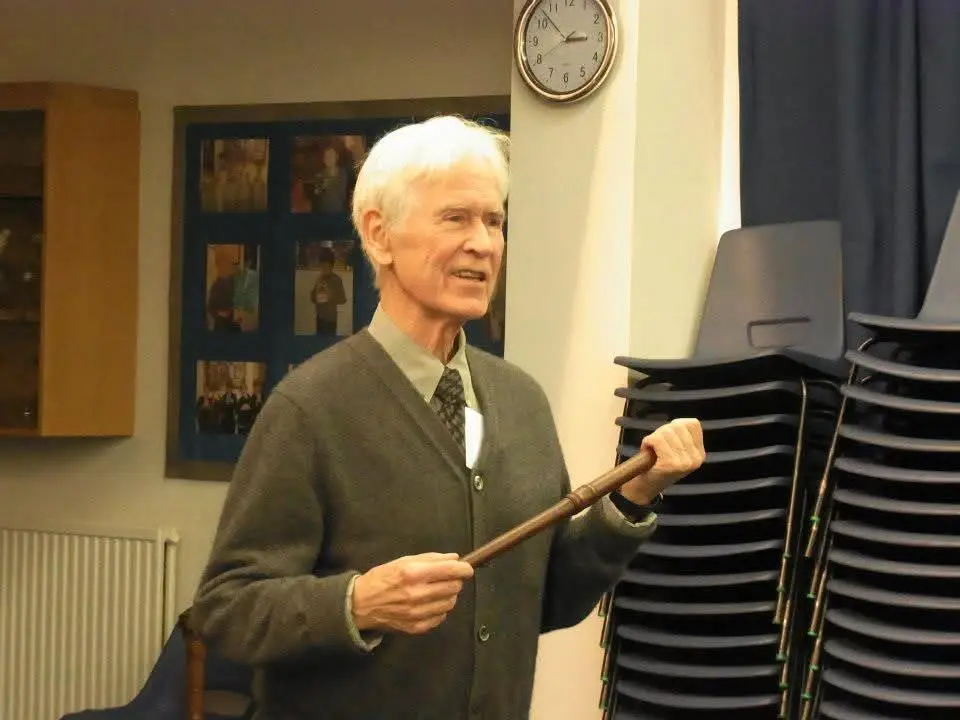
Maurice Sharp stands as one of the most quietly influential figures in American flute history. For more than four decades as principal flute of The Cleveland Orchestra under George Szell, he shaped a sound ideal that was at once clear, disciplined, and unmistakably individual. Trained by both William Kincaid and Georges Barrère, Sharp embodied a rare lineage connecting the French school, early American orchestral tradition, and the emerging modern flute aesthetic of the twentieth century.
Yet his greatest legacy may lie not only in his orchestral career, but in his teaching. Sharp formed generations of flutists through a deeply personal, exacting, and uncompromising approach to sound, intonation, rhythm, and musical responsibility. His studio was a place where fundamentals were not abstract concepts but living principles, learned through listening, imitation, and relentless refinement.
The following account offers a rare inside view of Maurice Sharp as pedagogue, musician, and human being—seen through the eyes of a student shaped by years of close study. It is not only a portrait of a great American flutist, but a testament to a tradition of sound and thinking that continues to resonate far beyond his lifetime.
When I was thirteen years old my family moved from the inner city of Chicago to Cleveland, Ohio. For the first time, I had the opportunity to participate in a band program, and it was easy for me to pick an instrument. My grandfather was an amateur musician, and I often heard him play the flute when I visited him. Though he was born in Switzerland, he lived in Puerto Rico, and this meant that hearing him play with string trios, pianos and orchestras brought to life by Music Minus One lps as I went to sleep at night, audibly reinforced the exotic quality of my being there, so many miles away from Chicago.
As I began the band program my grandfather sent me one of his two Lebret flutes to have, and I started taking lessons at the Cleveland Music School Settlement. My teacher there was Cleophus Lyons, and after studying with him for about two months he told me that he wanted me to change teachers. I was really surprised, and I asked him if I had disappointed him. “No, you haven’t.”, he said, and while refusing my request to keep studying with him, he simply said that this new teacher would be better for me. I asked for the person’s name and phone number, but he told me that I had to try out to study with this person before I could set up any lessons. This was a completely new concept to me, and I asked him how it was possible that people had to try out to pay for flute lessons. He chuckled at the question but only answered that he had arranged for us to meet this person at the Cleveland Institute of Music the following Saturday morning, adding that I should pick out a favorite etude or two to play that day.
That Saturday I rode my three-speed Raleigh to the Institute and waited in a lounge with Mr. Lyons until a white-haired gentleman carrying a briefcase arrived and we were introduced. His name was Maurice Sharp. I had no idea who he was; that he had played principal flute with the Cleveland Orchestra for the past forty years or so, that he had grown up in Sheridan, Wyoming and had ordered his first flute from a mail order catalog after watching a marching band play, that he was self-taught until he began taking flute lessons at the age of eighteen in Philadelphia with William Kincaid at the Curtis Institute of Music and, concurrently, in New York City as a private student with George Barrere, and that after three years of studies he had been hired to play in Cleveland by the conductor Arthur Rodzinski.
Mr. Sharp was very polite and listened to me play two or three etudes while he smoked a cigarette. He asked me a couple of times when I had begun playing the flute and then he wrote his home address (3266 Aberdeen Dr in Shaker Heights) on the inside cover of my etude book, Luigi Hugues “Forty Exercises Opus 101”, saying that he expected me to come to my first lesson with him that following Sunday at nine-thirty in the morning. He also inquired about how my mother supported our family and told me that he would charge me one-quarter of his usual hourly lesson fee, that my lessons would be longer than one hour, and that if anyone asked what they cost, I should avoid giving them an answer.
I always handed Mr. Sharp the Sunday paper when I arrived for my lessons at his home and he often greeted me with shaving cream on his face, quickly retiring to the back of the house to finish washing up while I warmed up for my lessons in his sunroom. I studied with him while I was in high school and through my second to fourth years as an undergraduate student at the Cleveland Institute of Music.
Lessons always began with technical work. One of the first things that he taught me was how to hold the flute using one hand at a time. Doing this, according to him, allowed the hand with the most finger motion to remain as relaxed as possible while the other hand “supported” the instrument. He also showed me finger exercises to do while holding the flute (without playing), and finger exercises to do without the flute, all for the purpose of developing more independence between them. Mr. Sharp had the uncanny ability to tap out polyrhythms between his two hands and, believe it or not, he could do the same with different fingers on the same hand. (He could also solfege and transpose anything set before him.)
Rather than use technique books such as Taffanel and Gaubert’s Daily Exercises or Riechert’s Seven Daily Exercises, he taught me all manner of diatonic and non-diatonic interval and scale patterns by ear. Each week I would fumble along until I eventually grasped a newly introduced pattern, and he would then say, “Okay, for next week learn this pattern on each chromatic step from low B to high D.” The following week we would then play these assignments together, in unison and at different major, minor and perfect interval distances between the two of us. If I did this work successfully, he would present me with another pattern to learn. He never ran out of new patterns to teach, and he had an encyclopedic knowledge of alternate fingerings which he always insisted that I write down. His favorite etude books were by Karg-Elert, Donjon, Bitsch, Casterede, Jean Jean, and Genzmer. Etude compilations comprised of transcriptions of Bach’s music were also great favorites of his.
In addition to technique, Mr. Sharp was fascinated by tuning. He had several tuning bars in his sunroom, and he taught me how to make them ring sympathetically by matching their pitch when playing the flute. We spent many hours tuning intervals to produce the correct resultant tones, and we would often size the same interval in more than one way to produce different resultant tones. These changes in interval sizes related to the proper placement and proportions between the notes within a scale and the harmonies that they implied. Because every note had a role defined by its placement within a scale, he always made the point that enharmonically spelled notes were not to be played identically, a B flat could never be an A sharp. Adjusting pitch was done primarily by raising or lowering the chin, though alternate fingerings were occasionally used for the same purpose. When there were intonation problems during an orchestra performance, Mr. Sharp maintained, with the hint of a smile, that they had been caused by unusual atmospheric conditions in the area during the concert.
The second half of my lessons were always spent on orchestral excerpts and compositions. Mr. Sharp was always exacting in terms of rhythm, pitch and context when it came to learning orchestral solos. He often quoted George Szell, his favorite conductor, advising me to, “Take care of all things technical and then add the music.” (I reversed those priorities when I taught flute lessons). Edited compilations of orchestral studies became a large part of my personal music library. He liked and was most comfortable with works from the first half of the 20th century works, teaching me compositions by Griffes, Honegger, Foote, Kennan, Hanson, Bartok, and Hindemith (to name a few). Solo flute works such as Syrinx, Ache Stucke, Oiseaux Tendre, Danse de la Chevre and the like were also standard fare. He did not care to work on compositions written in the second half of the 20th century. When I brought Berio’s Sequenza to a lesson he was at a loss, and the same could be said, for example, when I brought in Messiaen’s La Merle Noir. Non-traditional sounds such as key clicks or singing while playing the flute were ridiculous to him and he told me that he would invariably shake his key ring in the orchestra instead of clicking his flute keys if that was called for. He also had no interest in the performance practice movement which was just getting underway in the seventies. At one point I brought a baroque flute into a lesson and after I played it for him, he stated, with a mischievous smile and a cigarette in his hand, that hearing the one-keyed flute made it wonderfully clear why so much progress in the design of the flute had taken place over the last two hundred years.

Waiting for lessons to begin, I often heard him practicing orchestra solos in his studio at the Institute of Music. One time he showed me a solo that he had to play that evening, saying that he was not happy with how he was playing it. Assuming that he might not be able to fix the problem, he said that, at the very least, he would “…make his mistake very well that night.”
Mr. Sharp never spoke poorly of any of his colleagues, and he never spoke about other students. He did mention that he did not like Vivaldi’s music because it was too repetitive and he thought that William Walton’s music was boring. He did not like opera singers or opera music, so I never brought Marcel Moyse’s, “Tone Development Through Interpretation” which was full of operatic arias to any of my lessons.
I have always been grateful for Mr. Sharp’s understanding of my “wandering about” as a young man. Rather than attending the Cleveland Institute of Music for my first year in college, I went to the Manhattan School of Music where I had a full scholarship and where I studied with Harold Bennett. It turns out that Harold Bennett had also grown up in Wyoming, that he had studied the flute there with Mr. Sharp, and that he had also attended the Curtis Institute after leaving Wyoming. I transferred to the Cleveland Institute of Music after a disappointing year in New York and Mr. Sharp never questioned me about it, he simply welcomed me into his studio. I took another year-long “break” after my second year in college, when I left school to live and work on a farm. Following that year I once again returned to my studies at the Institute, and again, Mr. Sharp never questioned me about my decision making, though he did want to know if I had kept practicing the flute during that time.
One summer when I was an undergraduate student Mr. Sharp hired me to paint his home, so instead of biking there for flute lessons, I biked there to earn college money. In between jobs as an airplane pilot, his son, Richard, worked with me. We shared lunches and bantered back and forth while we scraped and painted the house. Mr. Sharp would often watch our progress, smoke cigarettes and share in our joke telling. While I never heard him practicing those days, most afternoons he drove off in his Mustang convertible to the Blossom Music Center (the summer home of the orchestra) for evening concerts.
Occasionally Mr. Sharp would speak about unrelated topics during our lessons. In particular I remember his asking me if I had read any books by the author Loren Eisley. He shared Eisley’s sense of awe and wonder regarding the immense passage of time in which we all play a very small part. He had also experienced considerable tragedy in his life; his parents died overnight during a fire while sleeping on board a passenger train and he had a brother who had drowned in a flash flood while fly fishing in Wyoming.
At one point I asked him what he remembered about studying with George Barrere and William Kincaid. He said that when he got to Curtis that he had to relearn everything because of his lack of lessons before then and he told me that he had never made a sound on the flute that came close to how beautiful Barrere’s sound was. Mr. Sharp also told me that Barrere told him that he wore a goatee so that he could dedicate his shaving time to practicing the flute. I often referenced this story whenever I came to a lesson looking like I needed to shave; Mr. Sharp would ask me if I was “short on blades”, and I would explain to him that I had neglected shaving simply because I had needed some extra time to prepare for my lesson, and that, no, I was not short on blades.
After I finished my degree at the Institute I found work in Mexico with the Orquestra Sinfonica de Xalapa, and the Sinfonica de Veracruz. Meeting, hearing and working with flute players from different backgrounds at that time further broadened my horizons, and I grew increasingly discontented with what I came to regard as the limited scope of both my sound and my flexibility on the flute. I realized that I “anchor tongued” when I played and that, throughout his career, so had Mr. Sharp. (See end note.) I never asked him about the practice or how he felt about it, but I was certain that if I continued anchor tonguing, I would be limiting myself. At the same time, I knew that by undertaking this type of change I was undoubtedly risking quite a bit of what I had achieved and that it would be unfair for me to expect Mr. Sharp to understand what I was attempting to do. Living and working in Mexico was an ideal place for me to start making those changes.
That same Fall, the personnel manager of the Cleveland Orchestra called me in Mexico and asked if I would like to join the Cleveland Orchestra as their interim second flute player. I never imagined myself in that position, and I could hardly do so even after the invitation to join the orchestra had been extended to me. I knew that filling the position would be intimidating, and I knew that an audition for the permanent second flute position would take place while I was there. I decided to use my anchor tonguing embouchure when playing with Mr. Sharp, and my fledgling non-anchor tonguing embouchure at other times.
During that time, Mr. Sharp invited me to call him Mo rather than Mr. Sharp, but I could never bring myself to do that, and I continued addressing him as Mr. Sharp. Perhaps if I had stayed in that position for more than one year, a more collegial rapport would have developed between the two of us, but I did not win the position. And so, when I left Cleveland, I saw myself as a favored student that had, at best, disappointed him.
Following that time, I completely moved on from anchor tonguing and later attended graduate school. During my first year there, Mr. Sharp’s son, Richard, called me to tell me that his dad had died, “He would have wanted you to know”, he said. I could not attend Mr. Sharp’s memorial service at the time and, though I have a recording of the service, I have never been able to bring myself to listen to it.
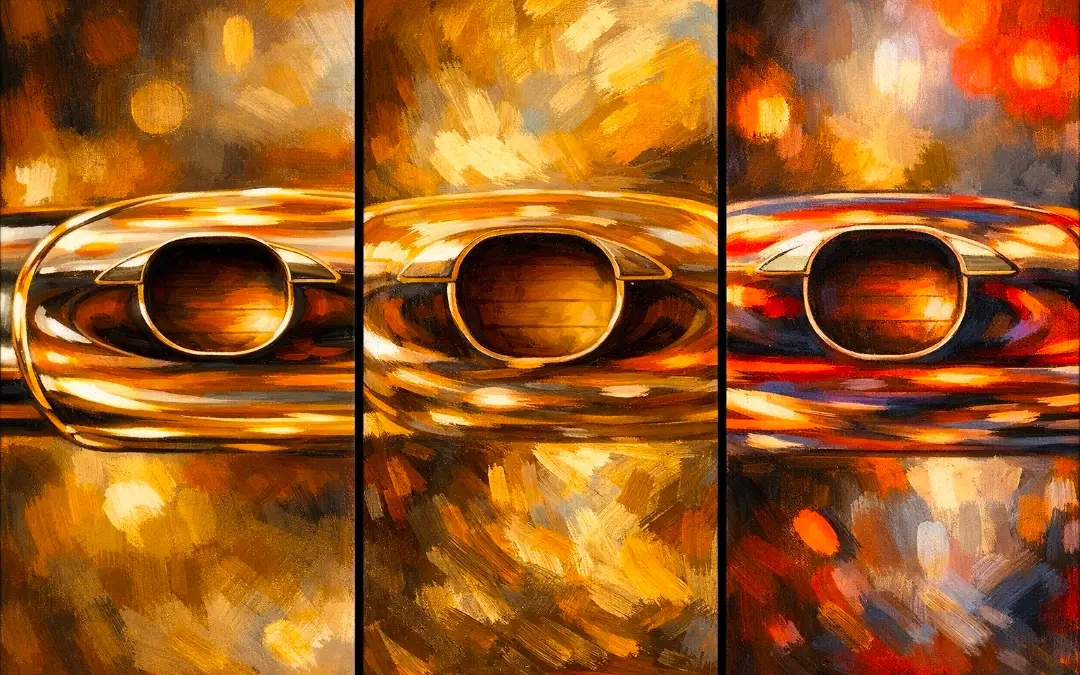
Mr. Sharp taught some very influential flute players during his career. In addition to Harold Bennett, Julius Baker and Thomas Nyfenger had been students of his. He was immensely proud of playing first flute under George Szell, telling me that Szell had once confided in him that he was the only flute player that he had heard who had such a clear, centered, and ringing sound. He played on a Haynes flute with a winged embouchure, and while he had a solid gold Haynes flute, his favored Haynes was a silver one that had a very, very thin wall. His sound did, indeed, ring throughout the flute range. Mostly he played without vibrato, and he advised me to do the same, saying that vibrato should not be used in lieu of producing a well-directed musical line. When he added vibrato to his sound, it was fast and narrow, primarily produced by shaking his hand and, now and then, produced from within his throat.
Today, when I listen to his recordings with the Cleveland Orchestra, I hear a sound that effortlessly clarifies any orchestral texture over which it floats. His playing remains unique; I have not heard that timbral quality or defining “ability” anywhere else. While he told me that he was not particularly fond of his solo recording, “Music for a Golden Flute”, he was very proud of his recordings as principal flute in the orchestra. When I want to remember his playing at its very best, I listen to the Cleveland Orchestra’s recording of W. A. Mozart’s, “Posthorn Serenade” in which he played principal flute, along with Martin Heilman on the second flute part, and John Mack as the principal oboe player. I also recommend listening to him play the extended flute solo that closes the third movement of Paul Hindemith’s, “Symphonic Metamorphosis”, also recorded with the Cleveland Orchestra and conducted by George Szell. Listening to these recordings reminds me of why I loved biking to his home on those Sunday mornings so many years ago and why, during that time, I was inspired to play the flute for a lifetime.
Griffes: Poem for Flute and Orchestra — Maurice Sharp with Cleveland Sinfonietta
Mozart: Posthorn Serenade, K. 320 — Maurice Sharp, flute solos
Hindemith: Symphonic Metamorphosis — Maurice Sharp, flute solo (III. Andantino at 13:50)
End Note: An article on anchor tonguing will follow in a future edition of the Flutists Almanac.
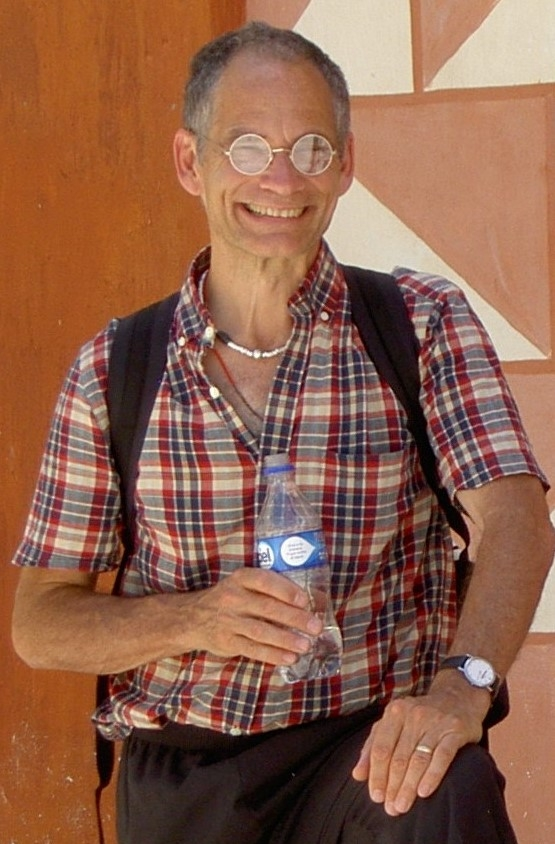
Tim Lane
Paper Route Press
Tim Lane is an Emeritus Professor at the University of Wisconsin-Eau Claire where he taught from 1989 – 2020. Prior to that he was a faculty member at Eastern Illinois University, the Interlochen Arts Camp, and the Cleveland Institute of Music Preparatory Department.
He has been a member of the Orquestra Sinfonica de Veracruz, Mexico, the Cleveland Orchestra, the Ohio Chamber Orchestra, and the Eau Claire Chamber Orchestra. He currently serves as the principal flute player with the Chippewa Valley Symphony Orchestra and operates “Paper Route Press” which specializes in unique and innovative flute-related publications. Mr. Lane attended high school at the Interlochen Arts Academy and earned his Bachelor of Music from Cleveland Institute of Music.
He later earned his Masters and Doctoral Degrees from University of Illinois at Urbana-Champaign. As a college-age student he studied the flute with Maurice Sharp, Harold Bennett, Alexander Murray, and Claude Monteux.