In the contemporary music world, visibility is often treated as a commodity. Exposure can be purchased, impressions can be boosted, and attention can be rented for a moment. Yet despite this abundance of advertising options, one distinction remains essential — and frequently misunderstood:
Recognition is not the same as advertising.
For flutists, composers, educators, publishers, and makers, understanding this difference is crucial to building a professional presence that is credible, respected, and lasting.
Advertising Buys Space. Recognition Builds Meaning.
Advertising is transactional by nature.
It purchases space, placement, and visibility — usually for a limited time and under predefined conditions.
An advertisement tells an audience:
- This exists.
- This is available.
- This is being promoted.
What it does not provide is interpretation, context, or evaluation.
Recognition, by contrast, is earned.
It emerges through editorial selection, framing, and thoughtful presentation. It answers not only what something is, but why it matters.
The Limits of Paid Exposure
Paid advertising plays a role, but it has clear limitations in artistic and professional fields:
- It does not carry independent judgment
- It does not imply endorsement or evaluation
- It is clearly marked as promotional
- Its lifespan ends when the campaign ends
For serious artistic work, this is often insufficient.
An album, a book, a method, a career milestone, or a research project is not simply a product — it is a contribution. Contributions require context.
Editorial Credibility Comes from Curation
Editorial platforms operate on a fundamentally different principle.
They rely on:
- Selection rather than purchase
- Framing rather than slogans
- Interpretation rather than claims
When a project is featured editorially, it enters a curated environment where credibility flows from the platform itself. The audience understands that the work has been examined, contextualized, and presented with intention.
This distinction matters deeply in the arts.
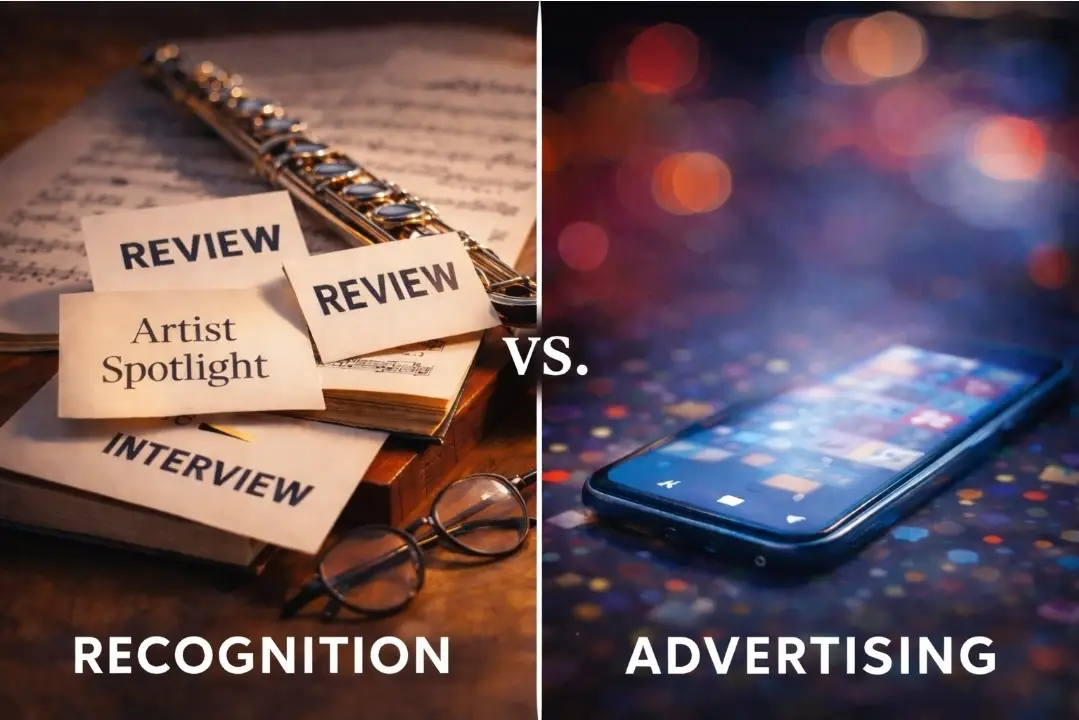
Artist Spotlights: More Than Visibility
An Artist Spotlight is not an advertisement.
It does not simply list achievements or promote upcoming events. Instead, it places an artist within a broader professional and artistic narrative — considering background, direction, values, and contribution.
The result is recognition, not promotion:
- A documented professional presence
- A narrative that can be referenced and revisited
- A profile that builds authority over time
Interviews: Context Through Voice
Interviews provide something advertising never can: voice and perspective.
Through conversation, readers gain insight into:
- Artistic choices
- Creative processes
- Educational philosophies
- Long-term visions

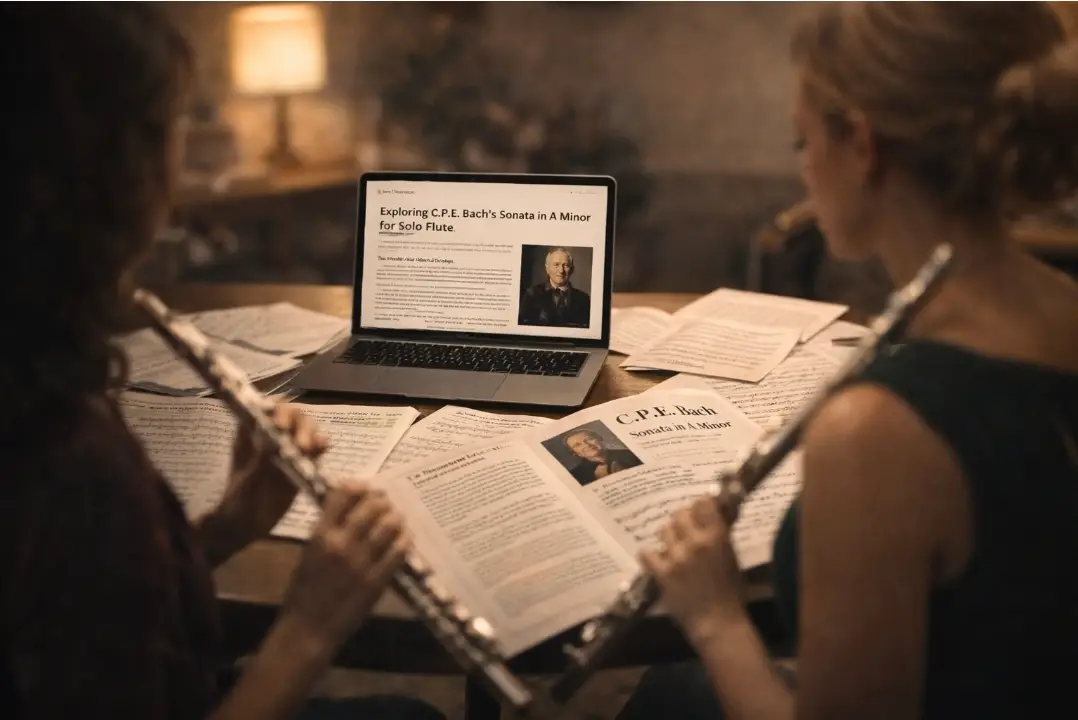
An interview establishes trust not through claims, but through thoughtful exchange. It allows the subject to be understood — not just noticed.
Reviews: Interpretation, Not Endorsement
Reviews occupy a particularly important space in the recognition ecosystem.
A review is not a sales tool. It is an act of interpretation.
Whether addressing an album, a book, a method, or a product, a review:
- Situates the work within its field
- Articulates its purpose and significance
- Engages critically and constructively
This is precisely why reviews carry weight — and why they cannot be bought in the same way advertising space can.
Why This Distinction Matters
In an age saturated with promotion, credibility has become rare.
Audiences increasingly recognize the difference between:
- Being told something is valuable
- Being shown why it is valuable
Recognition answers the second.
It is slower, more deliberate, and more enduring — but it is also far more powerful.
Editorial Platforms as Spaces of Trust
Editorial platforms like Flute Almanac exist to protect this distinction.
They provide:
- A curated environment
- Clear separation between editorial content and advertising
- Long-term documentation rather than short-term exposure
In doing so, they serve not only today’s audience, but the future record of the flute world.
When a Project Calls for Editorial Presentation
Credibility is earned through:
- Context
- Curation
- Editorial integrity
Editorial recognition carries responsibility.
Artist Spotlights, interviews, and reviews require time, expertise, research, editorial judgment, and platform resources. Each feature involves careful preparation, thoughtful writing, editing, publication, and long-term hosting within a trusted professional environment.
For this reason, when an individual, publisher, institution, or company wishes to highlight a specific project, release, or professional profile, these editorial services are offered as –> paid professional services.
This ensures that the work is:
- Prepared with the depth and care it deserves
- Presented with editorial integrity
- Sustained as part of a permanent, searchable archive
Payment does not purchase praise — it supports the editorial labor, expertise, and infrastructure that make meaningful recognition possible.
Recognition with Integrity
Flute Almanac maintains a clear distinction between editorial standards and financial support.
What is supported is not advertising, but professional documentation — carried out responsibly, transparently, and at a level appropriate to the global flute community.
Recommended products

This article is part of an ongoing Flute Almanac editorial series exploring visibility, recognition, and professional presence in the flute world. Future articles will examine the role of reviews, directories, documentation, and long-term discoverability.