In an era dominated by instant announcements and fast-moving content, most musical promotion is designed to be seen once — and forgotten quickly. Concert posts disappear. Release news fades. Even strong performances are often reduced to fleeting impressions.
Repertoire, however, works on a different timeline.
When thoughtfully documented, repertoire does not expire. It accumulates relevance. And one of the most effective ways to ensure that longevity is through in-depth repertoire articles.
Repertoire Lives Where Search Lives
Students, teachers, and performers search differently than casual audiences. They are not looking for headlines — they are looking for answers.
Common searches include:
- “How to interpret…”
- “Background of…”
- “Technical challenges in…”
- “Best pieces for…”
Repertoire articles meet these needs directly. They become reference points rather than promotions. Years after publication, they continue to be discovered — not because they are trending, but because they are useful.
Searchability turns repertoire writing into a form of cultural preservation.
Pedagogy Needs Written Context
Repertoire is learned, taught, and passed on through explanation. Even the most familiar works require guidance:
- Historical background
- Stylistic considerations
- Technical and musical challenges
- Interpretive traditions and choices
When these elements are documented in a clear, structured way, repertoire articles become teaching tools. They support lesson planning, studio work, and self-guided study — extending their impact far beyond a single readership moment.
This pedagogical value is what gives repertoire articles their long life.
Performance Benefits from Depth
Performers return to repertoire articles not once, but repeatedly — before auditions, recitals, competitions, or premieres. A well-written feature offers:
- Context that informs interpretation
- Insight that shapes musical decisions
- Language that helps performers articulate their ideas
This depth creates trust. Articles that respect the complexity of the music become part of the performer’s preparation process, not just their browsing history.
Why Repertoire Articles Outperform Announcements


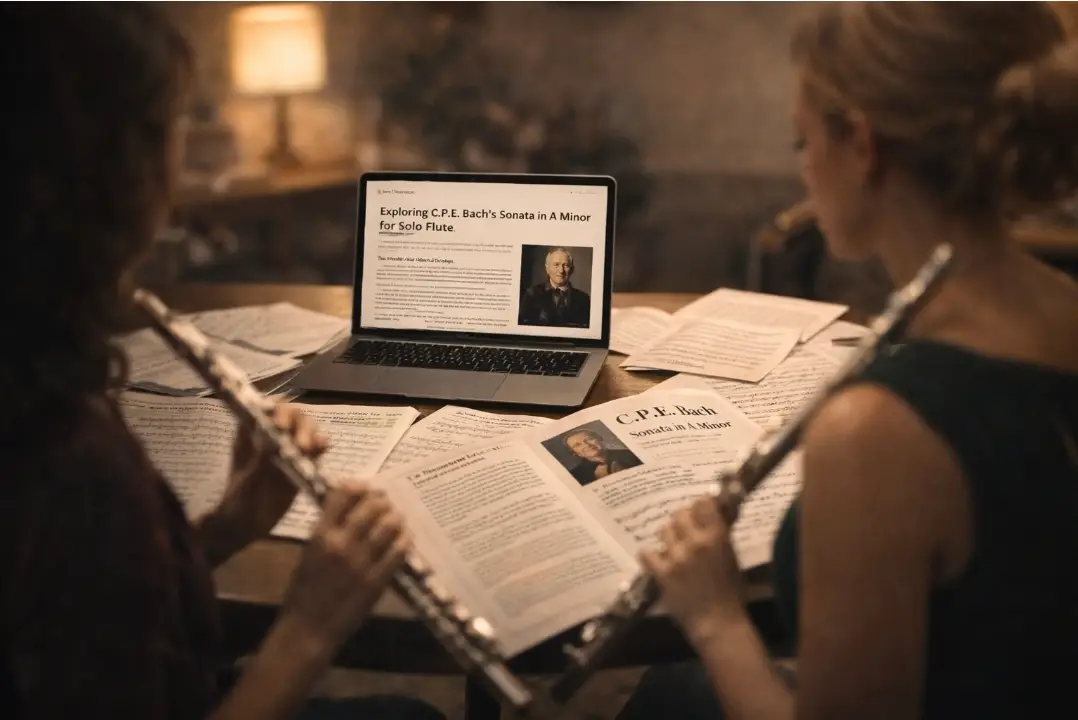
Unlike news items, repertoire features are not tied to dates. Their relevance grows rather than diminishes.
A single repertoire article can:
- Serve students at different stages
- Support teachers across generations
- Accompany performers throughout their careers
This is long-term visibility in its most meaningful form — visibility rooted in understanding rather than exposure.
Editorial Framing Makes the Difference
Not all repertoire writing achieves this impact. The difference lies in editorial framing.
Effective repertoire features:
- Are written by knowledgeable specialists
- Balance scholarship with practical insight
- Speak to students, teachers, and performers simultaneously
- Present the work as a living part of the repertoire, not a museum piece
This approach ensures that the article remains relevant even as performance practices evolve.
Flute Repertoire Feature Sponsorship
At Flute Almanac, Flute Repertoire Feature Sponsorship is designed to give important works the visibility they deserve — not for a week, but for years.
These sponsored features offer:
- In-depth, search-optimized repertoire articles
- Pedagogical and performance-oriented perspectives
- Placement within a trusted, flute-focused editorial environment
The goal is not advertising. It is documentation, education, and long-term discovery.
Repertoire survives through teaching, performance, and writing.
When music is thoughtfully documented, it continues to speak — long after the concert ends.
→ Explore Flute Repertoire Feature Sponsorship
Recommended products


This article is part of an ongoing Flute Almanac editorial series exploring visibility, recognition, and professional presence in the flute world. Future articles will examine discoverability, documentation, and the role of editorial platforms in preserving artistic work.