On January 17, 2026, Ronna Ayscue presented an extraordinary solo concert at Saint Mark’s Episcopal Church, an event that immediately stood out as a highly significant flute performance at the opening of the new year.
Set within the soaring acoustics and luminous architecture of this historic church, the concert was not merely a recital but a large-scale artistic statement — one that demanded exceptional stamina, intellectual focus, stylistic command, and musical integrity from its principal artist.
A Program of Rare Scope and Artistic Courage
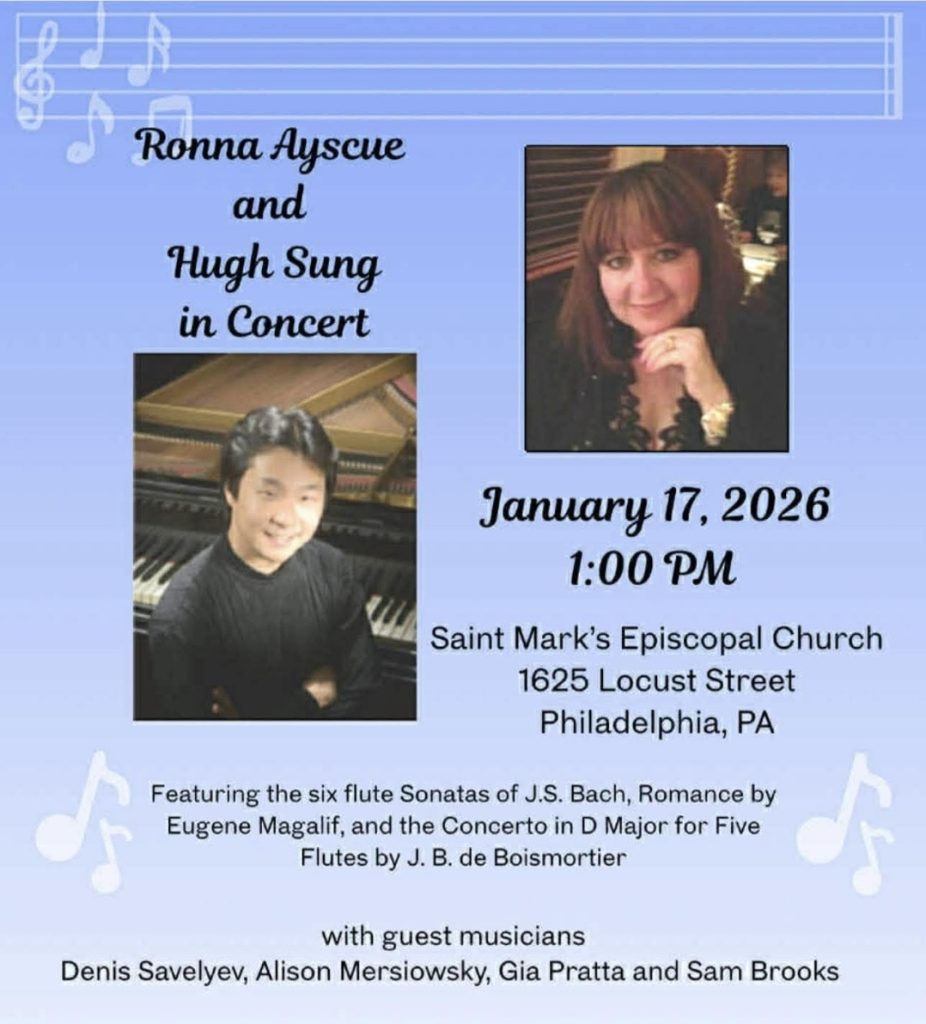
At the heart of the program was one of the most formidable undertakings in the flute repertoire: the complete cycle of six flute sonatas by Johann Sebastian Bach.
Performing all six sonatas in a single concert is a rare and courageous decision, requiring not only technical endurance but a deep understanding of Bach’s contrasting affective worlds, structural clarity, and rhetorical nuance. Ayscue’s interpretation revealed a profound relationship with this repertoire — shaped by decades of artistic maturity, stylistic insight, and unwavering musical purpose.
She was joined in these works by pianist Hugh Sung, whose refined, responsive collaboration provided both elegance and architectural support throughout the Bach cycle.
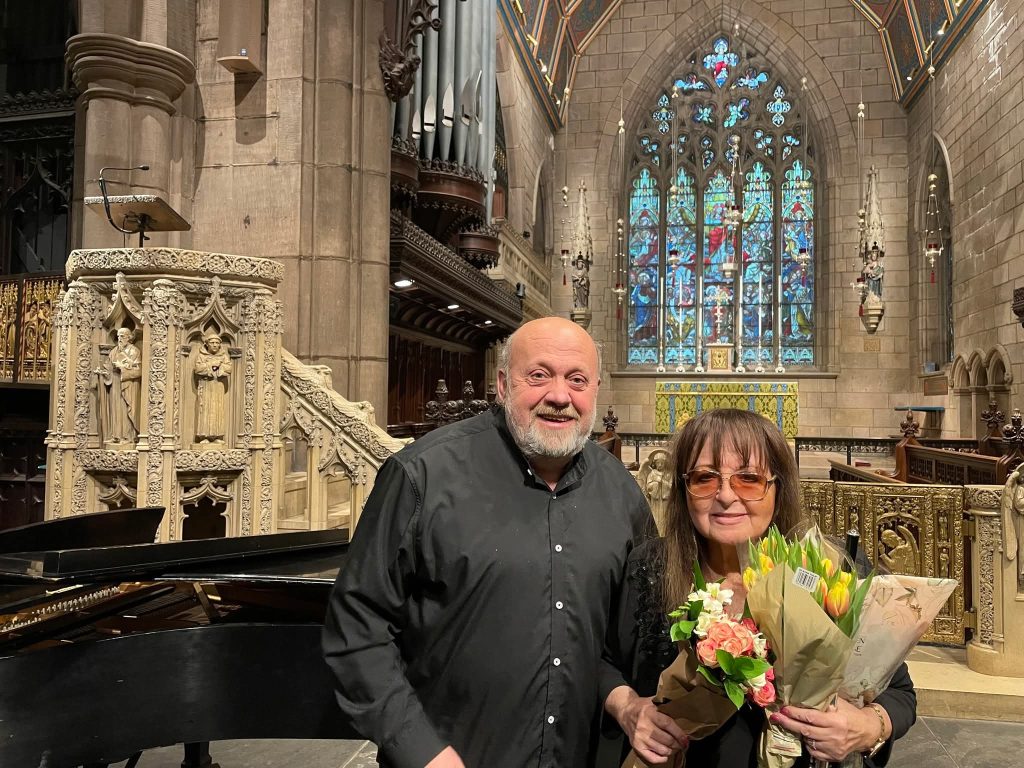
Eugene Magalif’s Romance — Composer at the Piano
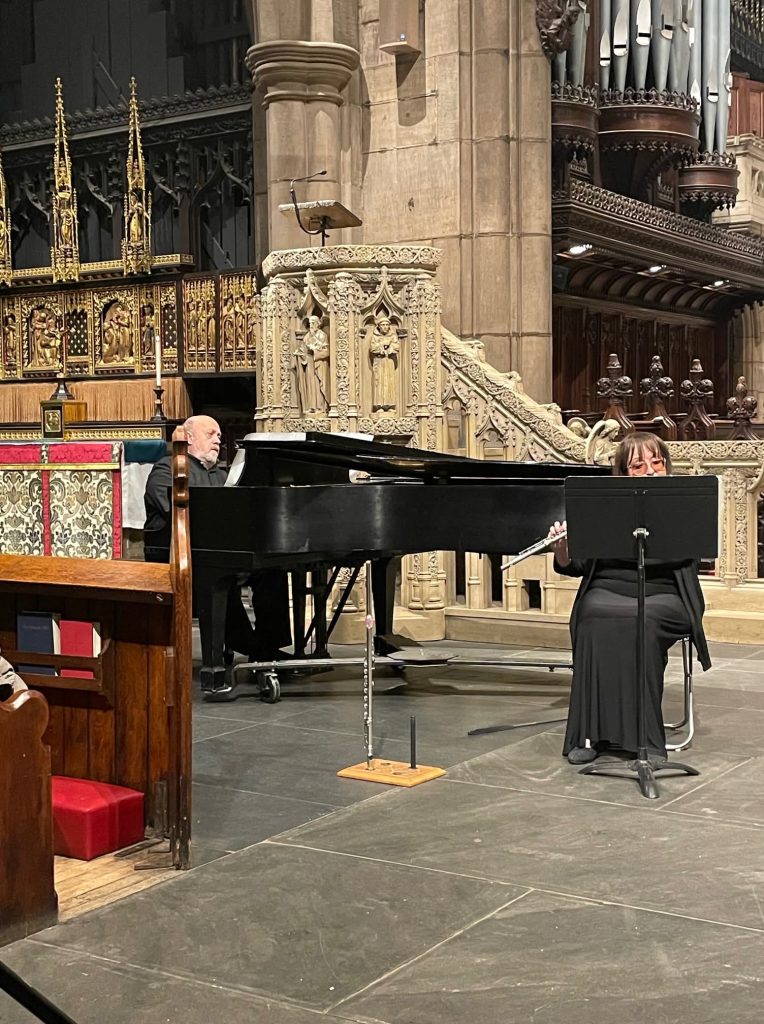
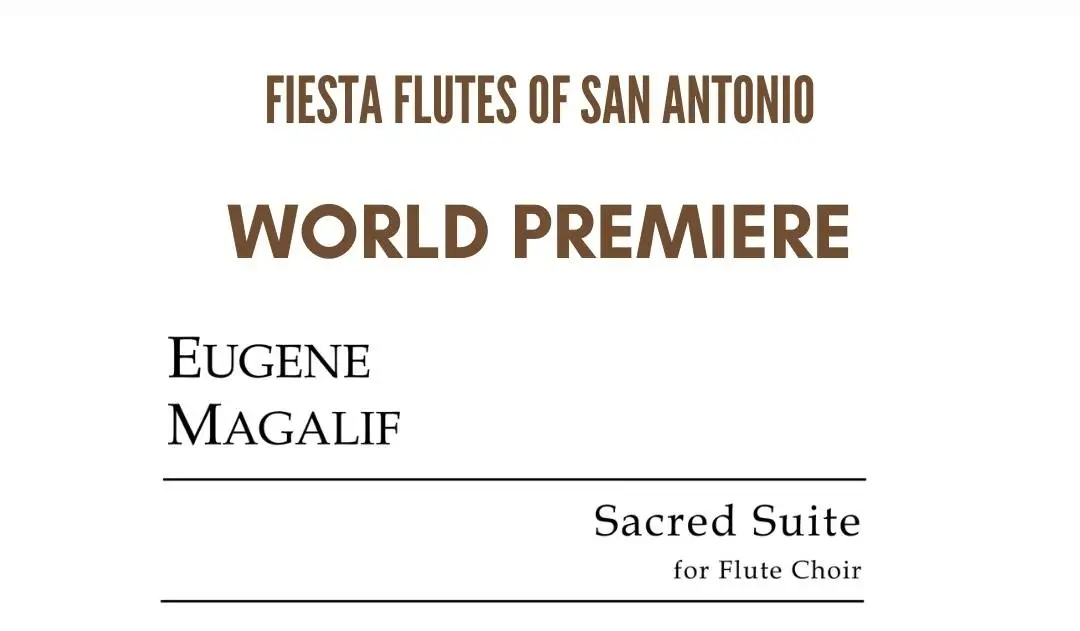
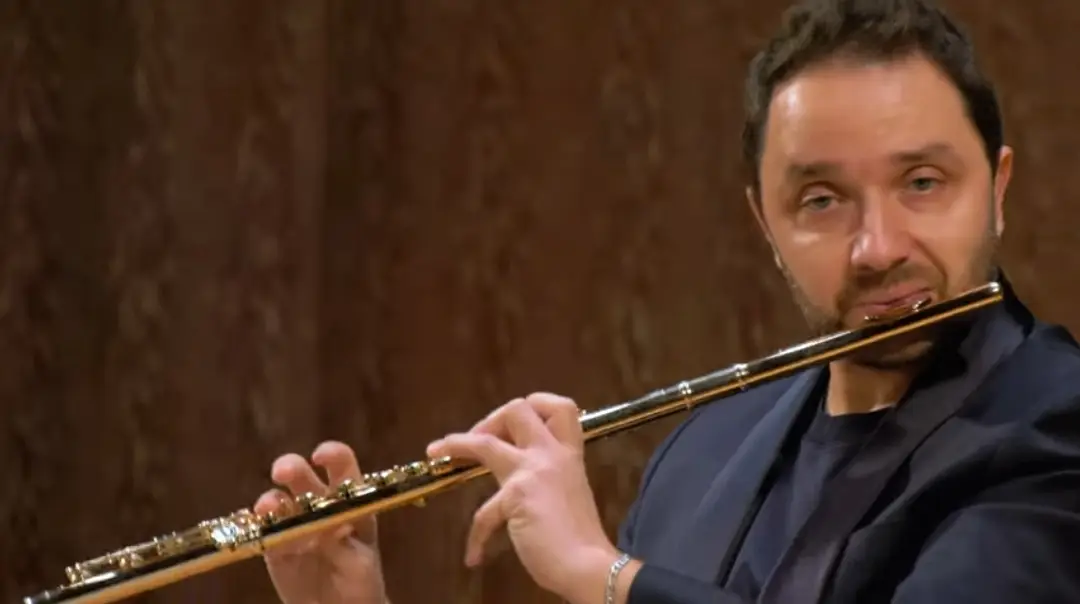
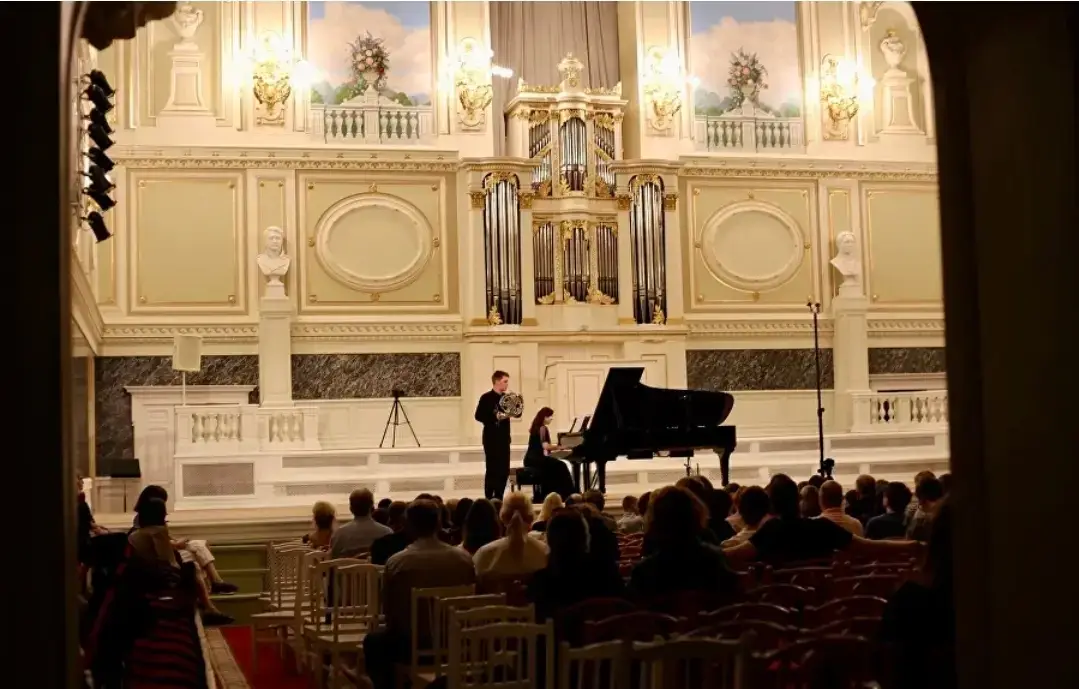
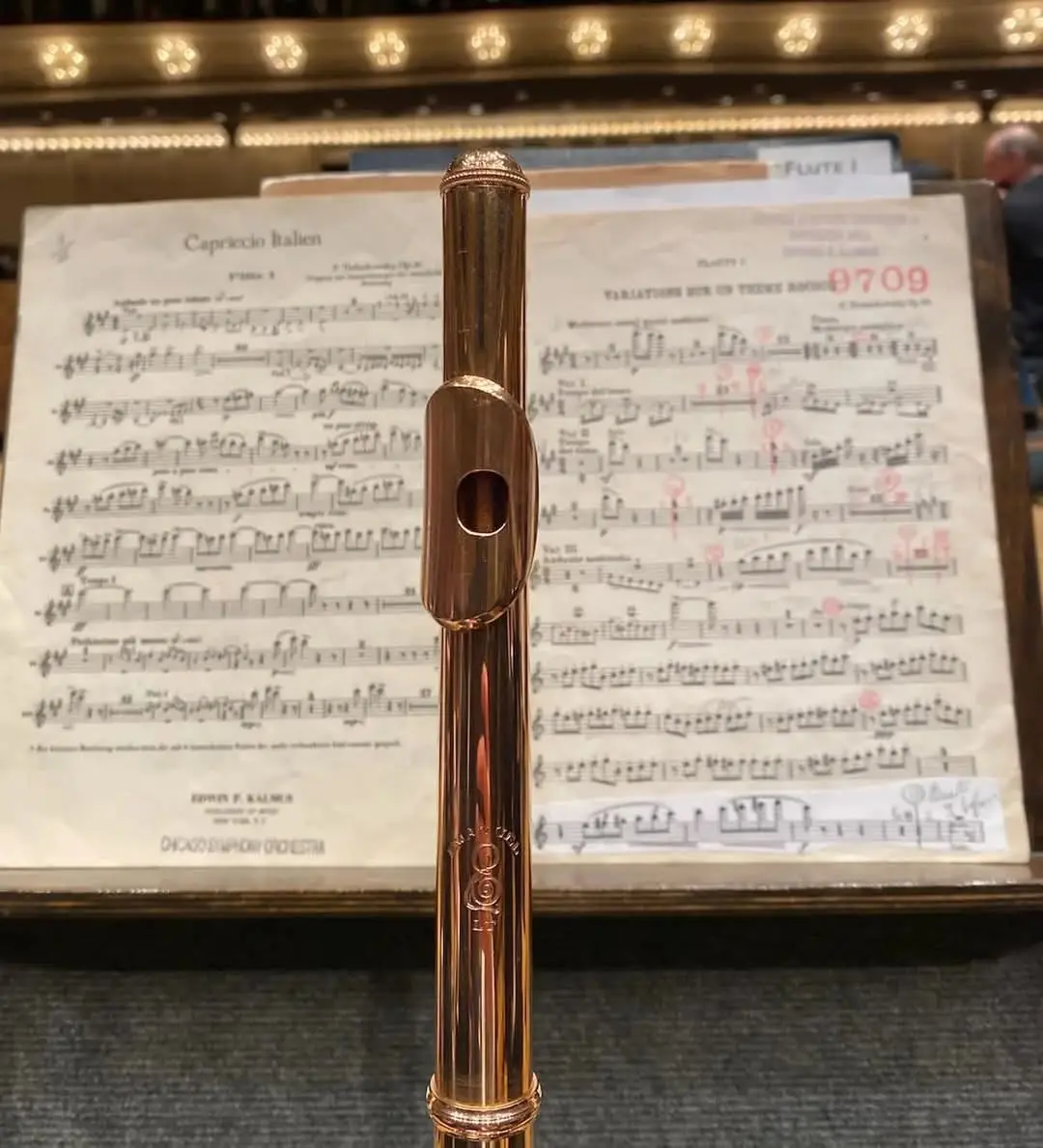
A deeply personal and moving moment of the concert came with the performance of Romance by Eugene Magalif, a distinguished composer whose music has been performed internationally and embraced by leading performers across continents.
What made this moment especially powerful was Magalif’s presence at the piano himself, partnering Ayscue in a performance that felt intimate, conversational, and emotionally direct.
The work unfolded with lyric warmth and expressive depth, allowing the audience to witness a rare communion between composer and interpreter — an exchange of trust, friendship, and shared artistic language.
Ensemble Collaboration and Pedagogical Legacy
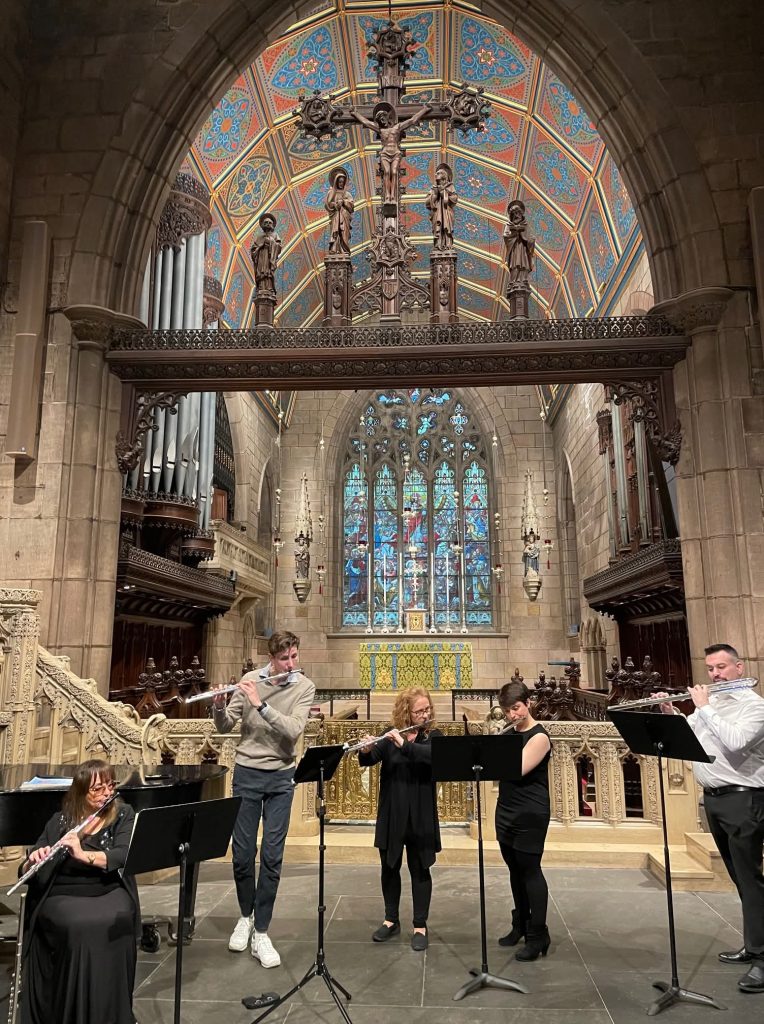
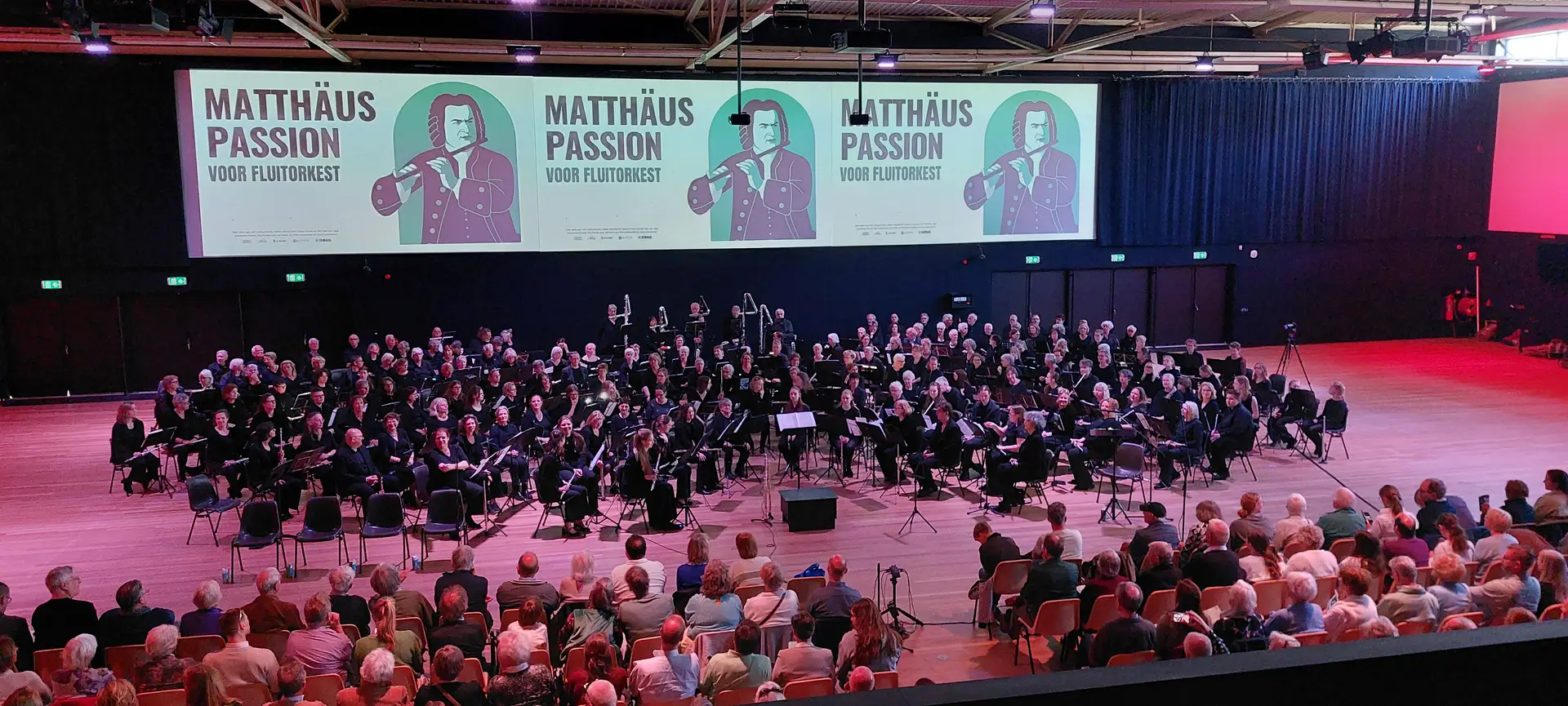
The program concluded with the Concerto in D Major for Five Flutes by Joseph Bodin de Boismortier, performed with four distinguished guest flutists:
Denis Savelyev, Alison Mersiowsky, Gia Pratta, and Sam Brooks on bass flute.
This finale was more than an ensemble piece — it was a celebration of artistic lineage, mentorship, and shared musical values. The collaboration underscored Ayscue’s lasting influence not only as a performer but as a guiding force within the flute community.
A Concert of Lasting Significance
This was not a routine recital. It was a major musical event, distinguished by the scale of its program, the level of artistry involved, and the depth of its expressive intent. The audience witnessed a performance shaped by experience, discipline, and unwavering dedication to musical truth — qualities that cannot be rushed or manufactured.
Ronna Ayscue’s Philadelphia concert stood as a testament to artistic longevity, intellectual courage, and the enduring power of serious musicianship. It was an evening that resonated far beyond its final notes, affirming that the highest level of performance is defined not by spectacle, but by substance, clarity, and purpose.