Buying a flute can be a major investment, but with the right approach, you can find a great instrument without overspending. Whether you’re a beginner, a parent, or a professional upgrading your setup, here’s how to make the smartest purchase possible – while saving money.
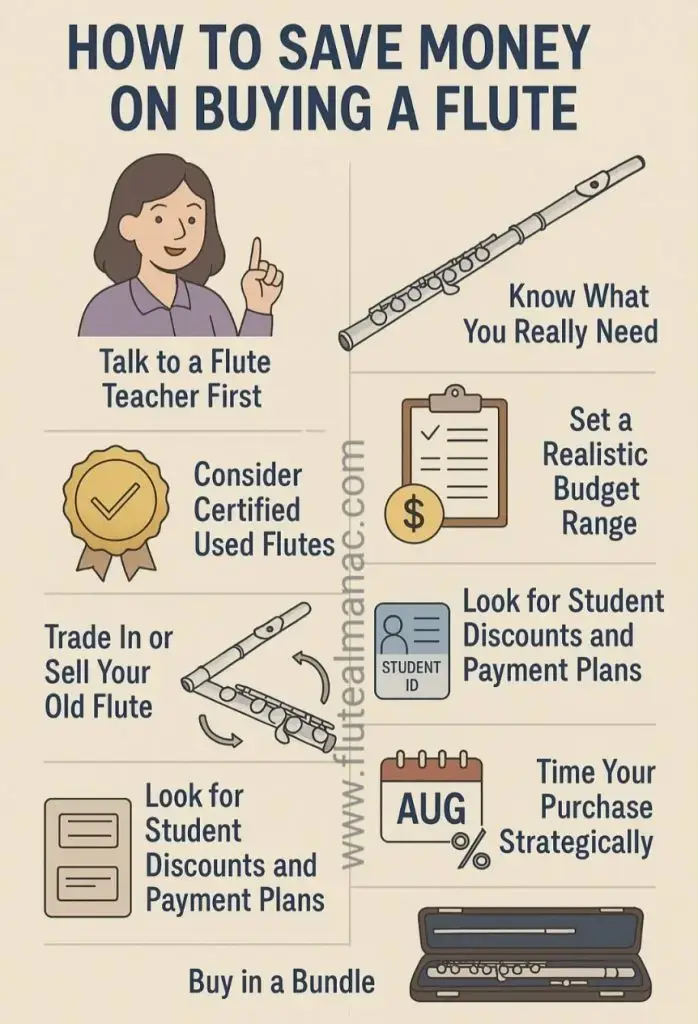
1. Talk to a Flute Teacher First
Before you begin searching or comparing prices, consult a qualified flute teacher. This is one of the most important (and often overlooked) steps.
A teacher can:
- Recommend the right flute level and features for you or your child
- Help you avoid common mistakes
- Suggest specific models or brands that offer great value
- Connect you with students or colleagues selling reliable used flutes
- Sometimes provide access to educator discounts from music stores
This expert advice could save you hundreds – or even thousands – by guiding you away from poor-quality or overpriced instruments.
2. Know What You Really Need
Buying too much flute – or not enough – can both cost you. Start by defining:
- Your current level (beginner, advancing student, or professional)
- What features matter: Open holes? B footjoint? Offset G? Split E?
- How long you want this flute to serve your needs
This clarity will help you make a practical choice and avoid paying for extras you don’t need.
3. Set a Realistic Budget Range
Give yourself a flexible range instead of one fixed number. For example:
- Beginner flutes: $300–$1,200
- Intermediate flutes: $1,200–$3,500
- Professional flutes: $3,500 and up
A range helps you stay open to slightly better options or affordable upgrades if a great opportunity arises.
4. Consider Certified Used or Pre-Owned Flutes

Used flutes can save you 30–60% off retail prices, but always buy carefully. Top places to look:
- Reputable flute dealers with used sections
- eBay, Craigslist, and Facebook Marketplace – you can find a great deal, but use caution here. Always:
- Ask for clear photos and hopefully videos of the flute being played
- Check serial numbers
- Arrange for a local technician to inspect the flute before finalizing the sale (if possible)
- Never send money without some form of protection or verification
Facebook groups for flute players and gear sales can also yield excellent deals from fellow musicians.
5. Trade In or Sell Your Old Flute
Many dealers offer trade-in credit if you’re upgrading. Or, you can sell your instrument yourself on:
- Facebook Marketplace or flute groups
- Craigslist or eBay (with proper description and clear photos)
- Your local music school, bulletin board, or teacher network
Apply the proceeds toward your new purchase and save significantly.
6. Look for Student Discounts and Payment Plans
Ask flute shops about:
- Student or educator discounts
- Rent-to-own programs
- Installment or financing plans
These can make higher-quality flutes more accessible, especially for students transitioning to the next level.
7. Time Your Purchase Strategically
Watch for:
- Back-to-school sales (August–September)
- Holiday deals (Black Friday through New Year)
- Tax-free weekends in your state
- End-of-year model closeouts
Sign up for newsletters from flute retailers to be the first to hear about deals.
8. Don’t Overlook Maintenance Costs
Sometimes a “cheap” flute ends up being expensive if it needs frequent repairs. Always budget for:
- Cleanings and adjustments
- Pad replacements
- Possible overhaul (especially for used flutes)
Ask about the flute’s recent service history before purchasing used.
9. Buy in a Bundle
Some shops or individual sellers offer flute packages that may include:
- Cleaning supplies
- A flute stand
- Maintenance tools
- Beginner books
Bundles often cost less than buying these items separately, especially for beginners.
Final Thought
The best way to save money on a flute is to be informed and strategic. Start by talking to a flute teacher, explore used markets carefully, and look for smart programs like rent-to-own and trade-ins. With patience and planning, you can find a flute that meets your needs – without breaking your budget.