In three previous articles published in The Babel Flute and Flute Almanac understanding expressive shaping and legato has been presented via an understanding of how movement in space changes the sounds that we hear in our environment.
- Sound, Movement and Expression in Music
- Mastering Expression Through Air: Exploring Legato and Motion in Flute Playing
- Further Shaping Exercises
In this article new expressive expressive exercises are introduced.
The previous shaping exercises have primarily focused on adding non-notated change elements to single phrases and to paired phrases that form arches. In Shaping Large Structures the focus is how sequential phrases can be combined in order to create more readily understood, larger structures.

Regardless of the musical vocabulary that is used to create a composition, the creation of larger structures can always be seen to rely on notions of familiarity and difference. In a sense, musical forms replicate the process of “discovery”, moving between what is known, what is less known and what is unknown.
What is familiar and what is new (or less familiar) becomes more apparent to listeners if performers emphasize the internal differences between phrases. This can be done via the discretionary use of non-notated sound changes (timing, color, dynamics, and vibrato). In addition, the degree of closure between phrases can be directly related to their internal differences.
Generally speaking, greater degrees of internal difference between phrases become further clarified when greater degrees of separation takes place between them. This practice is also discretionary and it is accomplished by 1. varying the amount of time taken to end an initial phrase and 2. by varying the amount the pause allowed before beginning of the next phrase. These two discretionary practices help organize and clarify large structures in music.
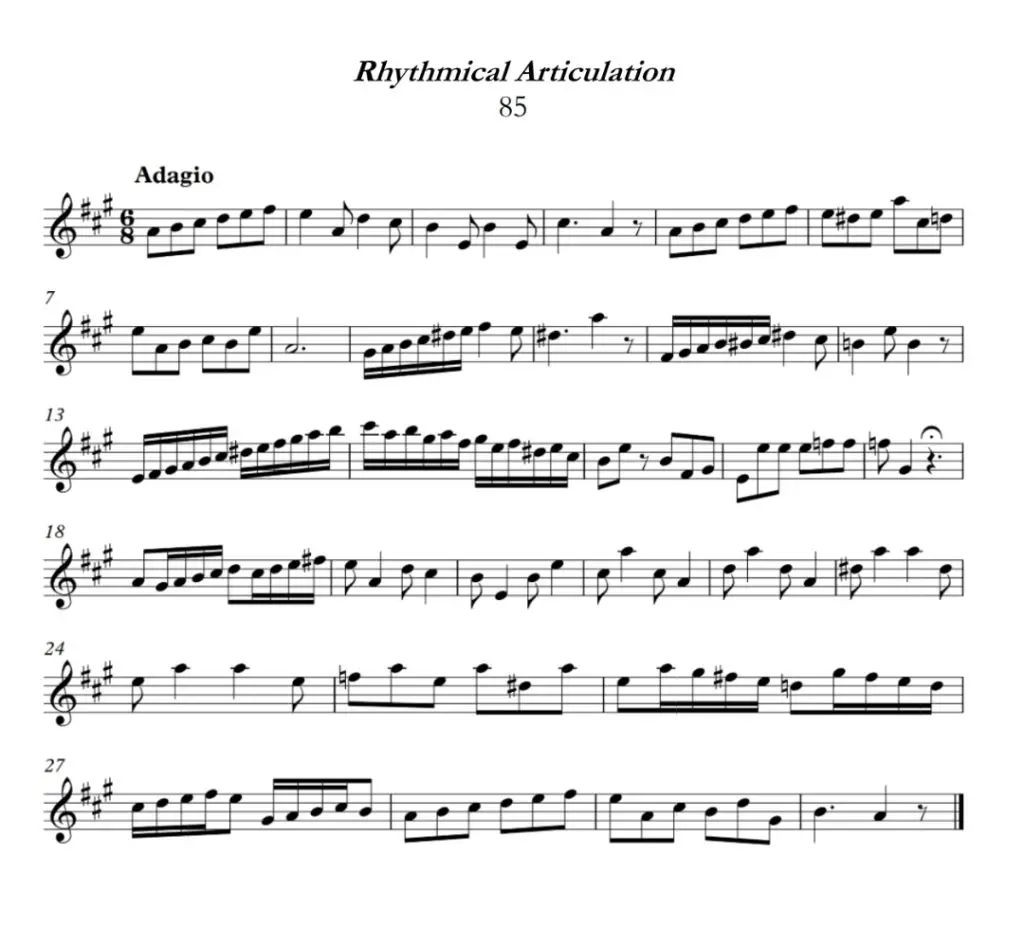
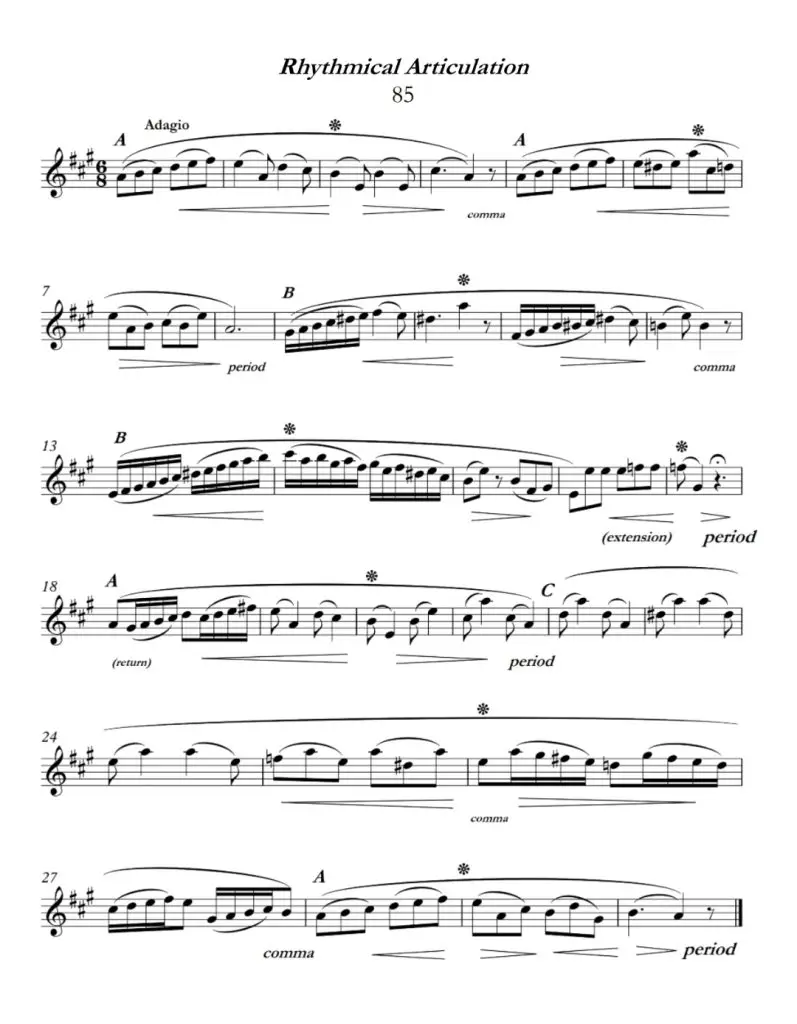
The following two etudes are taken from Pasquale Bona’s work titled, “Rhythmical Articulation”. Each etude is first presented as it was originally published and then it is presented with edits intended to convey phrase shapes, phrase differences, and returning phrases, as well as the degrees of closure between the phrases.

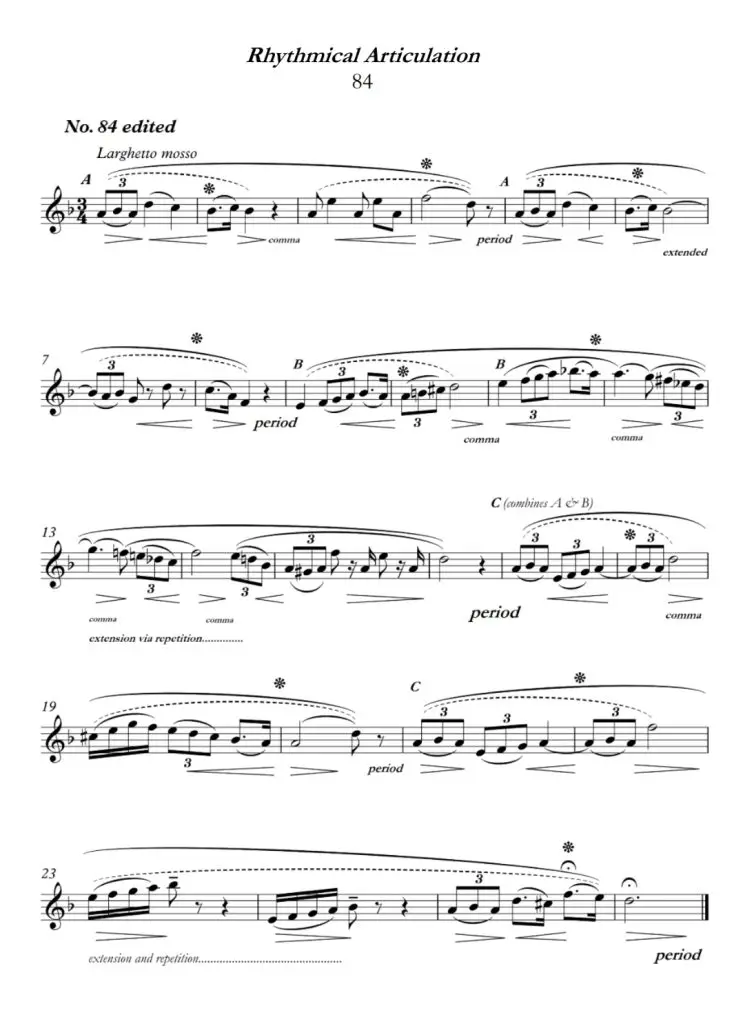
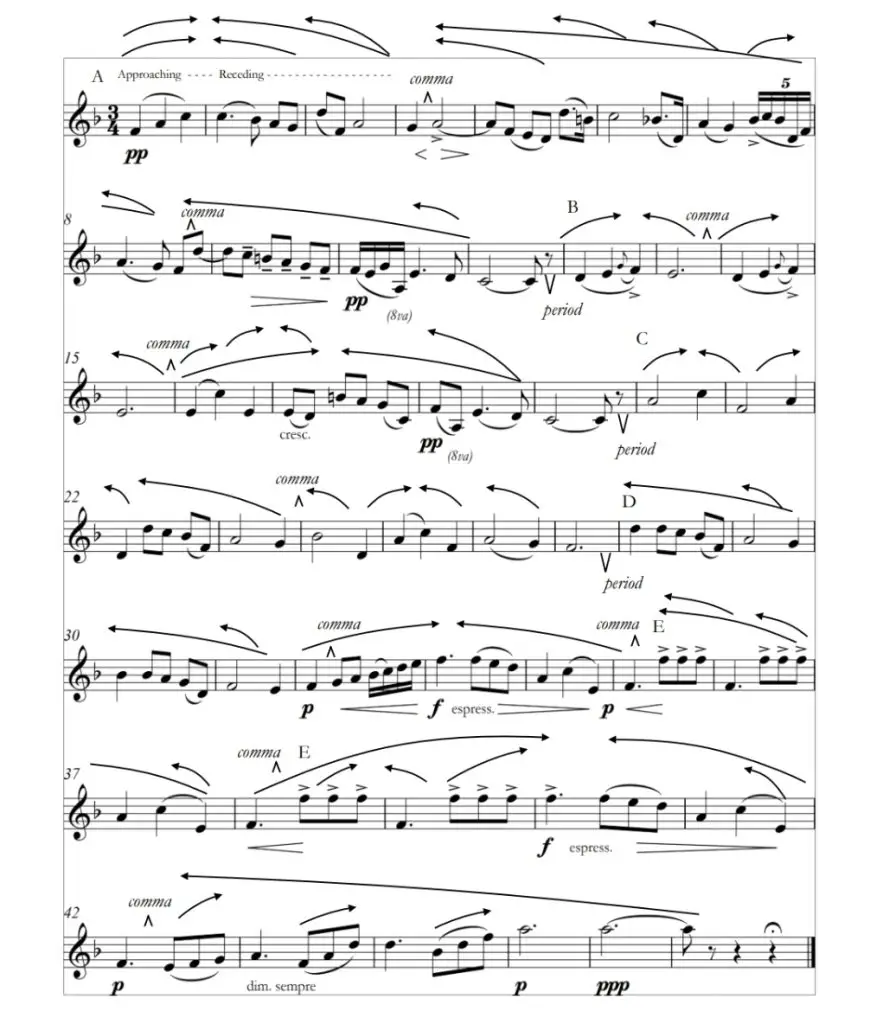
The following rendition of Pietro Mascagni’s Intermezzo includes shaping indications in which smaller motions are enveloped by larger ones. Use varying combinations of the four shaping tools in order to phrase the melodic lines and their sequencing to the best of your ability. Various degrees of closure (or distance) between the phrases are also indicated.
Tim Lane
Paper Route Press
Tim Lane is an Emeritus Professor at the University of Wisconsin-Eau Claire where he taught from 1989 – 2020. Prior to that he was a faculty member at Eastern Illinois University, the Interlochen Arts Camp, and the Cleveland Institute of Music Preparatory Department. He has been a member of the Orquestra Sinfonica de Veracruz, Mexico, the Cleveland Orchestra, the Ohio Chamber Orchestra, and the Eau Claire Chamber Orchestra. He currently serves as the principal flute player with the Chippewa Valley Symphony Orchestra and operates “Paper Route Press” which specializes in unique and innovative flute-related publications. Mr. Lane attended high school at the Interlochen Arts Academy and earned his Bachelor of Music from Cleveland Institute of Music. He later earned his Masters and Doctoral Degrees from University of Illinois at Urbana-Champaign. As a college-age student he studied the flute with Maurice Sharp, Harold Bennett, Alexander Murray, and Claude Monteux.