Each year on March 8, the world observes International Women’s Day, a moment to recognize the achievements of women across every field of human creativity.
Within the world of the flute, women have long shaped the instrument’s artistic evolution — as composers, performers, researchers, teachers, and innovators. At Flute Almanac, these contributions are not only celebrated in history but actively visible in the voices that fill the pages of the magazine.
Through scholarship, performance, pedagogy, and artistic exploration, women contributors continue to expand our understanding of flute culture across continents and generations.
Rediscovering Women Composers
One of the most significant contributions to the magazine has been the work of musicologist and flutist Vilma Campitelli (Italy), whose extensive research has brought renewed attention to women composers whose works deserve a place in the flute repertoire.
Through her essays, readers have been introduced to remarkable figures from different musical traditions and eras, including Graciela Agudelo Murguía, Mélanie Hélène Bonis, Kaija Saariaho, Lucrecia Roces Kasilag, Galina Ustvolskaya, and Cécile Chaminade.
These studies illuminate not only individual composers but also the broader cultural landscapes in which their music was created.
Mapping Hidden Repertoire
Researcher and piccolist Mariaceli Navarro Salerno (Venezuela) has made an extraordinary contribution to the documentation of repertoire.
Her work More Than 100 Works for Piccolo Written by Women provides one of the most comprehensive overviews of piccolo music by women composers currently available. In addition, her research on Latin American piccolo repertoire offers performers a valuable guide to works that remain largely unknown to international audiences.

Through this work, repertoire that might otherwise remain hidden becomes accessible to performers and teachers worldwide.
Scholarship and Pedagogy
The work of flutist and writer Marina Vologdina (Russia) adds another dimension to the magazine’s intellectual landscape.
Her essays explore flute repertoire, history, and pedagogy, examining topics ranging from the relationship between the flute and vocal traditions to the broader cultural role of the instrument throughout history.
Such studies remind us that flute performance is not only a technical discipline but also an artistic dialogue with history.
Exploring New Artistic Frontiers
Women contributors also explore new directions in performance and research.
Articles by Laura Chislett (Australia) examine performance technique and interpretation, while Aude Prieur (France) investigates electroacoustic possibilities and new sound technologies for the flute.
Meanwhile, writers such as Lea Pearson (United States), Mirella Pantano (Italy), and Sofía De Salis (Switzerland) explore the relationship between the musician’s body, mind, and artistic expression — topics that are increasingly central to modern pedagogy.
Arina Shvarenok (Russia) explores the impact of digital transformation on the musical mind. Barbara Gisler-Haase (Germany) contributes perspectives on flute ensemble repertoire and the creative possibilities of the flute family through the work of the Vienna Flautists. Natalia Marashova (Russia/Germany) examines the rare flute–mandolin duo, exploring its history and repertoire across the centuries.
Together, these perspectives reveal how flute culture continues to evolve through interdisciplinary thinking and creative experimentation.
Building a Global Platform
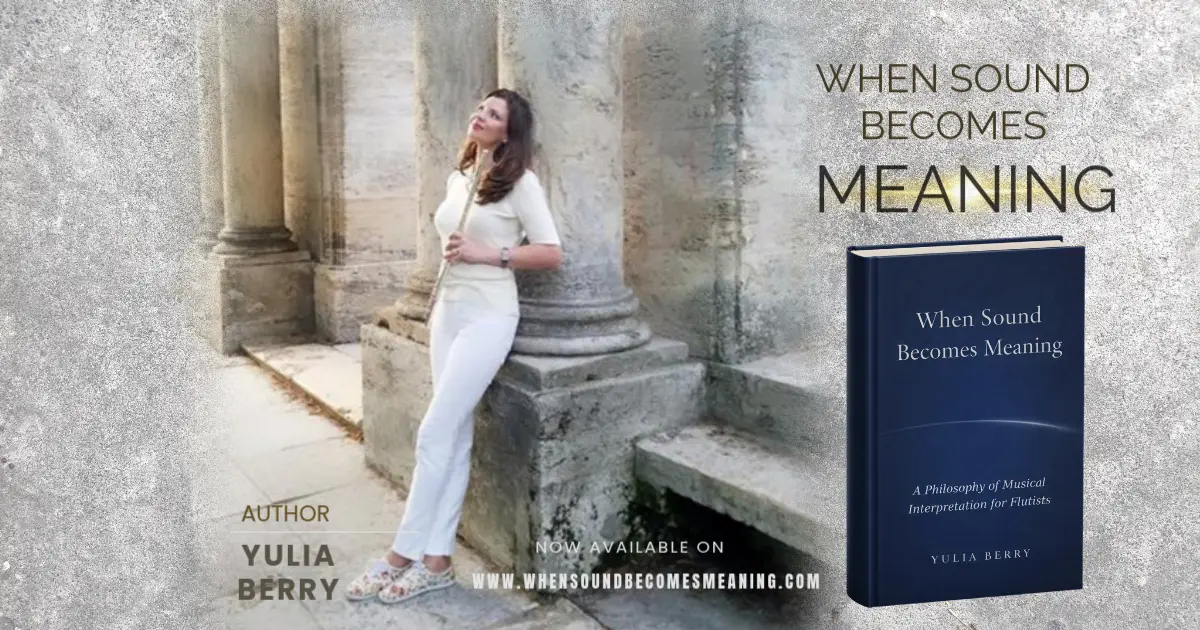
Behind this growing international platform is the vision of Yulia Berry, Founder and Editorial Director of Flute Almanac, who created a global space dedicated entirely to the flute.
Through research articles, repertoire studies, performance reviews, and educational essays, Flute Almanac has become a living archive of flute culture.
A Living Tradition
What emerges from these voices is something greater than a single publication.
It is a conversation — one that crosses borders, traditions, and generations.
Through their work, these women are not only documenting the history of the flute; they are helping shape its future.
And in doing so, they continue to expand the imagination of the instrument itself.
Congratulations to the Women of Flute Almanac
On this International Women’s Day, Flute Almanac celebrates the remarkable women whose scholarship, creativity, and artistic curiosity continue to expand the imagination of the flute.
Through their research, performances, and ideas, they are not only documenting flute culture — they are shaping its future.
Congratulations to all the women whose voices enrich the pages of Flute Almanac and inspire the global flute community.