In recent decades, flute pedagogy has expanded enormously, yet the piccolo still remains somewhat underserved in pedagogical literature. While orchestral players depend heavily on the instrument, dedicated teaching materials addressing the unique technical and musical challenges of piccolo are relatively scarce.
In this context, the work of Polish piccolo specialist Hanna Turonek offers a welcome contribution to the repertoire of teaching materials for advanced students and professionals alike.
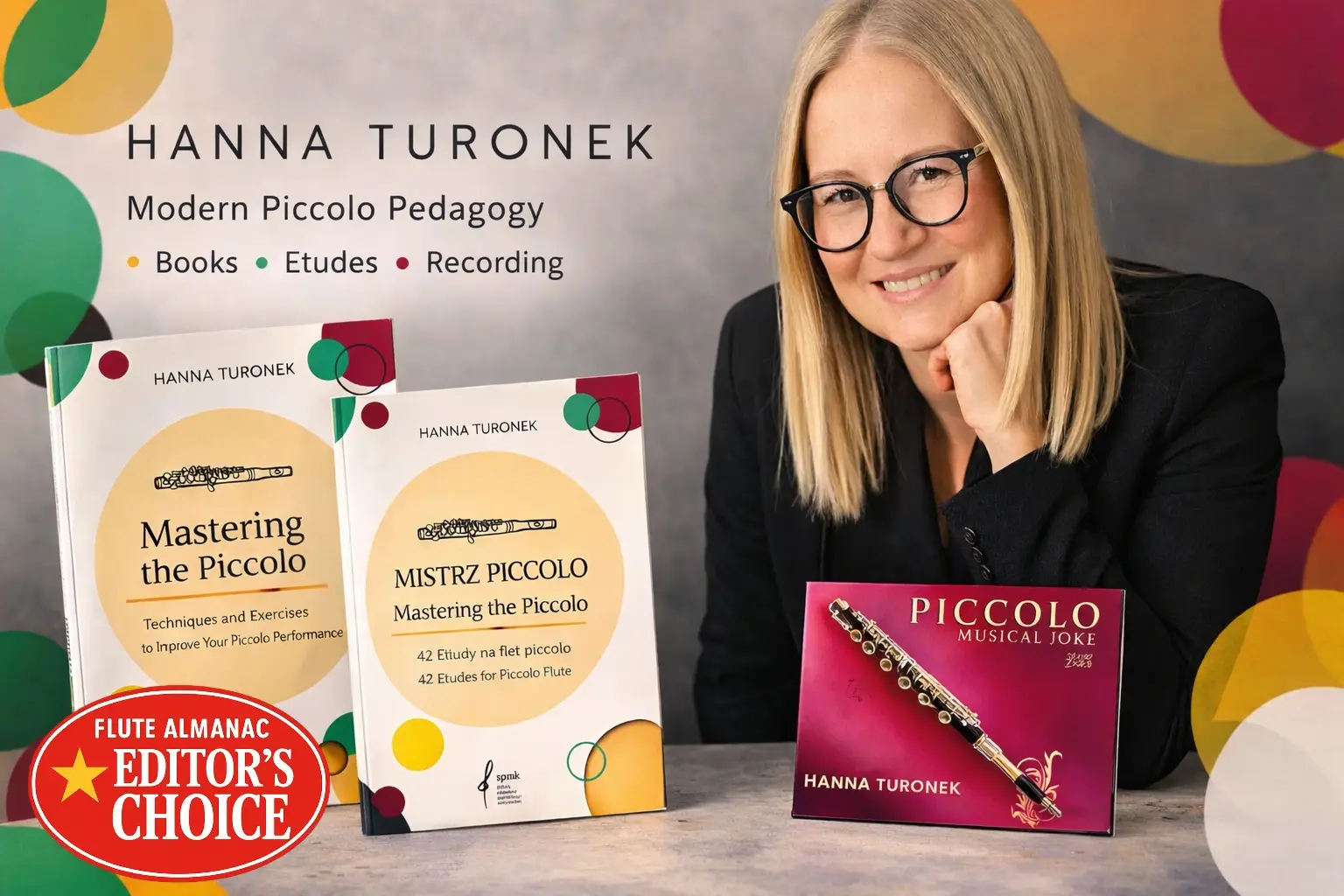
Turonek’s pedagogical approach is presented primarily through two complementary publications: Mastering the Piccolo and 42 Etudes for Piccolo Flute. Together they form a practical system that combines theoretical reflection with applied technical studies. As an additional artistic extension of this pedagogical work, Turonek has also released the recording Piccolo Musical Joke, which presents her creative voice as a composer and performer.
A Guide to the Instrument: Mastering the Piccolo
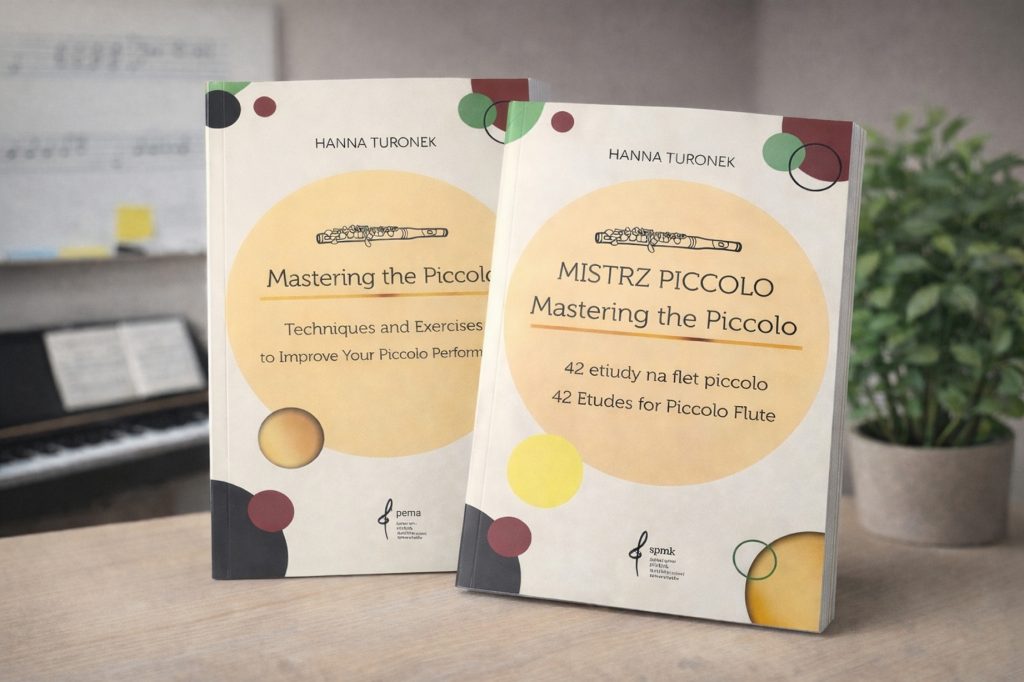
Mastering the Piccolo serves as the conceptual foundation of Turonek’s pedagogical method. The book addresses many of the issues that make the piccolo distinct from the flute, both technically and musically. Topics include sound production, articulation, intonation, fingerings, and practical considerations for orchestral performance.
One of the strengths of this method lies in its pragmatic orientation. Rather than presenting abstract technical theories, Turonek focuses on the concrete problems encountered by piccolo players in real musical situations. Intonation, for instance, is treated not simply as a theoretical concept but as a daily challenge shaped by register, dynamic level, and ensemble context. The author emphasizes the importance of awareness and flexibility in adjusting embouchure, air support, and articulation in order to maintain clarity and stability of pitch.
Another useful feature is the inclusion of alternative fingerings and practical suggestions for managing difficult passages in the upper register. Because the piccolo is particularly unforgiving in matters of tuning and articulation, such practical guidance can be invaluable for both students and professionals.
The book also reflects the author’s experience as an orchestral musician. Advice is often framed in terms of ensemble playing, audition preparation, and the particular responsibilities of the piccolo player within the orchestra. In this sense, the method bridges the gap between technical study and real-world musical practice.
Character and Technique: 42 Etudes for Piccolo Flute
While Mastering the Piccolo establishes the conceptual framework, the companion volume 42 Etudes for Piccolo Flute provides the practical training ground where these ideas can be applied.
The etudes are designed as concise studies focusing on specific technical and musical challenges. Each piece carries a descriptive title and is accompanied by a short explanatory note outlining its pedagogical objective. These explanations appear in both Polish and English, making the material accessible to an international readership.
Rather than presenting purely mechanical exercises, Turonek organizes the etudes around musical images and instrumental problems commonly encountered in piccolo performance. The titles themselves often hint at the character of the study: Tongue Session, Pentatonic, Cracking Sounds, Aviary, Sniper, Chirping, and Trampoline, among others. This approach encourages players to engage not only with the technical aspects of the music but also with its expressive character.
Several studies focus on articulation, a particularly sensitive area of piccolo technique. In Tongue Session, the player works on the clarity and precision of individual attacks. Turonek observes that producing isolated notes on the piccolo — especially at softer dynamics — can often be more challenging than executing fast passages. The exercise therefore encourages experimentation with tongue placement in order to achieve a clean and controlled articulation.
Another study, Harsh Tongue, addresses the problem of overly aggressive staccato attacks. Here the emphasis is on maintaining rhythmic precision while producing a short yet flexible articulation that remains musical rather than percussive.
The etude titled Cracking Sounds tackles one of the most common difficulties encountered by piccolo players: the tendency of certain notes, particularly in the middle register, to crack when played softly. Turonek identifies pitches such as E, F, F-sharp, G, and G-sharp as particularly problematic and proposes a method of articulation that emphasizes focus and consistency. The accompanying explanation uses a vivid pedagogical image, encouraging players to imagine the consonant “ch” or the sound of a champagne cork popping in order to guide the articulation.
Other studies address agility and stylistic flexibility. Pentatonic, for instance, references the piccolo writing found in orchestral repertoire such as the suite My Mother Goose by Maurice Ravel. By linking the exercise to familiar orchestral textures, the etude situates technical practice within a broader musical context. Likewise, studies such as Aviary and Chirping explore light articulation patterns reminiscent of birdsong, encouraging fluidity and brightness in the upper register.
The overall structure of the collection reflects a pedagogical philosophy that combines technical precision with imaginative engagement. The etudes are demanding enough to challenge advanced students, yet their characterful titles and concise form prevent them from becoming purely mechanical drills.
From Pedagogy to Performance: Piccolo Musical Joke
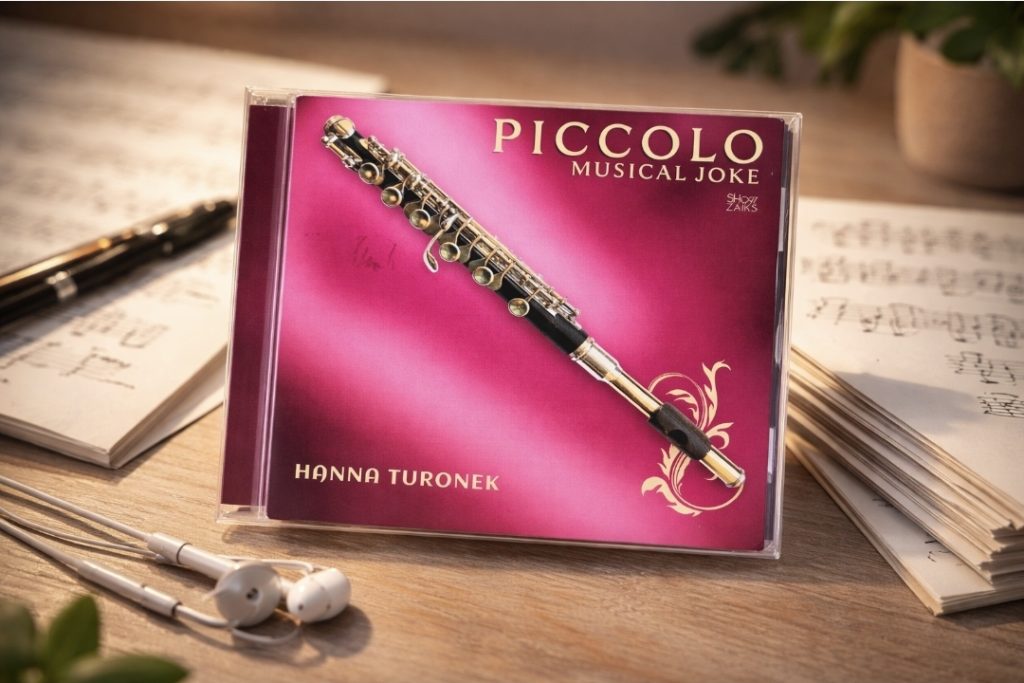
Complementing these pedagogical publications is the recording Piccolo Musical Joke. The album presents a series of short compositions by Turonek, many of which share the same playful spirit found in the etudes. Rather than presenting the piccolo solely as a brilliant orchestral instrument, the recording highlights its expressive and humorous possibilities.
The pieces often explore contrasting characters, combining virtuosity with wit and theatrical flair. Through these miniatures, Turonek demonstrates how the technical principles discussed in her pedagogical work can be transformed into engaging musical expression.
In this sense, the recording functions almost as a practical illustration of the artistic world that emerges from disciplined technical training. The humor and imagination of the compositions serve as a reminder that technical mastery ultimately exists in service of musical storytelling.
A Valuable Contribution to Piccolo Literature
Taken together, Turonek’s books and recording form a cohesive project that bridges pedagogy and performance. Mastering the Piccolo offers a thoughtful exploration of the instrument’s technical challenges, while 42 Etudes for Piccolo Flute provides a structured set of studies designed to address those challenges through focused practice. The recording Piccolo Musical Joke then reveals how these technical skills can be translated into lively and expressive musical performance.
For teachers and advanced students seeking new material specifically tailored to the piccolo, these publications represent a valuable addition to the available repertoire. By combining practical technical advice with imaginative musical studies, Turonek contributes to the ongoing development of modern piccolo pedagogy.
At a time when the piccolo continues to occupy an essential role in orchestral and chamber music, resources that address the instrument’s unique demands are particularly welcome. Turonek’s work reminds us that the piccolo, often perceived as merely an extension of the flute, possesses its own artistic voice — one that deserves both careful study and creative exploration.
About Hanna Turonek
Hanna Turonek is a Polish flutist, piccolo specialist, educator, and composer. She has developed a pedagogical approach focused on the unique technical and musical challenges of the piccolo, combining practical orchestral experience with imaginative teaching methods. Turonek is the author of Mastering the Piccolo and 42 Etudes for Piccolo Flute, both designed to support advanced piccolo study. She is also the creator and performer of the album Piccolo Musical Joke, which showcases her work as a composer and interpreter of contemporary piccolo repertoire.