Composed in 1936, Cinq Incantations remains one of the most important works in the twentieth-century solo flute repertoire. Few composers transformed the expressive identity of the flute as profoundly as André Jolivet.
Written at a time when composers across Europe were searching for new musical languages, Jolivet turned not toward modern technology or abstraction, but toward the ancient spiritual roots of sound itself. Jolivet was not just writing modern music. He was trying to re-sacralize it.
For Jolivet, music was not merely an art form or a vehicle for aesthetic beauty. He believed that in its earliest origins, music functioned as magic — a force capable of invoking spiritual energies, communicating with unseen worlds, and expressing humanity’s most primal emotions.
This philosophy found one of its most striking expressions in his solo flute work Cinq Incantations (Five Incantations), composed in 1936. The piece remains one of the most fascinating works in the modern flute repertoire, combining technical innovation with an atmosphere of ancient ritual.
Jolivet’s Philosophy: Music as Magic
Jolivet was deeply interested in the idea that music originally served a ritual and spiritual function in human societies. Inspired by anthropology, mythology, and ancient cultures, he believed that modern Western music had lost this primordial connection.
His artistic goal was therefore to restore what he called the magical and incantatory power of sound.
In many of his works, rhythm, timbre, and gesture are used not merely for musical structure but to evoke the feeling of ceremony, invocation, and trance-like intensity. Music becomes a kind of ritual act.
The flute, with its direct relationship to breath and air, proved to be an ideal instrument for this vision.
Why the Flute?
Among all instruments, the flute carries perhaps the most ancient symbolic associations. Across many cultures, the flute has been connected with breath and life, nature and the wind, pastoral landscapes, and spiritual or mystical expression.
Because its sound is produced directly from the human breath, the flute often feels closer to the human voice than other instruments.
For Jolivet, this quality made the flute particularly suited to ritual invocation. The instrument can whisper, cry, call, or chant — producing sounds that feel both human and elemental.
In Cinq Incantations, the flute becomes a solitary voice performing an ancient ritual, as if calling across time to forgotten ceremonies.
The Idea of “Incantation”
The word incantation refers to a spoken formula used in magical or ritual contexts — a chant intended to invoke supernatural forces or express spiritual intention.
Jolivet transferred this idea into music. Rather than presenting traditional melodic development, the piece unfolds through gestural phrases, repeated figures, and expressive calls that resemble the structure of ritual speech.
The flute line often feels like a voice addressing invisible powers, moving between moments of intensity, meditation, and release.
Why Five Incantations?
Rather than writing a single continuous composition, Jolivet created five separate incantations, each representing a distinct act of invocation. The sequence of movements suggests a ceremonial progression or ritual journey.
Each piece evokes a different emotional and symbolic state, and together they form something larger than a suite in the conventional sense. The work unfolds like a ritual journey, moving gradually through experiences that are both personal and universal.
The Five Movements
Each incantation carries a descriptive subtitle suggesting a specific ritual intention (given here in the original French with English translation).
Pour accueillir les négociateurs – et que l’entrevue soit pacifique
(To welcome the negotiators – and let the meeting be peaceful)
Pour que l’enfant qui va naître soit un fils
(For the child who will be born to be a son)
Pour que la moisson soit riche qui naîtra des sillons que le laboureur trace
(For the harvest to be rich that will grow from the furrows traced by the ploughman)
Pour une communion sereine de l’être avec le monde
(For a serene communion of being with the world)
Aux funérailles du chef – pour obtenir la protection de son âme
(At the chief’s funeral – to obtain the protection of his soul)
These titles evoke a mythical world in which human communities communicate directly with the forces of nature through ritual music. They trace a symbolic journey through fundamental human experiences: mystery, birth, fertility, contemplation, and death. Together they evoke a cycle of life expressed through the voice of a single instrument.
Musically, the work explores a remarkable range of flute expression. Sudden dynamic contrasts, unusual intervals, rhythmic freedom, and dramatic gestures create a sense of improvisatory ritual rather than conventional musical form.
The Hidden Idea Behind the Incantations
When viewed together, the five movements trace something deeper than a series of separate scenes: they suggest a symbolic cycle of human life and community.
The subtitles move through a sequence that mirrors fundamental stages of existence:
- Negotiation / invocation – the attempt to establish harmony between people or forces
- Birth – the arrival of new life
- Harvest – the flourishing and sustenance of the community
- Contemplation – a serene communion with the world
- Funeral – the passage from life into the spiritual realm
Seen in this way, the work becomes almost a musical ritual of the human condition, expressed through the solitary voice of the flute.
This deeper structure helps explain why Cinq Incantations feels so powerful and unusual. The piece is not simply a collection of expressive miniatures. It unfolds like an arc of existence — from invocation and birth through sustenance and contemplation to death and transcendence.
The Historical Context of Cinq Incantations
Cinq Incantations was composed in 1936, a pivotal year in André Jolivet’s artistic development. During this period he joined fellow composers Olivier Messiaen, Yves Baudrier, and Daniel-Lesur in forming the movement known as La Jeune France (“Young France”). The group sought to restore emotional depth and spiritual meaning to modern music, reacting against what they perceived as overly intellectual or mechanical tendencies in contemporary composition.
During the 1930s, after spending a significant period in North Africa — particularly in Algeria and Morocco — and closely studying the musical traditions of local communities, André Jolivet composed several works that vividly reflect the direction of his artistic search and his growing fascination with the magical and ritualistic essence of music. Among these are the piano cycle Mana (1935), Cinq Incantations for solo flute (1936), Danse incantatoire (1936), and Five Ritual Dances for orchestra (1939), among others. Each of these compositions represents a stage in Jolivet’s exploration of music as a spiritual and symbolic act.
Immersion in the cultural world of North Africa led the composer to reflect on the relationship between modern civilization and humanity’s connection to nature. Jolivet believed that modern music had lost its original purpose. He sought to restore what he described as the “ancient character” of music, when it functioned as the magical and incantatory expression of human spirituality. For him, music was not simply an artistic form but a transformative force — “an act of magic,” a means of communicating with the powers of the universe and fulfilling what he called a “vital human need.”
Without reliance on scientific technology, these cultures focused their attention on natural forces and elemental phenomena. In Jolivet’s view, unlike the modern Western individual, they had retained a heightened sensitivity to the subtle currents of life.
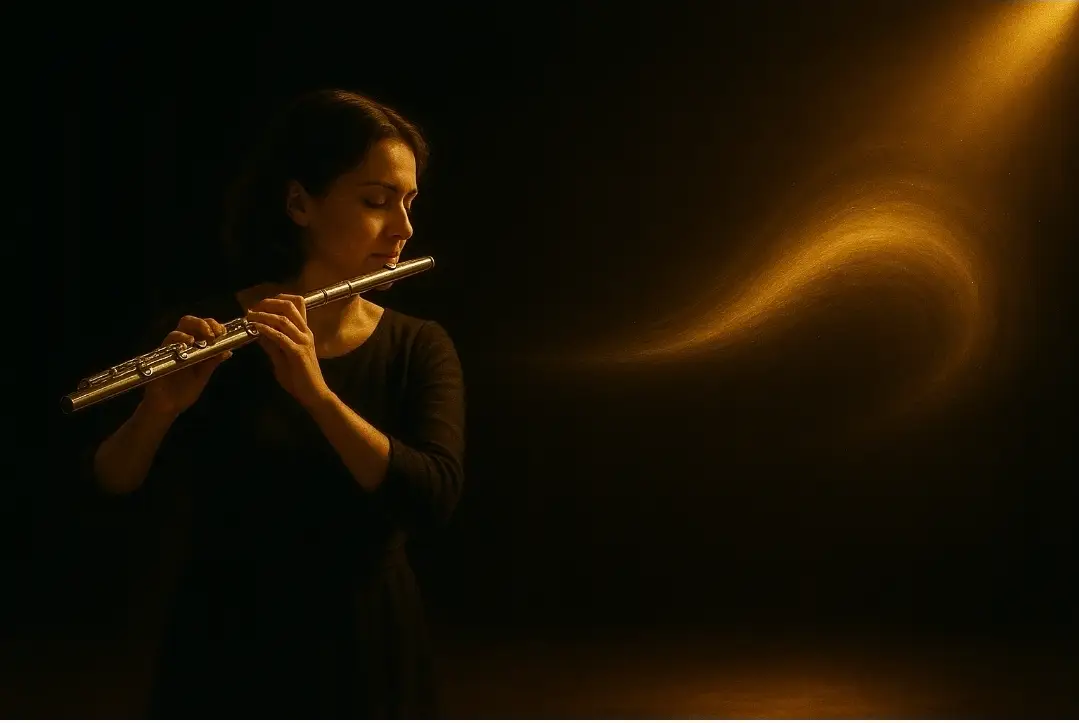
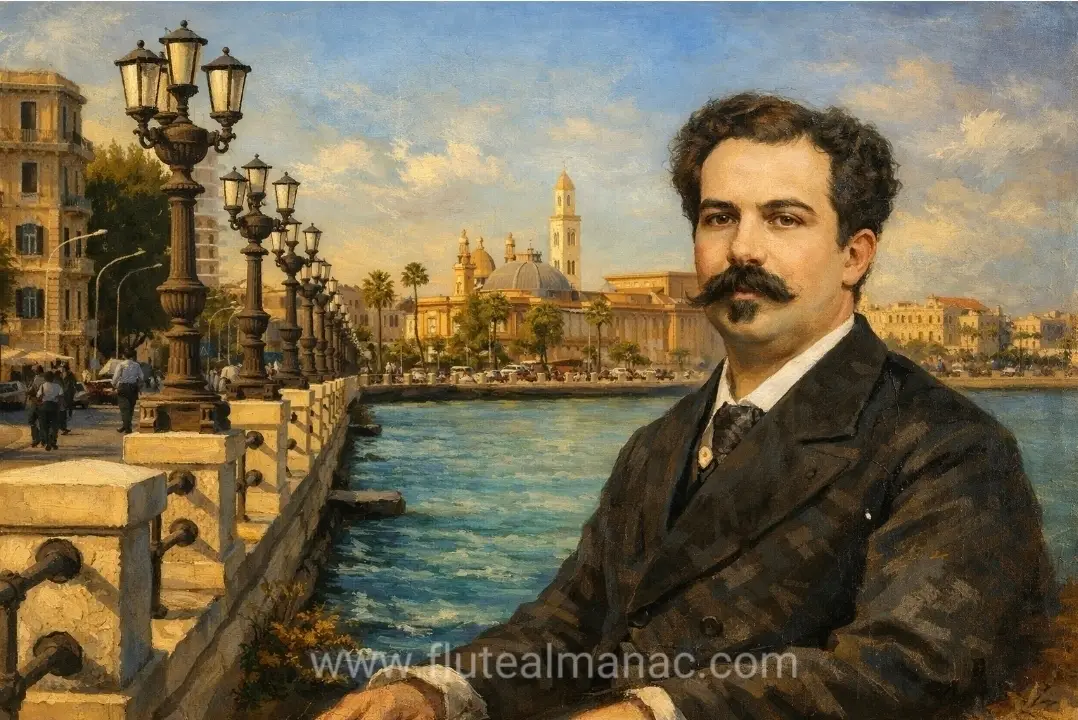
At the center of Jolivet’s artistic interest during this period stood the idea of the incantation. He regarded it as one of the most refined and powerful forms of ritual expression. In one of his reflections, Jolivet wrote that “incantation is the most delicate form of ritual refinement — beside it we are merely apprentices of sorcerers.” (paraphrased translation).
In this statement lies the composer’s awareness of the responsibility carried by a Western artist engaging with such deeply spiritual traditions. For Jolivet, the composer must act almost as a mediator, a figure capable of connecting with the hidden forces of nature and translating them into sound.
The five incantations evoke a world that feels almost prehistoric — a landscape in which humanity lives in direct contact with the forces of nature. In this imagined ritual environment, music becomes a means of communication with those forces, and the flute acts as the instrument of invocation.
Jolivet himself described his intention clearly:
“I have tried to restore the original ancient character of music, when it was the magical and incantatory expression of the religiosity of human communities.” (paraphrased translation from his 1946 essay André Jolivet ou la magie expérimentale, published in Contrepoints).
The premiere of Cinq Incantations was given by the flutist Jan Merry, a passionate advocate of Jolivet’s music who, despite pursuing a professional career as an electrical engineer, was active in the Parisian circle of modern composers that included Olivier Messiaen and Charles Koechlin. Merry was the first flute teacher of Michel Debost and a friend of Debost’s father. In his book The Simple Flute, Debost recalls that the original edition of Cinq Incantations included a dedication to Merry, reflecting the close relationship between the composer and the performer who helped bring the work to life.
Cinq Incantations is often compared with Density 21.5, the famous solo flute work by Jolivet’s teacher Edgard Varèse. Comparisons with Varèse’s Density 21.5 are inevitable. Both works explore the expressive extremes of the solo flute and were written in the same decade. Yet their artistic aims differ profoundly. Varèse approaches the instrument with a spirit of sonic experimentation, while Jolivet seeks to convey a spiritual and ritual message.
A short passage from the fourth incantation was later quoted by Olivier Messiaen in his flute work Le Merle noir (1951).
The Flute as a Ritual Voice
In Cinq Incantations, Jolivet treats the flute less as a traditional melodic instrument and more as a ritual voice. Many passages resemble calls, chants, and invocations, rather than lyrical melodies.
Particularly striking is the way the cycle begins, already revealing Jolivet’s search for a new sonic language for the flute. In the opening measures, the composer deliberately challenges conventional expectations about the instrument’s dynamic and timbral character.
The highest register of the flute is marked piano, while the lowest register is assigned forte — a reversal of the traditional approach in which the upper register is typically associated with brilliance and projection. By redistributing dynamic weight in this way, Jolivet invites the performer to reconsider the expressive potential of the instrument and to explore a broader palette of color and resonance.
For the flutist, this inversion of expected dynamics is more than a technical instruction; it becomes an interpretive gesture. The soft, restrained high notes acquire a sense of mystery and distance, while the powerful low register suggests a grounded, almost elemental voice. Through this simple but radical decision, Jolivet begins to reshape the flute’s expressive identity, aligning it with the ritual and incantatory character that lies at the heart of the entire cycle.
This approach reflects Jolivet’s belief that early music emerged from ceremonial practices, where sound functioned as a means of communicating with spiritual forces or with nature itself.
Much of the music’s power comes from Jolivet’s use of repetition. Short figures recur with slight variations, creating a hypnotic atmosphere that evokes the repetitive patterns of ritual chanting or incantation.
In this sense, the flute in Cinq Incantations can be understood as an echo of ancient wind instruments used in ritual contexts across many cultures. Because its sound originates directly from breath, the flute has long been associated with the life force and with the invisible movement of air.
Although the work is atonal, Jolivet often returns to central pitch points that give the listener a sense of orientation within the musical landscape. Between these tonal points the music unfolds in elaborate melismatic gestures and ornamental figures, sometimes suggesting the inflections of Middle Eastern flute traditions.
Jolivet’s writing often emphasizes this connection. Sudden gestures, dramatic pauses, and declamatory phrases create the impression of a performer calling outward into space, as if addressing unseen listeners.
Rather than presenting a continuous musical narrative, the work unfolds through short expressive invocations, each one resembling a ceremonial utterance. The performer is therefore not simply playing a piece of music but enacting a sequence of symbolic gestures — a series of musical incantations.
The Final Gesture of the Cycle
The conclusion of the cycle is particularly striking. The work ends with a trill on G♯ in the third octave, beginning at pp and gradually expanding through a powerful crescendo to fff. This dramatic gesture can be understood as a final cry — wild and primal, filled with elemental emotion. It is as if the solitary voice of the flute releases one last incantatory call into space.
Jolivet himself emphasized the central importance of what he called the monodic element in music. In Cinq Incantations, the carefully shaped organization of pitch, rhythm, and dynamics within a single melodic line becomes the foundation for expressing the most ancient layers of human feeling. Through this intensely focused musical language, the composer sought to reconnect with primordial emotional states — those belonging to humanity’s earliest relationship with nature and the surrounding world.
In this context, the flute becomes the ideal instrument for Jolivet’s vision. For him, it embodied the magical and incantatory power of music itself: a sound capable of influencing the most fundamental moments of life, of mediating between human society, the forces of nature, and the wider universe.
A Turning Point in the Flute Repertoire
Cinq Incantations represents a decisive moment in the evolution of the flute in twentieth-century music. While Debussy had revealed the instrument’s poetic voice and Varèse explored its sonic possibilities, Jolivet sought something deeper: the restoration of the flute’s ancient ritual power.
The piece expanded the instrument’s expressive vocabulary by emphasizing dramatic gesture, extreme contrasts, and the flute as a solo dramatic voice rather than a merely decorative one.
In doing so, Jolivet helped redefine the role of the flute in modern music. Instead of representing only pastoral elegance or virtuosic brilliance, the instrument could embody mystery, power, and spiritual intensity. Because of this deeper symbolism, Cinq Incantations occupies a special place in the flute repertoire.
Unlike many virtuosic solo works, the piece does not focus on technical display. Instead, it asks the performer to become something closer to a ritual storyteller, shaping each gesture as if it were part of an invocation. This is why the work still feels strikingly modern today. It challenges flutists not only to master the instrument technically, but also to explore the expressive and almost theatrical power of breath and sound.
For that reason, Jolivet’s Cinq Incantations remains not only a landmark of twentieth-century flute literature, but also one of the clearest artistic statements of the flute’s ancient, human, and ritual voice.
In Cinq Incantations, the flute becomes something more than an instrument of melody or virtuosity. It becomes a voice of breath itself — the most fundamental sign of life. From invocation to funeral, Jolivet allows the flute to trace a symbolic arc of human existence, reminding us that music once stood at the center of ritual, mystery, and spiritual expression. Nearly a century after its creation, the work continues to challenge flutists not only technically, but imaginatively, inviting them to rediscover the ancient, incantatory power of sound.
Yulia Berry
www.yuliavberry.com
Yulia Berry, DMA, is an award-winning flutist and renowned flute pedagogue with over 30 years of international teaching and performing experience. She leads a thriving Yulia Berry’s Flute Studio and is the founder of the New England Flute Institute, where her students consistently achieve top honors and festival placements.
Dr. Berry is the founder and editorial director of Flute Almanac, a global digital platform for flutists that features a multilingual magazine, international event listings, news, reviews, and educational content. Since its launch in 2024, Flute Almanac has quickly become an essential resource for the worldwide flute community. It is widely recognized as a leading flute magazine, receiving recognition from Google as the #1 global flute magazine.
She also founded The Babel Flute and Web Flute Academy, and in 2024, spearheaded the Global Flute Excellence Awards – a groundbreaking international initiative supported by Sir James and Lady Jeanne Galway. The awards recognized outstanding flutists, composers, educators, and flute makers, and brought together 52 judges from 19 countries.
Honored in Marquis Who’s Who 2024 for her exceptional achievements in music, Yulia Berry continues to shape the global flute community through innovation, education, and inspired leadership.