You take a breath before the first note of a Telemann sonata. The room is quiet. The phrase begins.
What are you saying?
In the Baroque era, this question would not have seemed unusual. Music was widely understood as a form of speech made audible through sound. Composers, performers, and listeners shared the conviction that music communicated meaning in ways comparable to spoken language. Tone, rhythm, articulation, pacing, and silence formed a vocabulary shaped by intention and directed toward an audience.
Across Europe between the early seventeenth century and the mid-eighteenth century, writers described music using rhetorical language. In Italy, composers such as Claudio Monteverdi developed stile rappresentativo, a style that mirrored the rhythms and inflections of speech. In German-speaking lands, theorists drew connections between music and rhetoric through traditions often referred to as musica poetica. Later, Johann Mattheson wrote about musical figures and affect using concepts drawn directly from oratory, explaining how expressive organization could move the passions of the listener.
The terminology differs from region to region. The underlying principle remains clear: music communicates through shaped, intentional delivery.
For flutists today, this perspective offers a practical and liberating lens. When music is approached as speech, articulation resembles pronunciation, breathing resembles punctuation, harmony resembles argument, and silence carries expressive weight. Technical choices align naturally with meaning. Phrasing begins to feel like thought unfolding in time.
A Culture That Listened for Meaning
Between roughly 1600 and 1750, rhetorical education shaped much of European intellectual life. Students studied classical authors and learned how to structure ideas, persuade listeners, and move emotions. This training influenced how communication was understood more broadly.
Music developed within this environment. When Mattheson described musical figures, he addressed readers familiar with rhetorical concepts. When Italian composers refined declamation in opera, they responded to an expectation that words and music should express meaning vividly and clearly.
Performance, in this context, was an act of delivery. A performer stood before listeners much like a speaker addressing an audience. Clarity, emphasis, pacing, and affect were not secondary concerns; they were central.
This historical awareness offers orientation. It gives us criteria for shaping sound with purpose.
Shaping Musical Speech: Articulation, Breath, and Harmony
If music functioned as speech, then articulation, breath, and harmony form its grammar, punctuation, and logic. These elements work together to shape how a musical thought unfolds.
A Baroque flute treatise makes this tangible immediately. In his Versuch einer Anweisung die Flöte traversiere zu spielen, Johann Joachim Quantz presents tonguing syllables such as du, tu, ru, and gu, linking each to character, tempo, and expressive nuance. These syllables influence how a note begins, how it carries weight, and how it relates to surrounding notes. Quantz treats articulation as expressive shaping. The syllables mirror spoken consonants and vowels, influencing timing, stress, and musical flow.
This becomes clear in practice. Take a short phrase from a Telemann sonata. Play it with light, rounded articulation. Then try firmer attacks. Then experiment with more connected tonguing. The written notes remain the same, yet the expressive character shifts. The phrase seems to “say” something slightly different each time. Articulation becomes pronunciation—an intentional way of delivering musical syllables.
Breathing belongs to the same expressive system. Quantz explains that breaths clarify phrasing and mark divisions. In spoken language, pauses signal completion, transition, or emphasis; musical breathing fulfils a comparable role. Observe where a phrase arrives at a cadence and where a new idea begins. Let your breath underline those moments. Speaking a sentence aloud and listening to its natural pauses can illuminate how to shape a musical line with similar clarity. Breath becomes part of expressive design.
Harmony completes the picture. Baroque composers shaped expressive movement through harmonic motion. Dissonance intensifies tension, resolution releases energy, sequences build momentum, and modulations introduce emotional shifts. In recitatives by Johann Sebastian Bach, harmonic changes often coincide with important words or dramatic turns. Instrumental works follow the same expressive logic. Following the bass line during practice reveals this narrative clearly. Feel moments of instability. Let resolution settle the phrase. Harmony begins to resemble thought unfolding over time.
When articulation shapes syllables, breath shapes punctuation, and harmony shapes argument, musical lines gain coherence and vitality. The flute does not simply produce tone; it delivers ideas.
Why Recitative Matters So Much
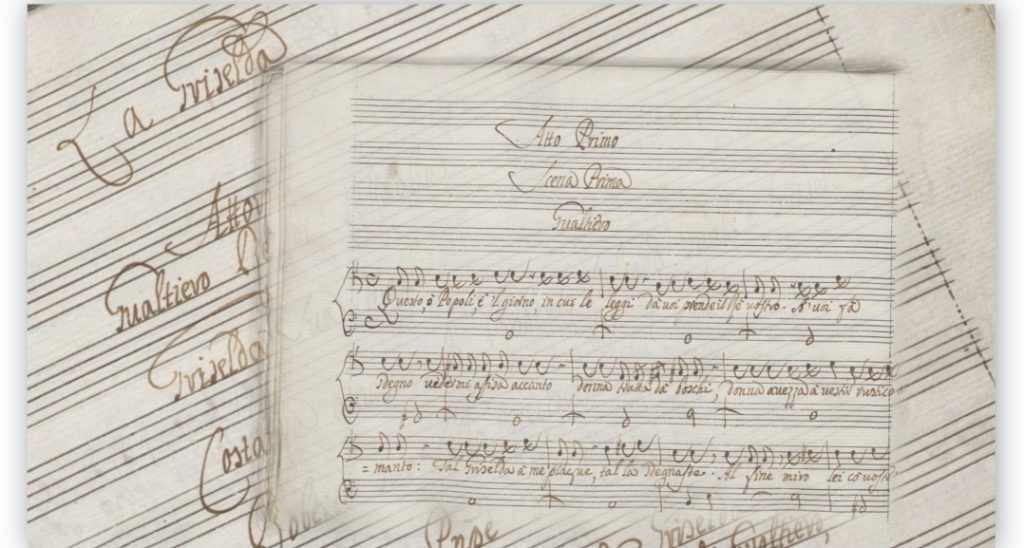
Recitative stands at the meeting point of music and speech. Rhythm follows textual inflection. Harmony reacts to meaning. Silence carries expressive weight.
For instrumentalists, recitative offers a training ground for expressive flexibility. It teaches pacing that responds to content. It aligns articulation with consonants and vowels. It reveals how harmony supports emotional movement.
Each language brings distinctive nuance.
Italian recitative often flows with vowel-led clarity and supple pacing. The line encourages legato flexibility grounded in harmonic direction.


French recitative reflects the prosody of French speech, with characteristic accent patterns and refined rhythmic shaping. Delivery benefits from attentiveness to subtle timing.
German recitative frequently emphasizes rhetorical weight and textual stress. Consonants can shape important syllables, and harmonic changes often underline key ideas with clarity.
English recitative conveys directness and narrative address, encouraging clear declamation and natural pacing.
Latin recitative, especially in sacred contexts, carries liturgical gravity. Its pronunciation and theological emphasis often invite steadier pacing, clear articulation, and formal declamatory presence.
Working with recitatives across languages deepens expressive awareness. It trains the ear to recognize how text shapes gesture. These habits naturally enrich instrumental repertoire.
While exploring these ideas in my own practice, I began working extensively with adapted recitatives for flute. I remember the first time I worked slowly through a German recitative, speaking the text aloud before playing a single note. The phrasing changed immediately. The breath felt inevitable. The harmonic turns became expressive events rather than abstract theory. Even short sessions of this kind reshaped how I approached sonata movements afterward. Recitative became an efficient teacher.
From Concept to Practice
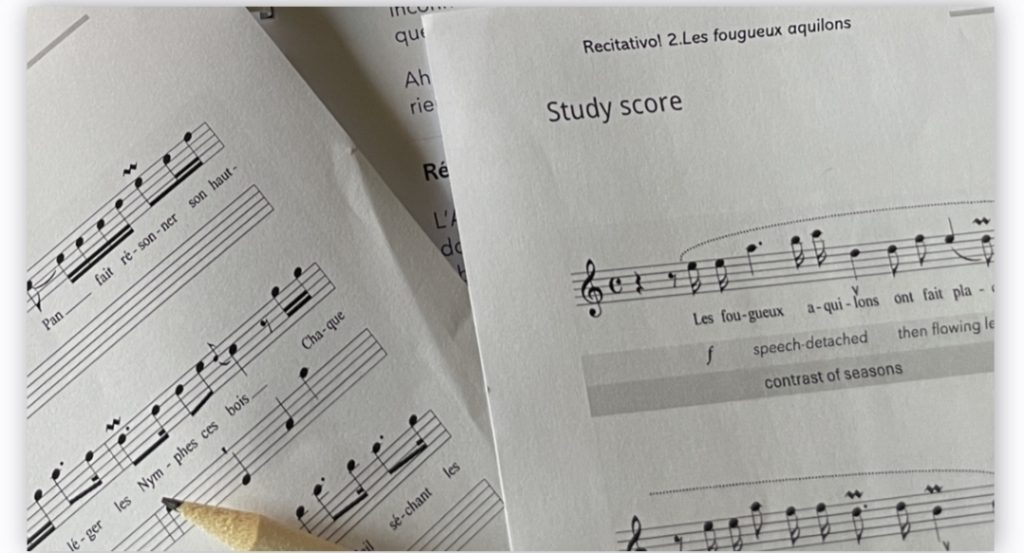
Rhetorical thinking becomes clear when embodied physically in sound. Recitative contains its own expressive roadmap. The text shows where emphasis lies. Harmony signals tension and release. Pacing suggests where breath belongs.
This practical exploration gradually led to the development of a study collection titled Recitativo!. The project grew from a desire to create material that would allow flutists to work with these principles in a structured and repeatable way.
The goal is not to present recitative as concert repertoire for flute. It serves as a laboratory for cultivating musical speech.
A Closer Look at Recitativo!
Recitativo! gathers selected Baroque recitatives adapted for solo flute and playable on various types of flutes. The adaptations preserve the rhetorical contour and expressive pacing of the original vocal lines while remaining idiomatic for the instrument.
Each piece includes the original text in its source language — Italian, French, German, English, and Latin — together with a clear translation. The flute version follows vocal inflection closely, maintaining the natural rise and fall of declamation.
Breath suggestions align with textual syntax and cadential structure. Commentary draws attention to rhetorical organization and harmonic turning points. Articulation guidance encourages exploration of syllable-based attacks linked to expressive intent. Practice reflections suggest ways to transfer recitative habits into instrumental repertoire such as sonatas and suites.
The material is designed for focused, regular use. A single recitative can become a concentrated session devoted to pacing, articulation, harmonic awareness, and expressive nuance. In teaching, it offers a shared reference point for discussing phrasing and delivery in concrete terms.
The project rests on a historically documented perspective: many influential Baroque musicians described music using language associated with speech. Working directly with recitative allows flutists to experience that perspective physically — through breath, timing, and gesture.
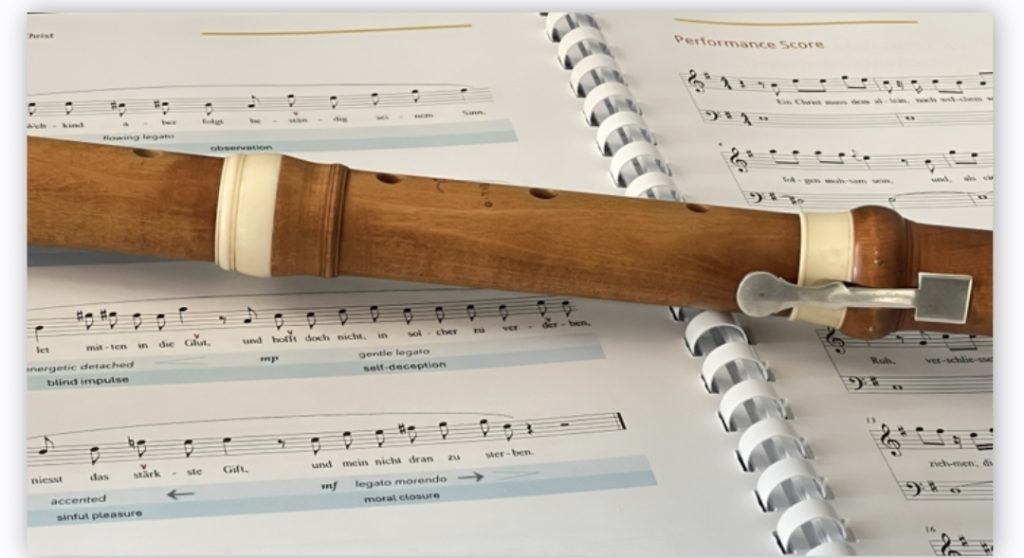
Further information about the collection and its pedagogical approach is available on the Traverso Practice Net website for readers who wish to explore the material in more detail. (https://www.traversopractice.net/recitativo.html).
Letting the Flute Speak
Approaching Baroque music as speech invites clarity and intention.
Articulation gains variety. Breathing clarifies structure. Harmony guides expressive shape. Silence carries presence.
When we begin to think in language, the flute no longer produces notes — it speaks, as the expressive vocabulary of the Baroque world continues to offer rich guidance for flutists today.
Francesco Belfiore
www.traversopractice.net | Facebook Page | Youtube
Francesco Belfiore is a lifetime flute enthusiast, amateur and researcher.
In 2022 he started the Traverso Practice Net, an open-access multimedia sharing platform, with the aim to fill existing gaps in baroque flute practice at all levels.
In just over a year, the platform has gained global traction and extensive recognition.
The website has had more than 9,000 visitors from all over the world and the Facebook community counts nearly 1,000 followers.