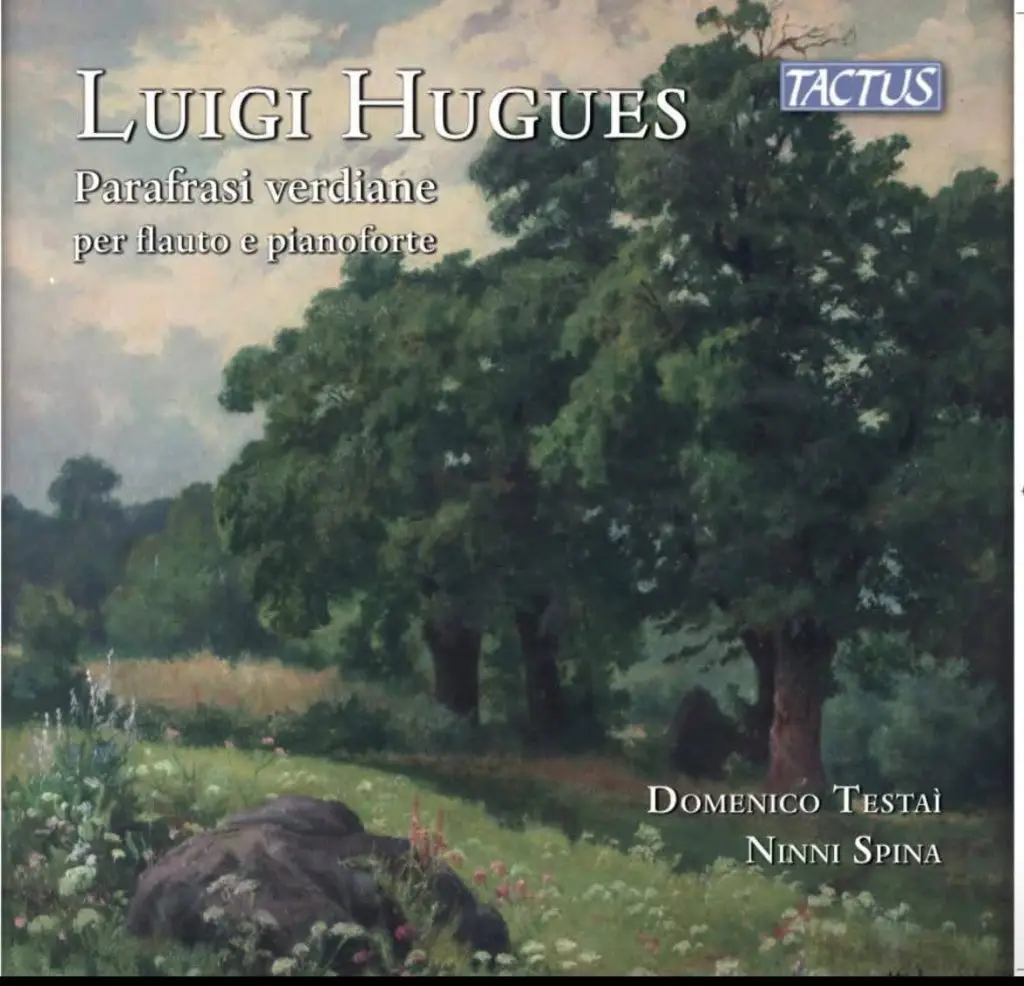
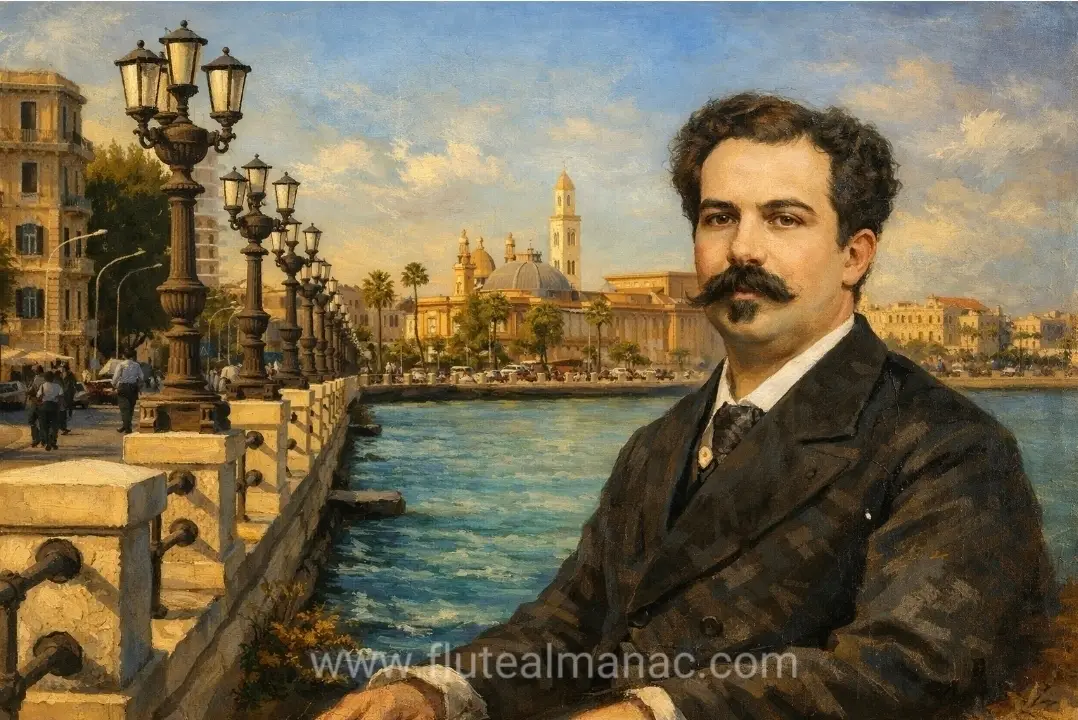
In a time when the flute repertoire is often dominated by Baroque elegance or contemporary experimentation, the Romantic voice of Luigi Hugues (1836–1913) offers a captivating and much-needed revival. Sicilian flutist and educator Domenico Testaì has undertaken a remarkable recording project that breathes new life into the rarely performed Verdi paraphrases by Hugues – an endeavor that not only enriches our understanding of 19th-century flute literature but also invites listeners to explore the lyrical and dramatic potential of the instrument through the lens of Italian opera.
A World Premiere Recording with Purpose
Released by Tactus on June 6, 2025, this new album is more than a mere homage to an overlooked composer – it is a scholarly and artistic statement. With pianist Ninni Spina, Testaì offers a vibrant yet stylistically informed interpretation of three major works: Prima Fantasia su Un ballo in maschera Op. 44, Fantasia brillante su Rigoletto Op. 43, and Fantasia su motivi del Don Carlos Op. 39. These paraphrases, written for flute and piano, are far from simple transcriptions. They are carefully crafted concert fantasies that preserve Verdi’s emotional power while transforming it into a chamber dialogue full of nuance and virtuosic color.
Hugues, himself a renowned flutist and a professor of geography, represents the 19th-century ideal of the cultivated polymath. His music reflects not only a deep understanding of the flute but also a broader cultural sensibility that embraced both technical brilliance and melodic expression. In this new recording, Testaì and Spina embrace these dual aspects with sensitivity and commitment.
The Genius of Hugues: Between Salon and Stage
The 19th century saw the flourishing of the operatic paraphrase as both a form of entertainment and artistic expression. In this landscape, Luigi Hugues stands as a uniquely Italian voice. While contemporaries like Franz Liszt reimagined opera for the piano, and Giulio Briccialdi adapted it for the flute, Hugues struck a careful balance between dramatic storytelling and instrumental lyricism. His paraphrases do not merely showcase technical prowess – they sing.
In Un ballo in maschera, the flute soars in the voice of Amelia, with cascading runs and delicate trills capturing her inner turmoil. In Rigoletto, the famous quartet “Bella figlia dell’amore” becomes a playful yet emotionally charged tour de force for the flutist, supported by piano textures that recall the full scope of Verdian orchestration. Don Carlos, darker in mood, challenges both performers to explore the full range of expression, from brooding introspection to heroic climax.
A Personal Quest and Artistic Vision


The genesis of this album was rooted in discovery. Testaì describes how his curiosity led him to forgotten archives, where dusty 19th-century scores lay untouched. Finding Hugues’s paraphrases was, in his words, like uncovering “melodies that danced on the staff, waiting to be heard again.” But this was no passive scholarly pursuit. Driven by both admiration for Hugues’s music and a pedagogical vision, Testaì set out to interpret these pieces in a way that would both honor their historical roots and speak to contemporary audiences.
The recording itself was produced independently, with minimal resources but maximum dedication. The choice of a modern flute, approached with Romantic sensibility, allowed for flexibility in tone and color, while Spina’s pianism provides an expressive and often operatic counterpart. The result is not only musically compelling but deeply human – an homage created through passion and artistry.
The Educational Value of Rediscovery
Beyond its artistic merit, this album offers crucial pedagogical insights. Hugues’s paraphrases serve as a valuable training ground for developing flutists. The technical demands – rapid scales, trills, arpeggios, and expressive phrasing – offer a comprehensive workout. But perhaps more importantly, they demand an interpretative depth: a capacity to shape phrases as if singing, to understand operatic context, and to communicate drama through sound.
In today’s conservatories, where Romantic flute literature is sometimes overshadowed by earlier or more contemporary styles, Hugues offers a refreshing alternative. His works bridge the gap between technique and musicality, stage and studio. Testaì himself points out that these pieces can be an ideal addition to advanced training programs – serving both as recital repertoire and as stepping stones to a deeper understanding of Italian musical heritage.
An Invitation to Listen – and to Remember
In the words of Verdi, “music is the art that comes closest to the heart.” This recording honors that spirit. Through the voice of the flute, through rediscovered melodies, and through a careful blend of scholarship and expression, Domenico Testaì has reintroduced Luigi Hugues to the 21st-century flute world.
For today’s flutists, educators, and music lovers, this album is an invitation: to listen, to reflect, and to revive a rich chapter of our instrument’s history. It reminds us that great music is not always the most familiar – and that sometimes, the forgotten voices are the ones most worth hearing.
Release Information:
Luigi Hugues: Parafrasi Verdiane per Flauto e Pianoforte
Performed by Domenico Testaì (flute) and Ninni Spina (piano)
Available from June 6, 2025, via Tactus srl and all major digital platforms including Spotify and Amazon.
Concerts and live performances of this program are in preparation.