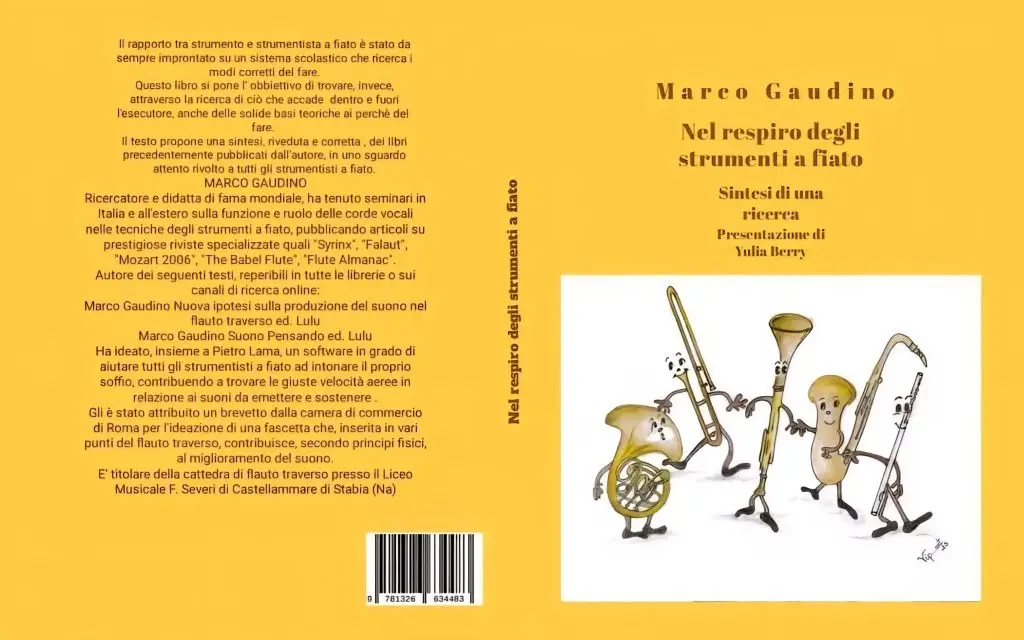
Marco Gaudino’s Nel respigo degli strumenti a fiato (In the breath of wind instruments) is a groundbreaking and meticulously detailed exploration of the physiological, acoustic, and pedagogical foundations of wind instrument performance. While centered on the transverse flute, its implications extend to all wind instruments. This book is not merely a pedagogical manual – it is a scientific treatise that redefines how we understand and teach tone production.
At its core, the book synthesizes decades of research and teaching experience, enriched by Gaudino’s collaboration with prominent phoniatrists and his use of interdisciplinary methodologies rarely seen in flute pedagogy. His central thesis is clear: tone production in wind instruments cannot be truly mastered or taught effectively without a deep understanding of the muscular, aerodynamic, and acoustic processes that govern it. Traditional didactic models, in his view, often remain too superficial, neglecting the complex physiological mechanisms that directly shape timbre, intonation, and projection.
Deeply rooted in scientific inquiry and richly illustrated throughout, this volume challenges outdated pedagogical assumptions and proposes a complete rethinking of wind instrument technique – grounded in anatomy, not abstraction.

Core Contributions and Innovations
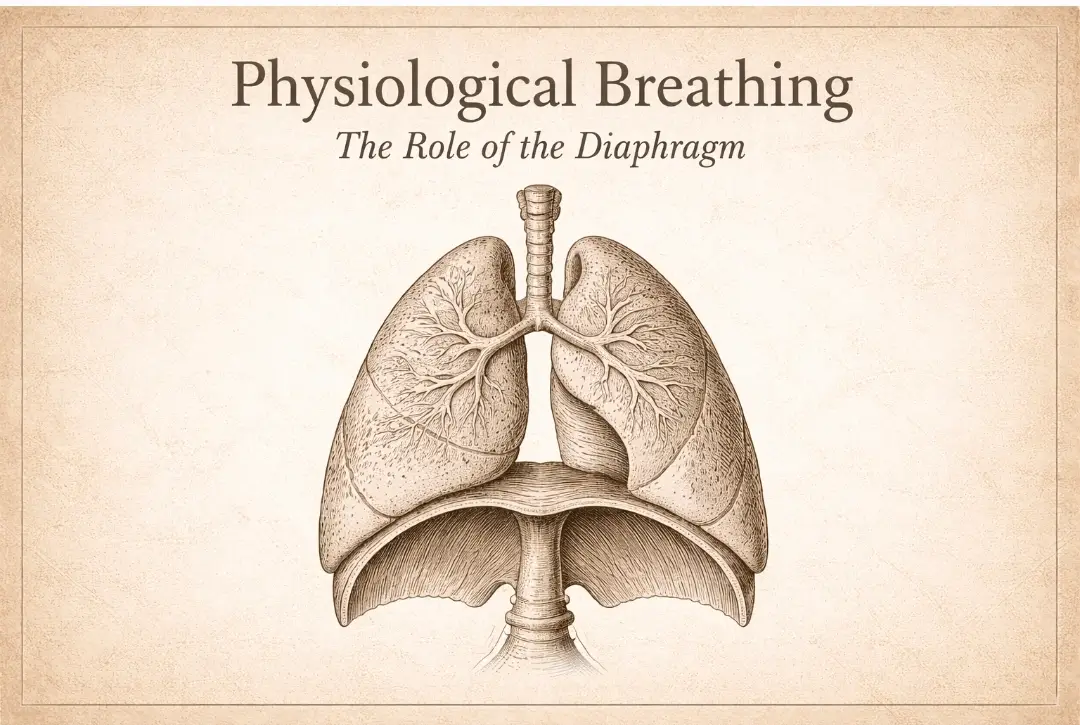
One of the most important contributions of the book is its analysis of vocal cord behavior and the distinction between phonatory and instrumental air use. Gaudino emphasizes that vocal folds, often overlooked in wind pedagogy, play a central role in breath flow regulation, vibrato, and pitch stability. Contrary to common belief, the diaphragm does not vibrate to create vibrato; rather, what vibrates is the corda aerea – the sustained air column, modulated through micro-pulsations by the vocal folds and abdominal muscles.
His chapters on vibrato and staccato are particularly revelatory. Vibrato is redefined as an acoustic-expression phenomenon, generated through subtle fluctuations in air pressure that mirror the elastic behavior of the vocal cords. Similarly, staccato is examined not as a mere articulation of the tongue but as a sophisticated interaction of costal, labial, and glottic muscles. Through this lens, articulation becomes not just a technique, but a precise physiological process involving coordinated bursts of air shaped by muscular micro-movements.


The book also offers a strikingly original treatment of “suoni tenuti” (long tones), elevating them from warm-up exercise to a central pillar of physiological training. Gaudino introduces multiple modes of executing long tones, including one without any flute sound at all – focusing solely on the intonation of the breath through controlled ffffffffff exhalations. These exercises allow musicians to explore internal air modulation before any sound emerges from the instrument, bridging traditional flute practice with the sensibilities of vocal science and somatic training.
Anatomical Personalization and Scientific Insight
A standout feature of the book is its attention to anatomical individuality. Gaudino analyzes how variations in oral and pharyngeal cavity shape, vocal cord thickness, and muscle elasticity affect airflow and tone quality. Through both illustrations and detailed explanation, he suggests that no single sound model suits all players; rather, optimal tone emerges from aligning one’s unique physical characteristics with the correct physiological processes.
The book’s scientific rigor is deeply informed by Gaudino’s collaboration with Italian phoniatrist Ugo Cesari and others. The chapters on oro-pharyngeal configurations, vocal fold dynamics, and glottic tension balance represent a rare and valuable intersection of medical science and artistic performance. Particularly enlightening are Gaudino’s discussions of aerodynamic feedback loops, explaining how musicians can learn to “hear” air pressure variations internally as a form of kinesthetic tuning.
Pedagogical Tools and Technological Innovation
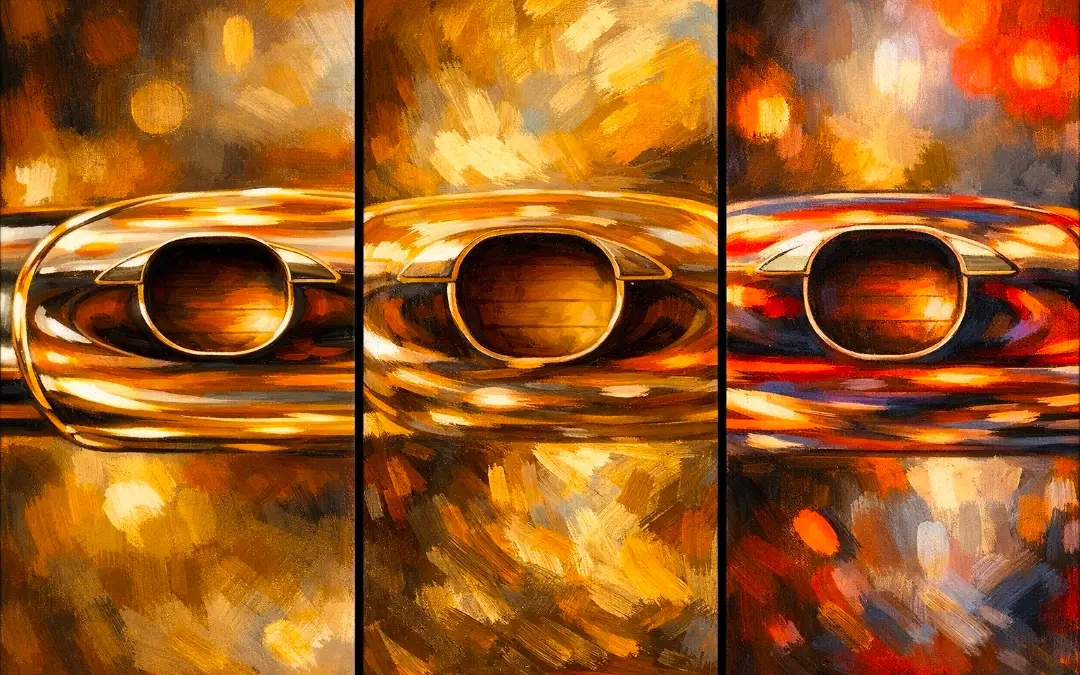
Adding to the book’s value is the introduction of “l’ottimizzatore di flusso aereo” (airflow optimizer) – a didactic invention by Gaudino consisting of flexible inserts that modify airflow inside the flute. These inserts, documented with precise dimensions and materials, offer physical feedback that supports tone production training and further reinforce his commitment to tactile, experience-based learning.
Equally innovative is Gaudino’s “Breath Tone” software, inspired by Luigi Russolo’s futurist theories of sound. Rather than producing musical pitches, this software intones breath frequencies – allowing musicians to explore the spectrum of airflow sonification, a tool with implications for both pedagogy and performance.
Context and Relevance
As noted by Yulia Berry in her foreword, this book is the culmination of a life’s work. Gaudino not only addresses long-standing gaps in wind pedagogy, but he also provides a vital bridge between the scientific understanding of the body and the expressive goals of musical artistry. His approach resonates with contemporary trends in music education, which increasingly value body awareness, interdisciplinary integration, and individualized technique.
Though deeply flute-specific in its examples, the book’s principles apply across all wind instruments and are equally valuable to vocalists, pedagogues, and music physiologists. Gaudino’s clear articulation of once-mystified concepts like “air support,” “resonance,” and “tone placement” replaces vague metaphors with practical, anatomical knowledge.
Conclusion
Nel respigo degli strumenti a fiato is a visionary and foundational text – rich in technical detail, philosophical insight, and practical application. Gaudino has written a book that elevates flute pedagogy into a new domain: one where artistry is grounded in science, and where technique begins with the body’s own design.
This book deserves a place in every conservatory library, in the hands of every flute teacher and serious student. It is not only a manual for improving sound but a roadmap to deeper self-knowledge through music.